A Baby Solar System, Night-time Worries, and Dinner Fairies

The birth of a solar system (and a young scientist) 

For the second time (ever) the birth of a solar system has been visualized – and the lead scientist for the project is a graduate student…

Source

What an incredible photograph of this nascent star and it’s protoplanet WISPIT2b, 437 light years from earth. It’s worth sitting with this image for a minute to “right-size” what it means to be one of  8,283,368,818 people on our planet (as of the time I am writing this).

“Often there is a lot of self-doubt for people at my career stage,” she says. “I hope this discovery helps others to realize that while they might not know it all yet, they still know enough to do big things.”

Chloe Lawlor

Better than counting sheep

If you find yourself tossing and turning as “to dos” flash through your brain at night, you might want add a “worry window” to your schedule. The technique, as described here, is based on stimulus control training. 

There are three simple steps:

  1. Schedule a deliberate, but short (10-15 minute) time to “worry” in the late afternoon or evening. Set a timer.
  2. Make a list of what is occupying your attention (i.e. causing you to worry) 
  3. For each thing on the list, decide on a small action you will take the next day.

According to the authors, this technique may not work at first, but stick with it – after 2 weeks you should see a difference. If worries pop up as you start to doze off, they suggest using the same response every time – “I have a plan. It’s in the notebook. I’ll deal with it tomorrow.”

How to be a Dinner Fairy

Something I do when I’m making plans with friends who have little kids… I pre-order Door Dash to their place for it to arrive after bath- and bed- time. This way, my friends don’t have to deal with the hassle, expense, and chaos that comes with hiring a sitter, plus free dinner! I get to see their kids for a bit, and we can all have adult-time. Yes, it’s very empty-nester-fairy of me, and I love doing it.

Maria Semple

Credit where credit is due! The quote and drawing are from this week’s post by Jenny Rosenstrach’s on her Substack, Dinner: A Love Story
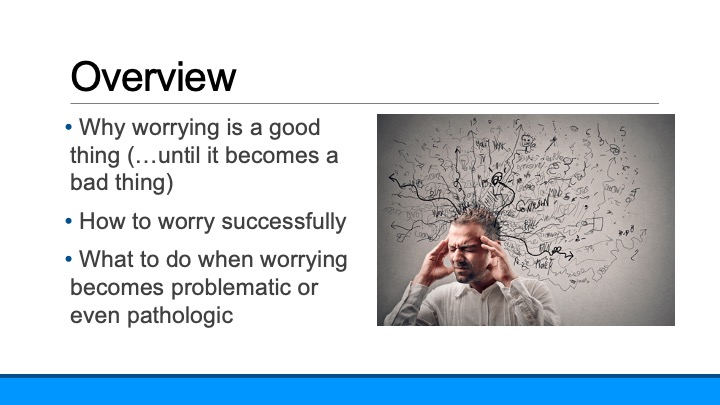
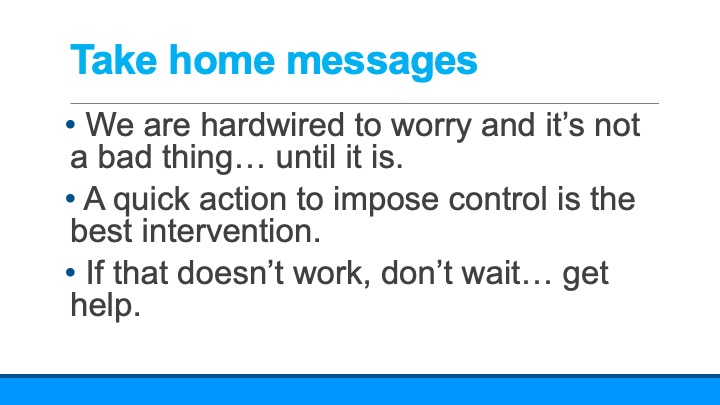
Why worrying is a good thing… until it becomes a bad thing.

I had the honor of speaking at the American College of Surgeons this week on a panel about stressors clinicians have control over i.e. can modify. I was assigned a topic I had not really thought about before – which meant I learned a lot! After the talk, there were many people who came up to me and asked if they could have my slides… so here they are!

Photo source

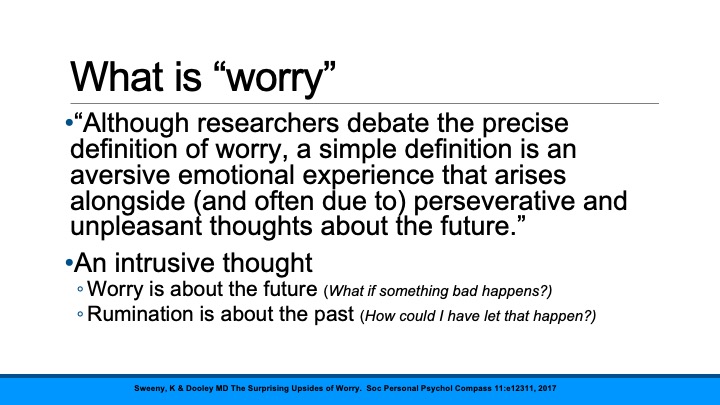
This is a really important concept… worry is an intrusive thought, which means it just pops in your head. And it’s unpleasant, so you worry about worrying!

Another important point here – worrying is always about something in the future (as opposed to rumination, which is always about the past)

Image source

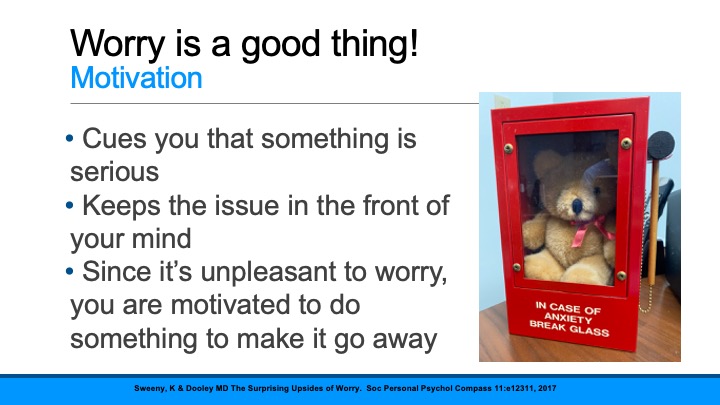
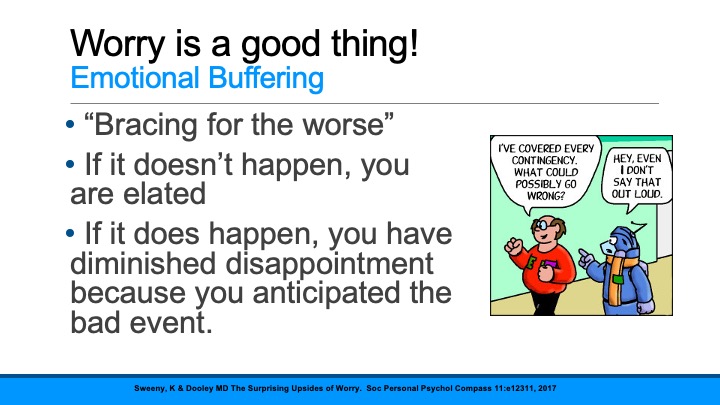
These are the two main ways worrying helps us – motivation and emotional buffering. The motivation part is pretty obvious. Emotional buffering is also obvious, but I didn’t have a name for it before. Take for example worrying that you will fail a test. If you end up getting a good grade on the test it is somehow even more exciting… but, if you do poorly your disappointment is somehow buffered.

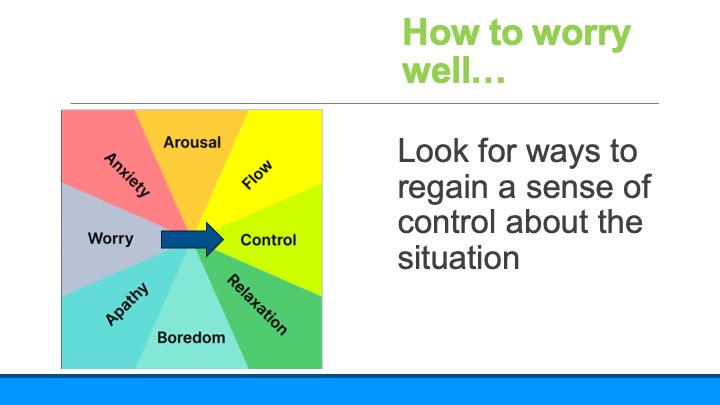
Image from Wikipedia, worry

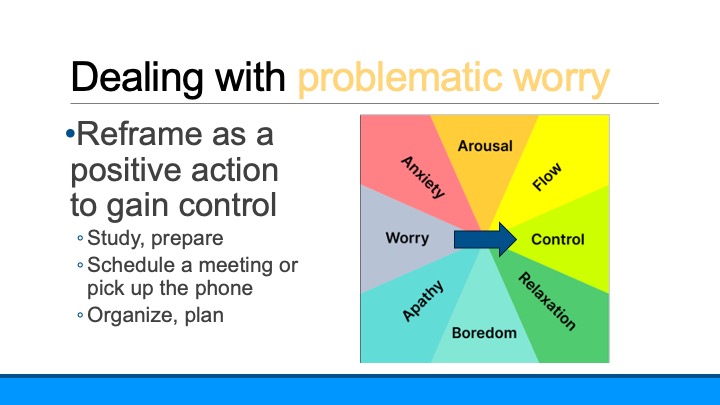
In terms of emotions, control is the opposite of worrying. Take the test I mentioned above. If you are worried you will fail it, the way to deal with that is to regain a sense of control. For example, using smart notes to optimize learning during your rotations, using this plan to ace your in-servce exam, or this plan to get ready for exams during basic sciences.

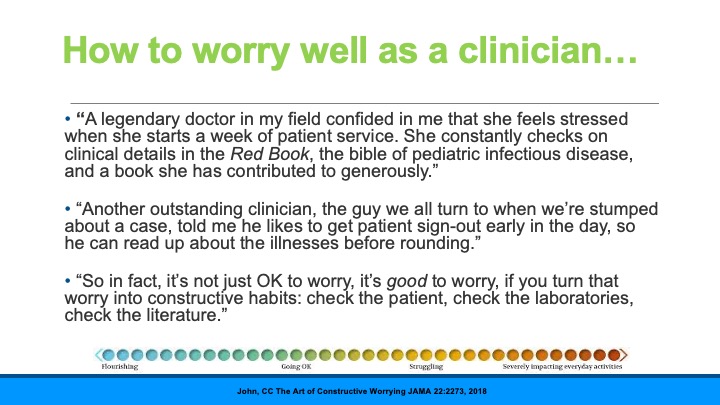
This principle holds true for ALL clinicians – no matter how long your have been in practice.

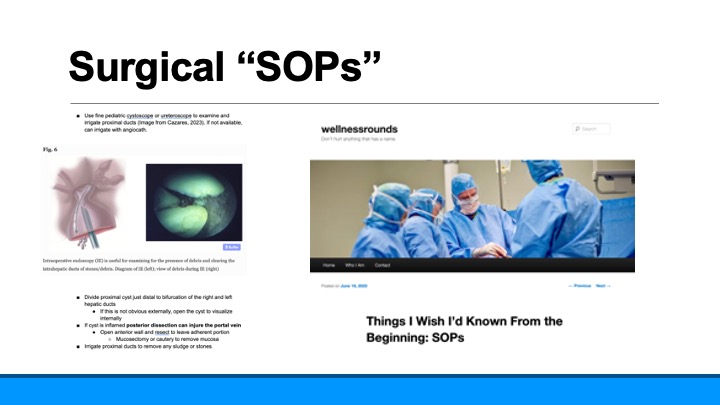
I shared one of my techniques to worry successfully, which is to create an “SOP” for every procedure I perform.

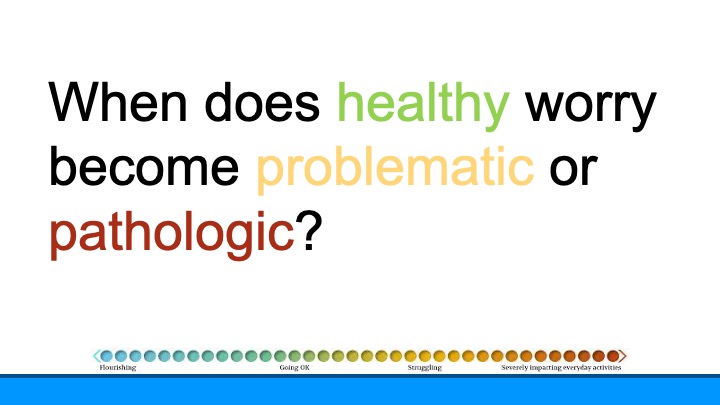
And then I tackled the next question… what to do when worry begins to spiral.

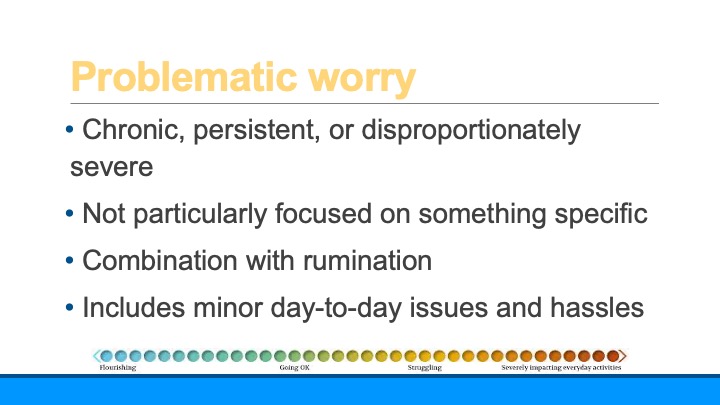
I introduced this validated tool to see if your worrying has crossed the line to problematic or pathologic.

And pointed out that if worry is causing you to suffer, it’s a problem.

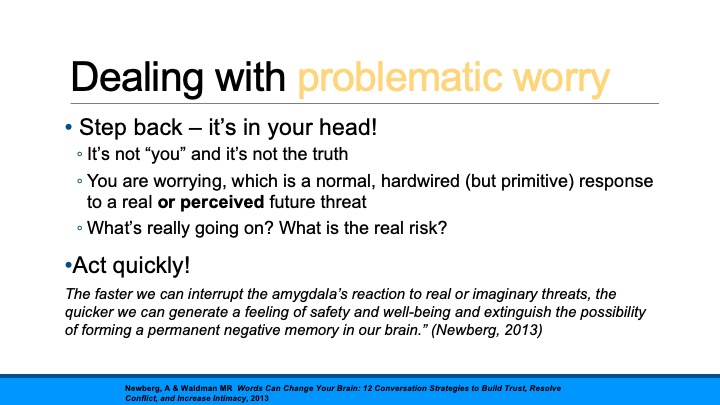
The way to deal with problematic worry is to try to return it to the kind of worrying that helps us, which we can do with any action to control what we are worried about. Worried about a test? Make a plan for how and when to study. Worried about a relationship? Plan to meet or pick up the phone to talk. Again – no matter what your are worried about – do something to create a plan to address the worry.

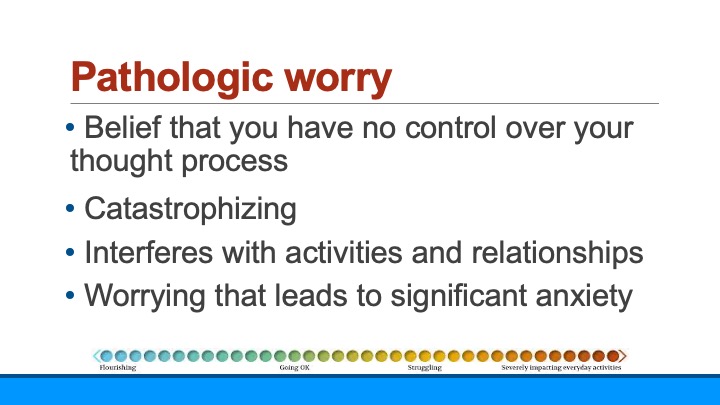
But despite our best efforts, the spiral of worry can land us in a bad place. If you find you have anything on this list (or if you are really suffering), it’s pathologic worry.

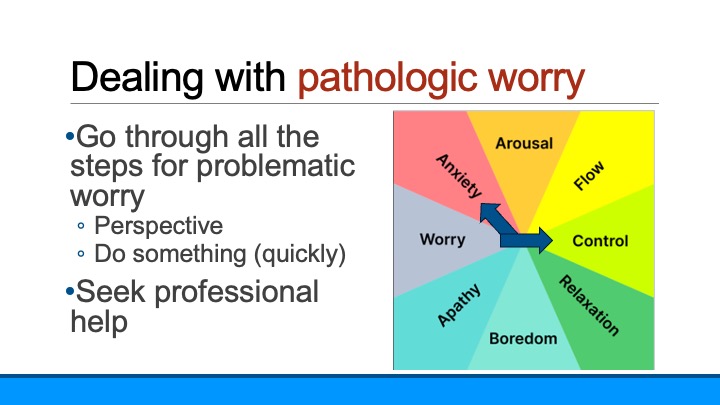
It’s super important that you act – quickly. This is your amygdala trying to hijack your brain! (Remember flight-flight-freeze?) If you don’t derail it quickly, it will continue to spiral and land you in a world of anxiety. In other words, follow all the steps for problematic worry – but if it doesn’t work, don’t wait. Get help.