New Year’s Resolutions

Why not take advantage of the first of the year to follow the tradition of making changes?  It’s a good opportunity to take stock of where you are and where you’d like to be a year from now.  Here’s some ideas to think about if you are planning to make some New Year’s Resolutions.

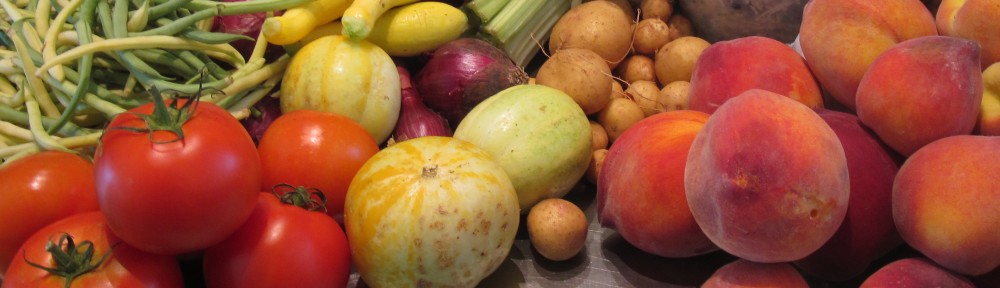
Eat real food. You may not be able to follow all of Michael Pollan’s rules all the time, but you should at least know about them.  Make a resolution that fits your life, but start with a) decreasing processed foods and b) increasing fruits and vegetables.  If you aren’t familiar with the principles of good nutrition, resolve to learn more by reading textbooks, information on line or books like In Defense of Food by Michael Pollan, Food Matters by Mark Bittman, or Eat, Drink, and Be Healthy: The Harvard Medical School Guide to Healthy Eating.

Eat breakfast. There are a lot of reasons this is a good thing to do!  This is an easy resolution for the new year.

Lose weight to a healthy BMI. If you are in the group of people (like many of us) who struggle with weight this is a hard task!  Do not “diet” – it’s doomed to failure.  Instead, find small changes you can make on a consistent basis that will decrease your calories by 250-500 calories a day.  For example, if you drink soft drinks (150 calories each), eat a bagel in the OR lounge  (300-400 calories), or eat at McDonalds on call (1000-1500 calories), change to diet sodas, cereal and bringing a sandwich from home.  If you think having the support of an on-line or real group would help, consider Weight Watchers or Spark People.

Exercise (almost) every day. Consistency is more important than quantity, so find something you like to do and “Just do it!”  It’s not easy to fit exercise into a busy schedule, but deciding to try is the first step!.  Another strategy is to increase your activity at work, especially on days you can’t actually work out.

Love what you do. You can decide to be a “romantic scholar”– to find enjoyment in difficult work and awe in learning.  It’s really easy to get caught up in how hard this work is and forget how amazing what we do is… and what a privilege it is to do it.  Make up your mind to cultivate a sense of awe about your work.  Keep a notebook, and write down what you learn from and about your patients.  Read more than you are asked to read, learn more than you are expected to learn – not to be a “gunner” but because you love medicine.

Nurture relationships with family and friends.  It’s easy to get caught up in the hours and hours we spend learning and practicing medicine.  Resolve to spend one night a week as a “date night” with your significant other, call close friends on a regular basis, keep in touch with relatives you don’t see very often.

Develop ways to deal with stress. Learn how to meditate and start a practice.  Spend time playing a musical instrument (or learning how to play).   Take yoga classes.  Join a church, synagogue or other religious community. Get a massage once a month.  Develop an exercise program which is one of the best ways to decrease stress (another reason to make this a New Year’s resolution!).

Tackle your debt.  Financial issues just add more stress to an already stressful time.  Assess where you are financially and develop a plan for dealing with the debt that all medical students and residents have to deal with.

If you need help with a personal issue, make an appointment. If you drink too much, use legal or illegal drugs inappropriately, suffer from depression, or have significant anxiety, please call and make an appointment with a health care professional.

Best wishes to all for a New Year filled with joy, health, success and happiness!

Thanksgiving Gratitude

Gratitude is not only the greatest of the virtues but the parent of all others.”  Cicero

Gratitude is a powerful tool.  There is good evidence that being grateful leads to a greater sense of well-being and less stress.   Practicing gratitude on a regular basis can be as simple as “counting your blessings” every morning, or listing things you are grateful for on your scut list, in a journal,or on your smart phone.  Another useful practice is to write letters (to send or not) to your parents, teachers, friends or mentors to thank them.  If you aren’t convinced that practicing gratitude can have a profound effect on your well-being,  take the “2 minute challenge”.  Get a piece of paper and for two minutes write down everything thing you are grateful for.  Don’t lift the pen off the paper and keep writing (non-stop) for the entire two minutes.

Today, as I am spending time with family and friends, making our Thanksgiving feast and counting our blessings, I am reminded that all over the United States, there are physicians, residents, nurses, therapists, and support personnel who are spending this holiday taking care of patients.  Along with the patients and families in their care, I am thankful for their sacrifice and their compassion.  It is a blessing to have the skills and the heart to care for others, and we are grateful for that privilege .

“If the only prayer you say in your whole life is “thank you,” that would suffice.  Meister Eckhart

Photo credit


Elements of a Self-Care Protocol – from The Resilient Clinician by Robert J. Wicks

The following is taken from The Resilient Clinician by Robert J. Wicks.  Dr. Wicks writes primarily for psychiatrists and other mental health workers, but his advice is applicable to anyone who works with patients.

There are basic elements of a self-care protocol that most everyone needs to renew themselves on an ongoing basis. It really doesn’t  require too much to take a step back from our work routine to  become refreshed and regain perspective. Some of the basic elements  might include:

• Quiet walks by yourself

• Time and space for meditation

• Spiritual and recreational reading-including the diaries  and biographies of others whom you admire

• Some light exercise

• Opportunities to laugh offered by movies, cheerful  friends, etc.

• A hobby such as gardening

• Phone calls to family and friends who inspire and tease you

• Involvement in projects that renew

• Listening to music you enjoy (Wicks, 2003, p. 50)

Other simple steps at self-care and renewal might be:

• Visiting a park or hiking

• Having family or friends over for dinner or evening coffee

• Going to the library or a mega-bookstore to have coffee,  a scone, and to peruse the magazines

• Shopping for little things that would be fun to have but  not cost a lot

• Taking a bath rather than a quick shower

• Daydreaming

• Forming a “dining club” in which you go out once  a month for lunch with a friend or sibling

• E-mailing friends

• Listening to a mystery book on tape

• Reading poetry out loud

• Staying in bed later than usual on a day off

• Having a leisurely discussion with your spouse over  morning coffee in bed

• Watching an old movie

• Making love with your spouse

• Buying and reading a magazine you have never read before

• Fixing a small garden with bright, cheery flowers

• Telephoning someone you haven’t spoken to in ages

• Buying and playing a new CD by a singer or musician  you love

• Taking a short walk (without listening to music) before  and after work and/or during lunchtime

• Going to a diner and having a cup of tea and a piece  of pie

• Going on a weekend retreat at a local spirituality center or  a hotel on large grounds so you can take out time to walk,  reflect, eat when you want, read as long as you’d like, or  just renew yourself

• Arranging to spend a couple of days by yourself in your  own home without family or friends present just to  lounge around and be alone without a schedule  or the needs or agendas of others

• Getting a cheap copybook and journaling each day as  a way of unwinding

Starting Medical School: Rules of the Road

If you are reading this because you are preparing to start medical school – welcome!  You are now part of one of the most noble professions in the world.  You are no longer just a student, you are part of a profession… as of now.

Medical school is a wonderful, but at times difficult experience.  As you start this fantastic journey, there are a few “rules” I think might help:

1. You can drink from a fire hydrant, but you’ll need to learn how.

The amount of information you are going to be exposed to in medical school is logarithmically more than you had to learn in college.  It really is like being asked to drink from a fire hydrant.   You are going to have to study more, study better and actually use the time in class to learn.  (more posts to follow with concrete tips on how to do this.)  But – here’s the good news.  You’ll be able to do it.   Everyone who has gone through this has thought at various times that a) everyone here is smarter than I am, b) the admissions committee must have made a mistake and I’m not really supposed to be here and c)  there is absolutely no way to read all of this material.  And… we all discover that a) we are just as smart as everyone else (sometimes in different ways, but all effective) b) nobody made a mistake – we really are supposed to be here and c) you have to change the way you study, but you really can learn this much material.

2. Make your bed.

You wanted to become a doctor for a myriad of reasons, but one of them was surely because service to others is important for you.   Therefore, you are already primed to sacrifice a lot of your needs for other people.  Sacrifice is part of the culture of medicine.  But, it’s like a Starling curve… a little sacrifice makes you better, but too much makes you ineffective.  Doctors are notorious for this; we forget that if we don’t take care of ourselves, we really can’t take care of others.   “Make your bed” is a simple rule (and action) which helps you remember that you need to take care of your environment, your fitness, your nutrition and your spiritual wellbeing as you are learning how to become a physician.

3. Act like a doctor.

We (all practicing physicians) see you as a doctor already.  I know this is a really hard concept for first year medical students, but it’s absolutely true.  You have started your apprenticeship and, unless you are one of the very, very few who change their mind, you will have an MD after your name in 4 years.  With all of the joys and privileges that come with this role, there are a few responsibilities to start thinking about as well.  Start thinking about your decisions, words and actions in this context.  You’ll learn a lot of specific details about professional behavior as your apprenticeship goes on, like protecting patient confidentiality, peer review, etc.,  but the core values of professionalism start when you enter the profession, which is now.

4. Kindness matters.

It is remarkable how our paths in medicine cross over and over again.  The person sitting next to you on the first day of medical school may be someone who will be an intern with you in 4 years or who will refer you patients 10 years from now.  You and your classmates will be going through classes together (like you did in college), but this is different.  You are starting your professional life together as well.  The camaraderie that results is a gift and is also very important personally and professionally.  Don’t blow off the class events.  Don’t stay home to study instead of going to class.  Go out of your way to meet everyone in your class and really get to know them.  Cultivate and nurture these important friendships.

5. Enjoy the journey

The first year or two of medical school may, at times, seem like an obstacle course you have to “get through” to get to the “real stuff”.  The basic science curriculum is not a rite of passage!   It turns out that even the “trivia” (or at least that’s what it will seem like) is important.  You are learning a new vocabulary… a new language.  If you don’t learn the breadth and depth of this new language, when it comes time to apply it to patient care you won’t be “fluent”.

You are about to embark on a life changing (and fulfilling) journey.  This journey is a privilege and it is very, very special.  Take a few minutes everyday to write down the events of the day.  The first time you hear a murmur in a heart will be just that – the first time.  Take a minute to record what that was like.  You are going to have a lot to process as you start studying anatomy – more than just the names of the structure.  “Talking” about it in a journal is a great way to make the transition we all make in the anatomy lab.   There are also going to be some hilarious stories and events that you’ll forget if you don’t write them down.  When you look at them later, you’ll be glad you recorded them.  Recording these moments doesn’t have to be by writing.  If you are an artist, you may want to use drawings.  Photos of your classmates (and some of those humorous moments) will become a treasure in the future as well.  (but remember the professionalism rule!)

Book Recomendation: Iron Doc by Mamta Gautam, MD

I became aware of this book last week through one of the anesthesia residents at work (whose chairman made this book required reading for all residents in his department).  Dr. Gautam is a psychiatrist who has specialized in caring for physicians and is an expert in physician wellness.  She uses training for an Ironman triathalon as an analogy.  Physicians have to “train” for different roles (personal and professional) if we want to prevent burnout.  She proposes a training program that helps keep balance in the complicated life of a doctor. The book primarily addresses physicians already in practice, but the information is very applicable to trainees, as well.

Here’s her website if you are interested:  http://www.drgautam.com/gautam/books.htm

Religion and Spirituality

People who are ill or hurting often turn to their religious roots for solace.  The mind and body connection is a powerful one, and one that can contribute to good patient care.  Spirituality in medicine can take an overtly religious tone, but only if both the physician and patient are completely comfortable.  No matter what your religious background, you will care for patients whose belief system is different from your own.  The true root of spirituality in medicine is compassion. Regardless of your religious background and your personal beliefs you can cultivate a philosophy of compassion.  Both you and the patients you care for will do better because of it.

 The workday can be onerous and fatigue can make you lose perspective.  It is important to find something greater than you and spend some time there everyday.  The most efficient method is to look inside of yourself by just sitting.  Learn to just sit.  It is harder than it sounds, but very powerful when achieved.  Slow your breathing, close your eyes and let the thoughts go.  Concentrate on your breathing and relax all your muscles.  Don’t fidget, don’t move.  When the thoughts start running (and they will), just acknowledge them and let them go.  Try to get to a moment (and that it all it will usually be) when your mind is silent and your body relaxed.  This is the moment to listen.  Being able to quiet yourself this way is very conducive to allowing your mind to work on the “big picture”.  If you spend even 10 minutes everyday in this kind of meditation, you will be surprised at how some of the things that are worrying you become “solved”.

 Work at finding beautiful places where you can sit for a minute or walk.  Nature is one of the most powerful spiritual experiences.  If you have a favorite place to hike or be outside, take some pictures and blow them up for your house or call room.  Put beautiful plants in your house and then take care of them. (Dead plants are a bad way to cultivate spirtituality…)  Watch for the surprising moments of beauty in a day and notice them.  Look for the flower blooming outside a patient’s room, the proud look of a father watching his two-year-old totter into the hospital, a new painting on the wall.

Cultivate a sense of wonder.  Have you ever seen anything more incredible than a beating heart in a surgeon’s hand?  Allow yourself a moment to be amazed in the middle of the day.  People have incredible resilience at times – notice it and appreciate it.

Life Math: An Essay by Marion Bishop, MD

This is a profound and wonderful essay about the “cost” of doing a residency. By comparing medical training to the life of Anne Bradsteet, a 17th century American poet, Dr. Marion Bishop discusses the sacrifices we make to practice medicine and how to consider them in the context of the gifts we receive as healers.  If you are discouraged about the years of training, the sleepless nights and the financial cost of medical training, please read this beautiful essay.

” …..    life is not a zero-sum game. A gain in one column does not necessitate a loss in another, and winning does not correlate with being debt-free or having the fewest losses in the final tally at the end of life. Rather, all losses are gains. All gains have corresponding losses. This is not harsh or bleak or cruel. This is being human. This is life. Sometimes you are talented enough to write it down.  And sometimes you are lucky enough to read what a wiser writer had to say about it 329 years ago.”

The link for this essay is no longer available to the public, but can be accessed through PubMed (JAMA 2007 Jul 18;298(3):266-8)