Wellness Rounds

"Don't Hurt Anything That Has a Name"

Browsing Posts tagged vegetables

Salads

2 comments

I was really inspired by a recent post by veggielady4life (a medical student, photographer and foodie!) on taking salads for lunch.  For medical students in basic sciences, this is a great “energy” lunch that lets you stay alert in class.  For students on rotations and residents, a fresh salad is a great lunch and an even better middle of the night meal when you are on call.

The concept couldn’t be easier – put lettuce, spinach, or the greens of your choice in a big container.  Top with protein, cheese, veggies, nuts and/or fruit.  If you don’t care what it looks like, it’s also really easy to dump it all in a big zip-lock bag.  When it’s time to eat, pour the salad dressing in the bag with the salad, shake, and then serve yourself from the bag.

Protein:  Beans from a can, beans you make yourself with a crockpot or pressure cooker (which saves money and avoid excess salt and additives), canned tuna, cooked chicken from the deli, prepackaged meats (look at the labels to make sure you aren’t getting a lot of additives you don’t want), shrimp, etc.

Cheese:  Shredded cheddar, Monterey jack or Mexican cheese (reduced fat or regular), feta, goat cheese, thin slices of parmesan

Veggies:  Any leftover in your refrigerator!  Another good idea for this is to buy what you need for a mirepoix when you do your once a week shopping.  A mirepoix is the basis of  French cooking and is one part onions, one part carrots, and one part celery.  The Cajun trinity is similar but substitutes green bell pepper for the carrots.  If you buy the ingredients for a mirepox (or trinity) and chop it up on the weekend, you can use handfuls in salads, omelets, soups, etc all week.  (You can add other things, too, like mushrooms, red bell pepper, etc – anything that can be eaten raw).  If its a really busy week and you don’t have time to chop up vegetables, you can used canned green beans, corn, beets… whatever vegetables you like.

Nuts and/or fruits: Adding some dried fruits and nuts, sunflower seeds, etc, will add some extra nutrition.  Fresh fruits like blueberries, strawberries, sliced peaches are delicious in salads.  Canned fruits, especially mandarin oranges, are good, too.

Salad dressing. Don’t put the dressing on the salad until you are ready to eat.  (The French say it “cooks” the salad… but the result in any language is soggy salad.) My favorite dressing is a homemade vinaigrette.  Start with vinegar (red wine, white wine, sherry or balsalmic), a clove of diced (not crushed) garlic, a healthy teaspoon of good Dijon style mustard, salt and pepper.  Stir these all together until the salt is dissolved and the mustard is blended with the vinegar.  Add olive oil while you are stirring (or shake it up at the end.)  The classic ratio is 1 part vinegar to 2 parts oil, but you can add less oil to taste.  I usually squeeze a little lemon juice in, too.  There are many different French vinaigrettes, so experiment!

The easiest thing by far is bottled salad dressings.  Be careful about calories (if you are watching your weight).  If you take salads to work regularly, you may want to leave the bottle there (unless the food snatchers raid your refrigerator on a regular basis).

http://allrecipes.com/Recipes/Salad/Green-Salads/Top.aspx

http://hubpages.com/hub/Favorite-Salad-Toppings-Lessons-From-Restaurant-Salad-Bars

http://www.fitsugar.com/Nutritional-Information-Salad-Toppings-7598444

I made a great dinner last night that took about 5 minutes to cook – absolutely within the “pizza rule” for medical students and residents (i.e. a recipe should take less time to cook than it takes to order a pizza).  It’s the kind of recipe I wish I’d had when I was a student/resident, so I thought I’d share it.  I know that many of you are not from Texas (or another state with a tradition that includes salsas), so here’s the basic concept.

1.  Buy tortillas (I like corn the best, but flour or whole wheat flour tortillas are fine).

2.  Choose a protein.  I prefer fish or shrimp (because they are so fast) but any meat will work.  An even easier alternative  is to buy a roasted chicken (or cooked beef or pork).   You can also use beans or tofu if you are vegetarian.

3.  Make a fresh salsa (see below)

When it’s time to eat:  Cook or heat up the meat (or alternate protein), heat up the tortillas (1 minute in the microwave).  Put the meat (or alternate protein) into the tortillas and top with the salsa. These soft tacos can make a compete meal, but serve a side of vegetables if you want … it’s a great dinner (and lunch the next day at work).

Salsas are best when you make them yourself.  You can buy good salsa in a jar but it’s never as good (or as healthy) as the ones you make.  Leftover fresh salsa can be used as a dip for tortilla chips – as is (diced) or blended.

The salsa I made last night was easy:  1 mango, 1 green tomato, red onion, cilantro, a jalapeno pepper – all diced fine and then mixed with lime juice and seasoned with salt and pepper.   All traditional fresh salsas are a variation on this same theme – tomato with or without fruit, cilantro, onion and peppers to taste.  On of the best examples is “Pico de gallo” (shown below), which is one of the most classic salsas – red tomato, onion, cilantro and jalepeno with lime juice and salt.  http://en.wikipedia.org/wiki/Pico_de_gallo

You can be creative!  Mix and match from this list or check out some of the recipe links  below

  • Vegetables:  tomato, tomatillo,bell peppers, corn, cucumber
  • Fruit:  melon, watermelon, peach, pear, mango, nectarine, avocado
  • Onion:  white onion, yellow onion, green onions, garlic
  • Chiles:  jalepeno, serrano, chipotle
  • Spices:  oregano, parsley, cilantro

Links to salsa recipes:

http://allrecipes.com/Recipes/Appetizers-and-Snacks/Dips-and-Spreads/Salsa/Top.aspx

http://www.salsa-recipes.com/index.html

http://www.fresh-salsa-recipe.com/

Farmer’s Markets

3 comments

I just got back from my weekly (when I’m not on call) trip to the farmer’s market.    I’m going to try to convince you why buying food at a farmer’s market should be a regular habit for any medical student or resident (although I think it applies to everyone else, too).

What the heck is a farmer’s market?

In general, farmer’s markets are open air markets where local farmers bring their food to sell. They usually take place once a week (often on Saturdays).

Just to give you an example – this is the market I go to most often in Houston:

http://www.urbanharvest.org/programs/market/index.html

How do I find out where they are?

The best way is to search the internet for your city.  Local harvest is a web site that covers most farmer’s markets, but there may be smaller (and possibly more convenient) markets in your city that aren’t listed here:   http://www.localharvest.org/farmers-markets/

If it doesn’t look like there is a farmer’s market near you, another option is to buy a share in a CSA (Community Supported Agriculture).  If you buy into a CSA you will pick up a fairly large quantity (usually a good sized box) of whatever is being grown at the time – usually once a week.   If you can find a group of friends to split this with, its a great option.  http://www.localharvest.org/csa/

What should I do to look cool if I’ve never been to a farmer’s market before?

Bring your own bags. This isn’t an absolute requirement, but it’s much cooler than relying on the vendors.  They often have small paper or plastic bags, but it will be easier if you bring your own.  In the big picture, you should do this no matter where you shop (good environmental karma!).  Fortunately, the “give away” bags at medical meetings are perfect for this!   A lot of grocery stores sell reusable shopping bags or you can find them on the internet.  I’m not endorsing this particular site, but here’s an example: http://cheaptotes.com/canvas_tote_bag_8.html

Bring cash. I’ve seen some people writing checks, but don’t count on it.  I’ve never seen a way to pay with a credit card at any farmer’s market.

Does it cost more?

Yes (but not a lot more).  But don’t let that stop you!  Value isn’t always measured by money – even if you are poor student or resident.  It’s not going to be a lot more and it’s completely worth it. (see below)

If it costs more and it takes more time, why should I bother?

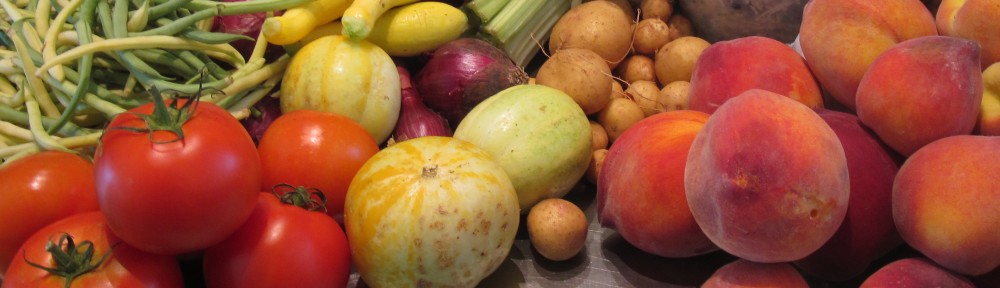
The food absolutely and unequivocally tastes better.  The first time I bought potatoes at a farmer’s market was a revelation for me.  I knew that tomatoes and peaches would be better, but I had no idea that a potato would be in the same category.  The produce you buy at a farmer’s market was in the ground (usually) less than 24 hours ago.  It is incredible how much better it tastes!

The food is probably better for you.  Most farmer’s markets sell organic or near organic food.  There’s good data that organic plants are higher in many nutrients and it’s intuitively obvious that avoiding pesticide residues on your food should be beneficial. http://www.healthy-eating-made-easy.com/advantages-of-organic-foods.html

You’ll eat with the seasons. There are no data that this is better for you, but it really makes sense.  If nothing else, it will taste better and you’ll be helping the environment by not eating things that travelled thousands of miles to get to you.

You’ll get to know the people growing your food. This sounds trivial, but it’s really cool.  You can ask them about how they grow the food, and you’ll hear stories about what’s happening on their farms.  One of my favorite vendors has great pictures and stories about her farm which she also shares on Facebook and her website: http://blueherontexas.com/.  There is also something intangible (but cool) in knowing that someone (not just a big corporation) cares enough to grow your food.

The farmer’s market is a once a week “sanity break”. You are outside, surrounded by beautiful food and happy people.  At the market I usually go to, there is always some live music, too.  It’s a great experience and, combined with the fact that you are doing something healthy for yourself, it’s a once a week mood changer!

Most medical students and residents eat poorly.  It’s not really a surprise – the days are packed with work from sun-up to sun-down.  There are no planned meals because there can’t be.  Food is a quick bite when it is available.  It’s feast or famine.  On the far end of the scale, the stereotypical diet of a resident is no breakfast (but usually coffee), a doughnut and coffee grabbed on the run once you get to work, some mid-day meal of fast food, and pizza on call.  Food, particularly fast food, becomes solace.  In the stressful world of residency, this kind of “comfort food” becomes a “reward” for the hard work and tribulations. It’s not rocket science.  This kind of diet doesn’t give you the energy you need to function at your peak.  It is also a diet that is very likely to lead to weight gain.  In your 20s, your body can cope with this suboptimal fuel, but it’s not ideal.  However, what “works” in your 20s won’t work as you get older and could even be responsible for a heart attack, diabetes, or other medical problems in your 40s and 50s.  On a more philosophical level, you would never advise this kind of diet to one of your patients.  None of us want to be hypocrites.

The answer is to cook for yourself.  Not everyone likes to cook, and not every one knows how.   I’m going to make a case that you should learn.  Trust me – if you can learn to take out an appendix, or diagnose a pneumonia, you can learn to cook.   I’m going to assume that you are single for the sake of this description.  But, if you have a significant other, it’s even more important to cook at home.  He or she can participate in helping with the meal preparation, and, by doing this together and for each other, there is added benefit for your relationship.  Having dinner at home with a significant other will become an “anchor” to your day that will become very important to you.  As hard as it is to work around a busy schedule, if you can eat together, and have a real conversation, you will both benefit greatly.

Cooking is a wonderful therapy for the stress of medical school and residency.  If you’ve never learned how to cook, this is a hard time to learn complicated techniques, but it’s not hard to learn simple techniques.  There are several advantages of cooking for yourself that outweigh (on most days) the hassle of spending the time.  The act of cooking for yourself can be a time of “decompressing” from work.  Arranging vegetables, cutting them, smelling the odor of the food appeals to all your senses and is a moment in the day that you can intentionally slow down.  It’s very important that the recipes you choose are simple and quickly prepared.  No one wants to come home to a 2 hour task in the kitchen after a hard day.  Cooking for yourself has other benefits as well.  First, it is tangible evidence that you are taking care of yourself.  This is not a trivial point.  There are days during your training when it seems no one is taking care of you.  Having concrete evidence that you are caring for yourself is an antidote to that feeling.  Secondly, you will eat better.  By cooking from fresh ingredients, you will decrease the amount of pre-packaged and fast food.  Even without medical school, you know that this will result in better nutrition.  Thirdly, you will eat cheaper.  Other than the “free” pizza (ethically debatable, but financially clear), processed food is usually more expensive.  And lastly, you can share.  It isn’t any more work to make 4 or 6 portions of a dish than it is to make 2, and it usually isn’t that much more expensive, either.  If you can convince one of your colleagues that this is a good idea, you can cook for each other on alternate days.   Likewise, you can cook larger amounts and, using freezer ready containers, freeze portions for yourself for the future.  Doesn’t homemade pasta with a side of fresh vegetables really sound better than the greasy middle of the night food that is available in most hospitals?   It’s true that you can’t cook just anything with the kind of schedule you will have in medical school and your residency.  But, there are few key rules that will make it possible for you to do this, enjoy it, and eat well.

Rule 1:  Don’t cook anything that takes more than 30 minutes to prepare.

Let’s be realistic – you are not going to walk into your home at 8 o’clock at night, hungry, and spend an hour preparing something.  But – there are very nutritious dinners that take less than 10 minutes, so getting home late is no excuse.

Rule 2:  Plan ahead.

The first step in preparing dinner for most busy people is to open the refrigerator door and ask “What can I eat tonight?:  If you are anything like I was in residency, the refrigerator had some cheese, some vegetables (often way past their prime), and maybe some leftovers.  Not very appetizing.  There is an easy way to prevent this from happening.  On whatever day you have off and have time to shop, spend 30 minutes making a menu.  Start by making a table for the week with what is happening.

Breakfast Lunch Snack Dinner Comments
Sun
Mon On call – take Tues meals, too
Tues
Wed Out Out with friends after rounds
Thur
Fri On call
Sat

Once you have an outline of your week, fill in the blanks with the meals.  Now, most of us can handle “hamburgers” or “Raisin Bran” as a menu item… but it’s more fun, and healthier to branch out a bit.  So, if you are not used to looking for new things to cook, how do you find recipes?  Cookbooks can be fun, particularly if you are looking for a particular ethnic food or a style (e.g. low-fat) of cooking.  If you like cookbooks, and bookstores, find the used book store nearest you and go to town!  There are also web sites for recipes.  Many of them also have “cooking lessons” on line.  Most cooking shows have a web based recipe site as well.   So, say you start by searching the web and find this recipe. (for this particular recipe, I’m assuming you have no concerns about calories)  It looks easy, and like it would taste good.   So you print it out.

NEW ORLEANS PASTA

ESSENCE OF EMERIL (FOODTV)   SHOW #EE123 – http://www.recipesource.com/main-dishes/pasta/11/rec1100.html

1 tablespoon olive oil

16 ounces chicken breast half, cut into strips (about 1/2 cup)

1/4 cup chopped chorizo sausage

2 tablespoons chopped green onions, plus extra for garnish

1/2 tablespoon chopped garlic

Tabasco and Worcestershire sauce

3/4 cup heavy cream

1/4 cup grated Parmesan cheese

1/4 pound shrimp, peeled and deveined

1/2 pound penne pasta, cooked al dente and tossed in oil to coat

Creole spice, salt and pepper

In a large saute pan heat oil, add chicken and sausage and cook 5 minutes, stirring often. Add green onions, garlic, 2 dashes each Tabasco and Worcestershire sauce or to taste, and cook for 1 minute. Add cream, cheese, shrimp and pasta. Cook, tossing, to heat through. Adjust seasoning to taste with Creole spice, salt and pepper. Serve garnished with green onions.

Yield: 2 servings

Now what?  First, cut and paste the ingredient list to a shopping list.  If you are compulsive, you can organize it into meat, dairy, produce, etc (it makes shopping easier, but it’s not essential).  You’ll need to add a vegetable or salad to balance this out nutritionally. (I picked broccoli as an example) If you can afford the calories, add a desert. (Ice cream in this case)  Then decide what night in your schedule this will work best.  This recipe will take about 12 minutes total so it would be great for a night you are getting home late.  You can either share the other portion with your significant other or you can take it with you the next day as lunch.  You can double the recipe and have it more than one night.   For example:

Breakfast Lunch Snack Dinner Comments
Sun
Mon On call – take Tues meals, too
Tues
Wed Out Out with friends after roundsThaw shrimp for tomorrow
Thur NEW ORLEANS PASTA (CHICKEN, CHORIZO)Steamed broccoliIce Cream Freeze one portion for later
Fri NEW ORLEANS PASTA (CHICKEN, CHORIZO)Steamed broccoli On call
Sat NEW NEW ORLEANS PASTA (CHICKEN, CHORIZO)Steamed broccoli

Shopping list:

2 lbs chicken breast (16 oz x 2)

1/2 cup chopped chorizo sausage

1/2 pound shrimp, peeled and deveined

heavy cream   (need 1 1/5  cup)

Parmesan cheese  (need 1/2 cup grated)

Olive oil

Creole spice

green onions

garlic

broccoli (4 portions to steam)

One pound penne pasta

Ice cream

Rule 3:  Cook (or prep) today today to eat tomorrow

As soon as you get home from the grocery store:

  • Freeze any meat that is for later in the week (and make a note to yourself to put in into the refrigerator to thaw a day or two before you are going to use it.)
  • Wash the vegetables, dry them and put them away
  • Wash lettuce for salads and dry completely (a spin dryer is the best).  Store in a zip lock plastic bag with a paper towel in the bag (which absorbs any residual water).  Make sure you squeeze out all the air you can before closing the bag.

Take advantage of days off to cook things that may take a little more time or effort.  While  you are watch the football game on Sunday, you can cook chili in a crock pot for Wednesday.  If you know that your vegetable stir fry on Tuesday is going to be after a long day, go ahead and chop all the vegetables and meat a day or two before when you have the time and have them stored in the refrigerator.   When Tuesday rolls around (and you are exhausted from work), you’ll have all the ingredients chopped and ready to throw in the pan.

Learning to cook after a trip to the farmer's market!

Energy for Call

No comments

Food is fuel.  It’s also solice if you are stressed, and face it – it’s fun to eat. Other professions that deal with stress and physical labor have learned the lesson about not paying attention to nutrition.  The culture of medicine demands a “selflessness” that borders on the absurd.  It is often a badge of honor that you can go all day without eating.  But, when you consider the consequences of such behavior, it is really crazy.  There is no benefit to the patients, and clear harm to the doctor.

Eat often and eat well

When you are physically and intellectually busy (an average day on call in the hospital) you need to plan to eat every 3-4 hours.  In general, you will have one “meal” (i.e lunch) in the middle of the day and two snacks.  It’s not always going to possible to stop for lunch at lunchtime, but you should be able to find 10 minutes at some point in between 11 and 4 to eat a meal.  Different rotations have different demands, and you can certainly take this into account when planning your meals.  A peanut butter and jelly sandwich on whole wheat requires no preparation, and no refrigeration (it can even go in the pocket of your white coat).  Alternatively, buy a loaf of whole wheat bread every week, and put the bread, a jar of peanut butter and a jar of jelly in your locker. It takes 2 minutes to make a sandwich to put into your pocket on the way to a conference or a brief break.  Bring leftovers from the previous night’s dinner to reheat and have for lunch.  You need to plan to include fruits and vegetables as part of every meal and your snacks.  Buy a bag of apples once a week and put them in your locker.. and then make sure you eat the entire bag every week.  The snacks don’t need to be elaborate, but you do need to watch the clock and eat them – even if you are not hungry!

Examples of easy snacks for the hospital

  • “Meal replacement bars” (power bars, Luna bars, Kind bars etc)
  • “Meal replacement drinks” (Ensure, Boost, etc)
  • Skim milk with either graham crackers/peanut butter or a banana
  • Cheese stick and an apple
  • Melba toast or other crackers with sliced cheese plus some fruit
  • Yogurt