
“Entartements”
Absurdity can be an important tactic for non-violent protest. One of the great masters of this form of protest was Noël Godin, who was the king of the “entartement” (a made up word in French that roughly translates into the act of “pie-ing” someone).
From his obituary this week in the NY Times – “While Charlie Chaplin, Laurel and Hardy and the Three Stooges were among the first to demonstrate the hilarity of pie throwing, Mr. Godin refined the art of using whipped cream as a kind of protest.”

Petrichor
The distinct smell after it rains is called petrichor, a word coined by Bear and Thomas in the their 1964 Nature article from petra (rock) and ichor (the the ethereal golden fluid that runs in the veins of Ancient Greek gods and goddesses). Humans can detect geosmin, one of the key molecules that leads to this unique odor, in extremely low concentrations – which makes evolutionary sense since locating water is so critical.
It shouldn’t come as a surprise that climate change, which increases rain in some areas and increases drought in others, affects petrichor. It’s not just about us… like all environmental changes, there will be serious consequences for all living things, particularly mosquitos, fruitflies, and desert mammals, who rely on the scent to know where to find water.
Anchored Model Layering
I’m a big fan of the Zettelkasten as a way to organize information, and – more importantly – as a tool that promotes thinking deeply and writing well. This week, there was a post on the online Zettelkasten forum by Sascha (that’s the only name he uses on the forum) that really caught my eye. I’m not sure where to go with this, but I find it incredibly appealing as a way to visualize a concept that has multiple theories to explain it.
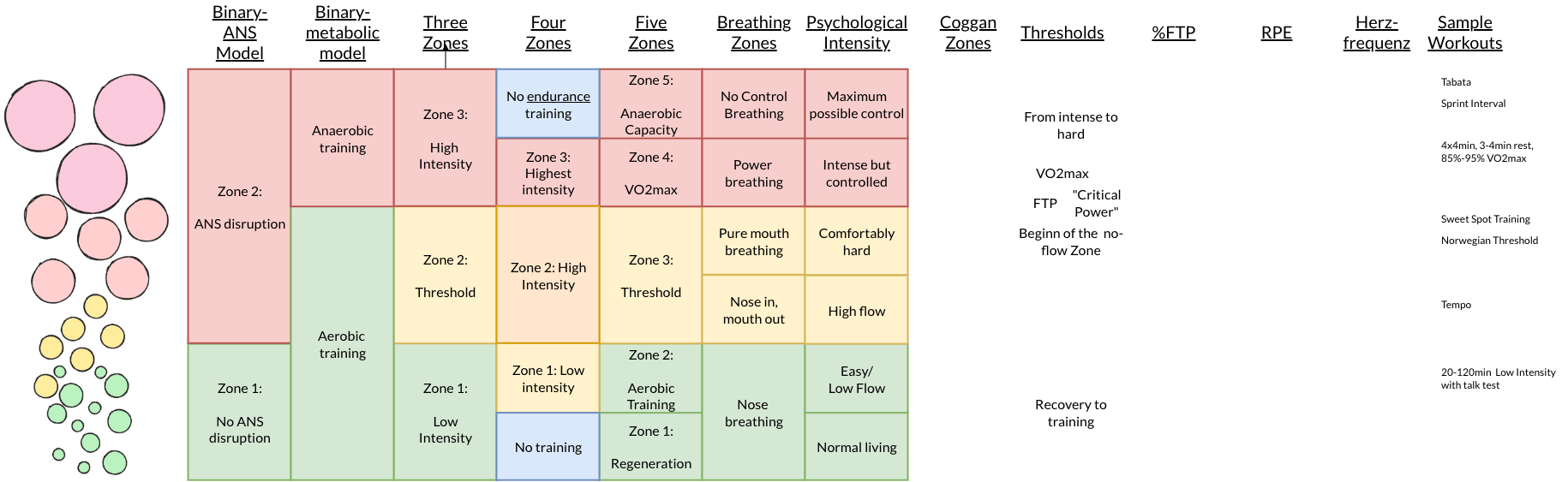
Anchored model layering is a visual way to “overlap” (layer) different models created to understand something. Another way to think about it is creation of a “meta-model” that allows you to generate new, creative ways to think about any complex problem.
The example used in the post is about how intensity in exercise leads to endurance. There are numerous ways to explain why exercise works (mental models). Using anchored layering lets you put those models side by side to compare, merge, or see new connections between these models.
In this “meta-model” – the visualization of the anchored layering – the Y axis is the “anchor” – the harder you push, the more muscle fibers you recruit. All the models then have to explain how to define “pushing harder”. The x axis is each of the models, side by side. (Which means new models can always be added).