It’s almost impossible during times of stress to be motivated to do hard things. For all but the most hardcore exercisers, ice cream just seems more soothing than running when you are emotionally exhausted (Right?). I’m no different. But, as much as I would like to think “later” will be ok to regain what I have lost in these months of being more sedentary than usual, I have begun to realize that I needed to get moving again.

Enter Richard Rohr
I’ve been a fan of Richard Rohr for years. He’s a gifted writer with the laugh and smiling eyes of someone who has tapped into something I want to know more about. I subscribe to his weekly email, which this week introduced Jonathan Stall’s practice of moving “as a way to invite brave creativity.”
There is a lot to unpack in that idea.
What exactly would “brave creativity” look like? I’m not sure, but it sounded like something I, and I suspect all of us, need more of right now.
“We invite you, as able, to take some time this weekend to move mindfully through your local area.”

I set off on a different kind of walk.
I grabbed my mask and headed out for a walk in my neighborhood, trying to think about this not just as exercise, but as something more. I read Jonathan Stall’s advice again:

Where did all these lawn chairs come from?
I’ve walked many times before in my neighborhood, and I’m an observant person. But today, as I walked, I began to notice all the chairs on people’s lawns and all the swings, and “tires” hanging from trees.
Were they always here and I didn’t notice them?
Are more people sitting outside now than before – even though it’s outrageously hot here in August?
Is this because of how much we all need (safe) connection to each other during the time of pandemic?
Are there actually more chairs, swings and tires because of how much we all need to hear birds, see trees and listen to the cicadas in the summer evening right now?

Next steps?
Yes, there will be next steps. This experiment led me to more questions than answers, but I had a real a sense of being taught, too.
Try it?
Let me know what you see.

Taking care of patients in this time is beyond stressful. I’m keeping my eye out for anything that might help support healers of all kinds. This was sent to me today and I found it profoundly helpful. Take 5 minutes to listen to this amazing professor, pastor and friend.
This video was made for the students of Illiff School of Theology by Dr. Cathie Kelsey. Although the specific examples she uses are from the Christian faith, the practice she teaches in this video can use text from any religious tradition, or no religion at all – perhaps a poem, a quote, or an inspiring song?


O’Donohue, John. To Bless the Space Between Us: A Book of Blessings (pp. 124-127). The Crown Publishing Group. Kindle Edition.
I asked a simple question to my colleagues on Twitter yesterday.

Thanks to all my colleagues for their amazing responses! This list is almost the curriculum for a course on how to do well (and be well) as an intern.
Enjoy…and take notes!


I don't know where prayers go,
     or what they do.
Do cats pray, while they sleep
     half-asleep in the sun?
Does the opossum pray as it
     crosses the street?
The sunflowers? The old black oak
     growing older every year?
I know I can walk through the world,
     along the shore or under the trees,
with my mind filled with things
     of little importance, in full
self-attendance. A condition I can't really
     call being alive
Is a prayer a gift, or a petition,
     or does it matter?
The sunflowers blaze, maybe that's their way.
Maybe the cats are sound asleep. Maybe not.

While I was thinking this I happened to be standing
just outside my door, with my notebook open,
which is the way I begin every morning.
Then a wren in the privet began to sing.
He was positively drenched in enthusiasm,
I don't know why. And yet, why not.
I wouldn't persuade you from whatever you believe
or whatever you don't. That's your business.
But I thought, of the wren's singing, what could this be
     if it isn't a prayer?
So I just listened, my pen in the air.
Like most of you, my New Years resolutions in past years have been something like “Exercise every day” or “Eat fruits and vegetables with every meal.” And, I bet that you had the same experience I did… a few weeks of “success” and then they seemed to fade away. The problem with these kinds of goals are how they are structured. They end up being “either-or” goals … you are either able to do them or, more often, you miss a day (or two… or three) and feel like a failure.
I recently read a blog post by Ryder Carroll, the originator of the Bullet Journal which profoundly changed the way I think about goal setting and New Year’s Resolutions

It’s a simple, but very powerful concept. Set your goal as a destination… as a “lighthouse” in the distance, and then head in that direction every day. As Ryder Carroll explains, “When goals are lighthouses, success is defined by simply showing up, by daily progress no matter how big or small…”
So instead of the usual New Year’s Resolutions, pick a few “lighthouse goals”. Write them down and keep track of how you are doing (every journey needs a map). This can be as simple as one piece of paper for each goal, but I am such a fan of the Bullet Journal, I hope you consider using it.
When you get up every morning think about how to move towards your goal(s). If you veer off course, that’s part of the journey…. look up, find your lighthouse, and correct your course. Every once in a while (maybe monthly?), look at the progress you’ve made and celebrate it! If, on the other hand, the goals you originally chose don’t make sense for you any more, pick some new goals, draw a new map and start over.
Potential New Year “Lighthouse” goals


It is a personal ritual that I read this poem every year on the first day of spring, so I thought I would share it today.
 Spring Morning by Theresa DiMenno
Happy First Day of Spring – and International Happiness Day!
“With rare exception, the majority of surgery residents and practicing surgeons who prematurely leave surgery do so because they find the work to be physically, emotionally or spiritually incompatible with the vision they have for their life.” Am J Surg 214:707, 2017
I’ve read a great deal about physician wellness, suffering and burnout and I’ve given (and heard) many talks on the subject. The classic talk on burnout, including some of my early talks, can be summarized as “Exercise more, eat well, pay attention to your family and friends.” I am in no way belittling these things as important, but…. as a good friend said to me the other day “If I have to hear one more lecture on burnout that tells me to add an hour of exercise, an hour to plan and cook my meals and an hour to meditate to my already crazy day, I’m going to shoot myself!”
Not too long ago, a friend recommend I read A Bigger Table: Building Messy, Authentic, Hopeful Spiritual Community by John Pavlovitz. He was in Houston yesterday, and I was able to go hear him speak. John is a Christian pastor, but his words and ideas can be used by everyone, regardless of whether you are religious or not and, if you are, regardless of the faith you hold
 John’s idea, which is neither doctrine nor theology, involves creating a “bigger table” in our lives, a table that has the four “legs” of radical hospitality, total authenticity, true diversity, and not having an agenda.
It’s human nature to surround ourselves with people that are just like us. But, when we only include people like us in our lives, our potential for growth and happiness is limited as a result. I truly believe that this “small table” mentality contributes to physician suffering and burnout, which means that the idea of building a bigger table may be just what we need.
So, what might a “bigger table” look like for physicians who are struggling with the “why” of their practice?
Radical hospitality. Dr. Francis Peabody famously said that “the care of the patient is in caring for the patient”. The same holds true for our colleagues, patient families and everyone around us. If we cultivate an appreciation, even love, for these people – regardless of how difficult they are or how much we disagree with them – we are practicing radical hospitality. As in so many of the gifts we give to others, this is a gift to ourselves, too.
Total authenticity. We all need a place to be absolutely, completely ourselves… unfiltered, loved, totally accepted. I’ve always told my trainees that the single most important factor in choosing where you practice is the people you will be joining. There is no location, salary or title that will ever make up for working with people that don’t let you be truly, authentically you.
True diversity. This is not just diversity in the sense we are used to hearing about. In addition to religion, race, gender, age and sexual orientation, true diversity means accepting and listening to people that have totally different views than you. Ouch.
During his talk, John told the story of “Sign Guy”. He was having lunch with a gay teenager when they noticed a man outside the window. He was carrying a sign that said gay people were an abomination and that they were going to hell. The young woman asked John “What about ‘sign guy’… how do I invite him to my table?”
We all have “sign guys” in our lives that, like it or not, we should invite to the table in order to have true diversity, but (and this is really important), we have to agree on “table manners” first. Which brings us to the fourth leg of the table…
Agenda free table. The concept of the bigger table is that we are choosing to sit at the table together because we know the power of listening, the power of really understanding each other. Although we can and should invite everyone to the table, no one should stay who is intentionally trying to change or hurt someone. Being agenda free is one of the non-negotiable “table manners” for all who want to sit at a bigger table.
So how do I think this translates this into our day to day work? For a start…
Spending more time learning the stories of our patients… not just “taking their history”.
Working to see administrators and leaders as people who care like we do… not just defending our specific point of view.
Calling out the agendas and implicit biases that keep us from hearing the soft voices of colleagues who are young or discounted for other reasons.
Checking back the next day to be sure that a colleague who said he’s “fine” really is.
Doing all this even though it’s hard, especially when it comes to the “sign guys” in our lives.
I’m sure there are others… what would you add?
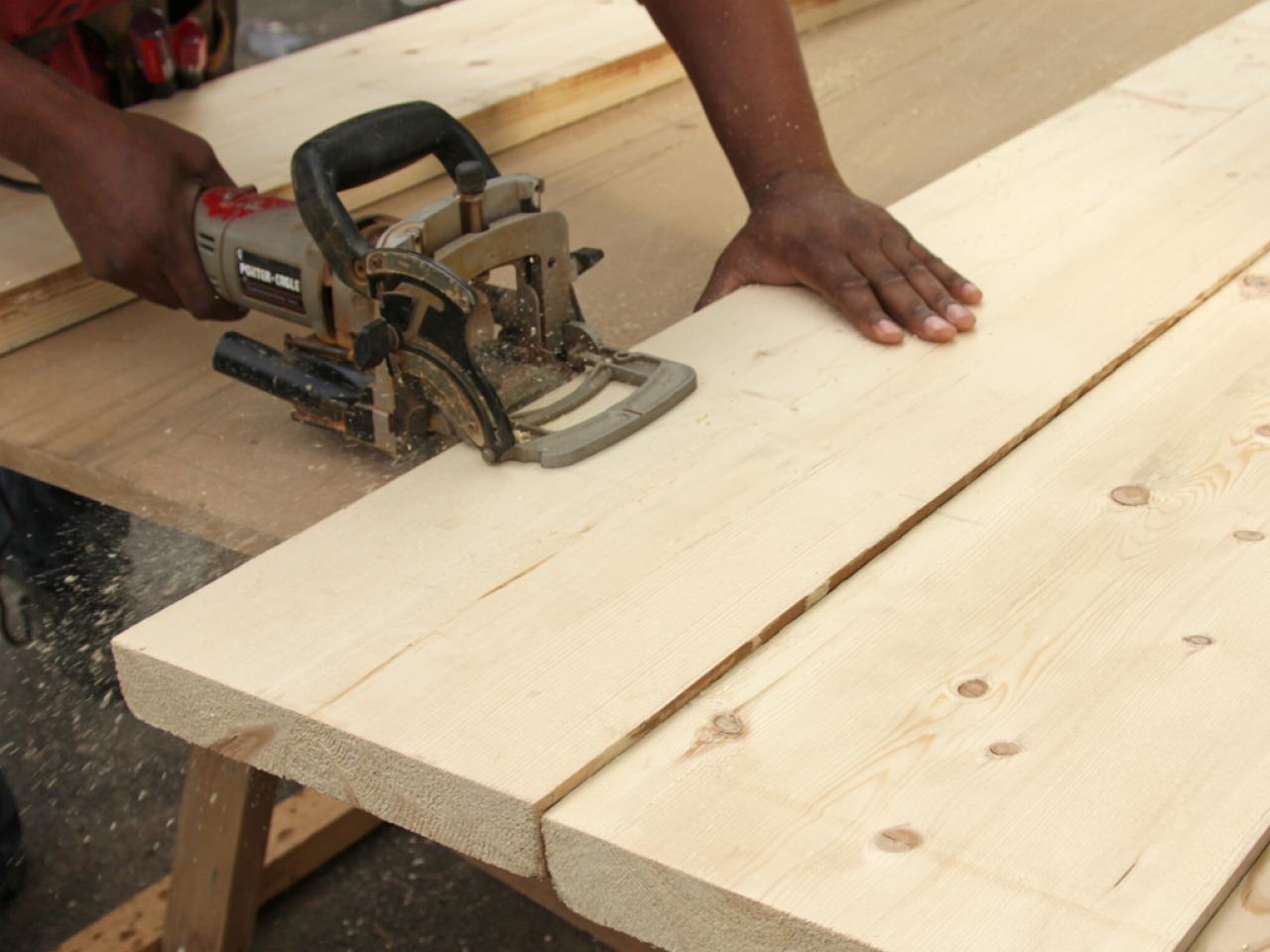
“Grab some wood and some tools, friend. We have work to do.” John Pavlovitz