
Although I follow my ancestors’ spiritual path, I have incredible respect for the varied traditional paths my friends follow…and for those who follow no specific spiritual tradition. This post, which is the text of a sermon I gave today, does not and should not imply anything beyond my desire to share… and to lift up love where ever we find it.
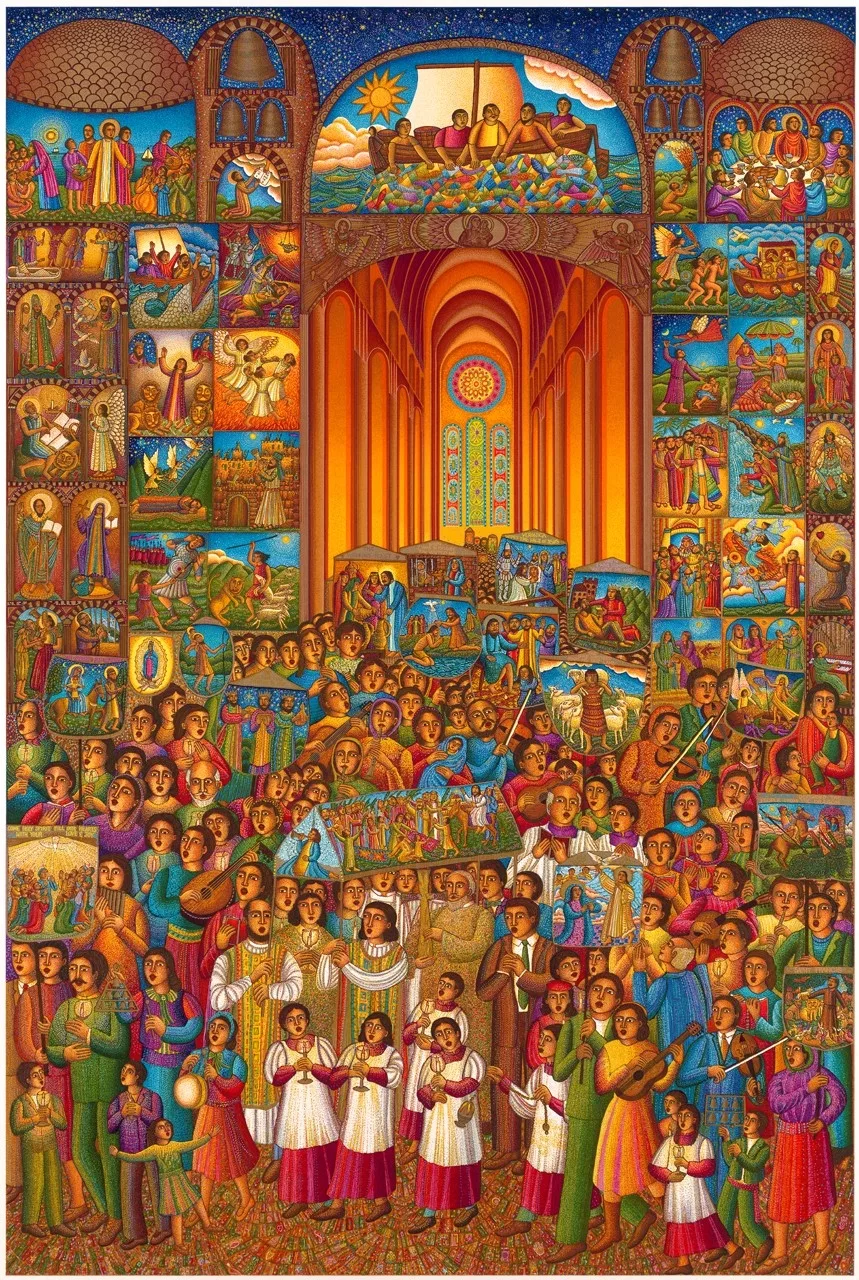
The Crowd of Witnesses
When Jesus saw the crowds, he went up on the mountainside, and after he sat down and the disciples had gathered around, Jesus began to teach them…
That’s how today’s gospel lesson starts – with a crowd.
Jesus had been tempted in the desert, found out that John has been arrested, and “withdrew to Galilee” where he calls his first disciples – Peter, Andrew, James and John. With them at his side he begins his ministry: “teaching in their synagogues, proclaiming the good news, and curing every disease and every sickness among the people”.
We don’t know how long a period of time passed between calling the first four disciples and the Sermon on the Mount, but most people who have studied this think it is somewhere between a few weeks and a few months. That’s a relatively short time in a society where word of mouth is the only way that information is spread…Which makes the verse that immediately precedes today’s Gospel lesson so remarkable: “So his fame spread throughout all Syria, and they brought to him all the sick, those who were afflicted with various diseases and pains, demoniacs, epileptics, and paralytics, and he cured them. And great crowds followed him from Galilee, the Decapolis, Jerusalem, Judea, and from beyond the Jordan.”
That’s an area that covers a lot of ground… literally.

The distances between these places and the hill overlooking Tabgha (which where a 4th century monk claimed the Sermon on the Mount was preached) range from a few miles to 80 miles. The exact distances aren’t important, but what is important is that the hundreds or even thousands of people who made up the “great crowds” surrounding Jesus had walked anywhere from days to weeks on foot… to bring their sick friends and relatives to be healed and to hear this amazing rabbi teach his disciples.
When Jesus saw the crowds, he went up on the mountainside, and after he sat down and the disciples had gathered around, Jesus began to teach them…
It was a day like most days for them. Jesus sat down to teach and his disciples gathered around him. The “great crowds”, the people who had walked days to see Jesus placed themselves around the disciples, eavesdropping if you will, to hear what Jesus was saying …while waiting for an opportunity to bring their loved ones to him to be healed.
They watched, they listened, they waited. They were literally a crowd of witnesses.
Some of them, maybe even many of them, ended up joining the early disciples, giving up everything to follow Jesus, to become a part of the first generation of his disciples.
It was the descendants of these first disciples, the second generation of new Christians, who Paul was writing to in today’s reading from Hebrews. It had been 30 or 40 years since the death and resurrection of Jesus and things weren’t easy. They were being actively persecuted and they were disappointed that Jesus had not returned. Their faith was wearing a little thin. Paul stressed to them in his letter that they were missing the big picture – that faithful endurance was part of the package if they were to follow Jesus. He reminded them that as disciples of Jesus they needed to remember they were to “live as [Jesus] did, faithful, hopeful, loving, and patient in the face of persecution.”
Paul starts the portion of the letter that includes today’s verses with this declaration: faith is the assurance of things hoped for, the conviction of things not seen. He then gives his readers examples of what it means to be faithful, reminding them of Abel, Enoch, Noah and – most importantly – Abraham and Moses. But he goes beyond these exemplars of the Jewish faith; He also reminds this second generation of wobbly Christians about all the ordinary people who were faithful, too. And after all of these examples of people who for centuries had remained faithful to YHWH he says, Therefore, since we are surrounded by such a great cloud of witnesses, let us lay aside everything that impedes us and the sin that so easily entangles us. Let us run with perseverance the race laid out for us.
I hate running.
I always have.
But I get it – the race is a metaphor for the life God has laid out for us and the importance of perseverance, even when it gets hard. But I can’t help it – every time I read this verse I imagine myself as a solo runner, pushing through pain to get to the finish line. I can’t help but think of burning in my legs and lungs and wishing I would be done. Not exactly a great way to understand – at least for me – what it means to be faithful.
But what if I didn’t have the right image of the race Paul is talking about?
Instead of an individual slog, what if it’s actually a relay race?
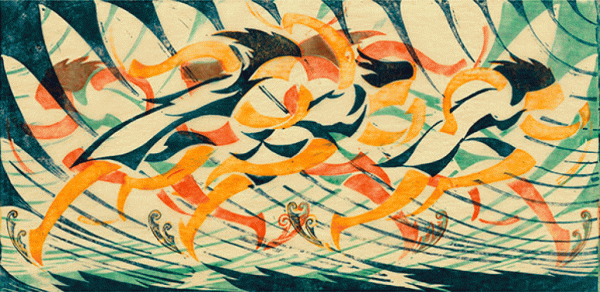
What if we are handed the baton of faith by our ancestors, our families of choice, the people in our faith communities, maybe even people who bump into us in parking lots… so we can run with joy as often and as hard as we can… and then hand the baton off to others? What if each of us is brought into this world to be part of an amazing, divine relay team while we are alive? And what if – when our physical bodies leave this world – we are still part of that team, responsible for cheering on those still running?
Eugene Peterson, in his translation of today’s reading from Hebrews captures this well: Do you see what this means—all these pioneers who blazed the way, all these veterans cheering us on? It means we’d better get on with it. Strip down, start running—and never quit! … Keep your eyes on Jesus, who both began and finished this race we’re in. Study how he did it. Because he never lost sight of where he was headed—that exhilarating finish in and with God…”

The Cloud of Witnesses
Today is All Saints Day, the day in the church calendar when we remember those who have finished their earthly race and are now part of the great cloud of witnesses cheering us on as we run. That’s a powerful image, but despite the promises, despite our faith…or maybe because of it… it doesn’t change the fact that we mourn the loss of our dear ones, that we still profoundly experience the pain and mystery of death.
None of us knows what happens when we die.
I don’t either… but as someone who has been present for many births and even more deaths, I can only offer to you how I have personally come to understand this mystery.
When I was sitting with my father in his final days in hospice, he woke from a deep sleep, looked at me, and gently said “Tell me about God.” It was a little out of the blue, but we’d had enough conversations about God and death that it wasn’t awkward. I looked at him and described what I believe like this:
“I believe that God is love. Not that God is “like” love, but that God IS Love, and that this particular kind of Love is the fundamental building block of everything in the universe. I also told him that I had come to believe that when we are born, we are created from that pool of Love, borrowing recycled stardust for our physical bodies, and that when we die, that stardust is returned as our soul, our self, our being is returned to the holy pool of Love that is God.”
We had already talked about moments he had felt the presence of people he loved who had died – his parents, his grandparents, and dear friends. We both had experienced and were able to talk about these moments, moments that the Celts call “thin places”. That made it easy for me to tell him “That’s why I am sure that we will still be connected after you die… that you will in some way recognize me and I will in some way recognize you. I am sure we will be part of each other’s lives, as part of that great pool of Love, for eternity.”
And it’s been true. More than just remembering him, I somehow recognize my dad and feel his presence when I look at my brother’s children, hear a bad pun, or listen to the birds sing at dawn.
I’ll end with these beautiful words from Nadia Bolz-Weber as we move towards our remembrance of those who have died, who have joined the great cloud of witnesses who are cheering us on:
In my limited understanding of all of this, all I know is that we all come from God; I swear you can smell him on the heads of newborns. And while we are here we have access to God, our divine source – when we come to God in prayer and when we are forgiven by someone and when we show mercy and when we love ourselves and when we are of service to others and when we sing and when we admit our faults and when we weep. These are thin places in which the veil between here and the heart of God is translucent.
I am no expert in the afterlife, but all I know is that when we die, we somehow return to our divine source. And because God is love, the love we shared here on Earth is the connective tissue that unites us eternally with everyone who loved us. In some inexplicable way, we are all – every single one of us – held together in the heart of God.
Praise be to God
Amen
Sermons are a spoken form of communication rather than a written one. If you’d like to hear this one, it starts at 40:38 on this recording.