
“The seat you randomly chose today is the seat you’ll sit in for the rest of the term.”
Sahil Bloom
That was the cold open from one of my college professors at the first class of the quarter. And he was right. About me and most of the 200 others in the lecture hall that day.
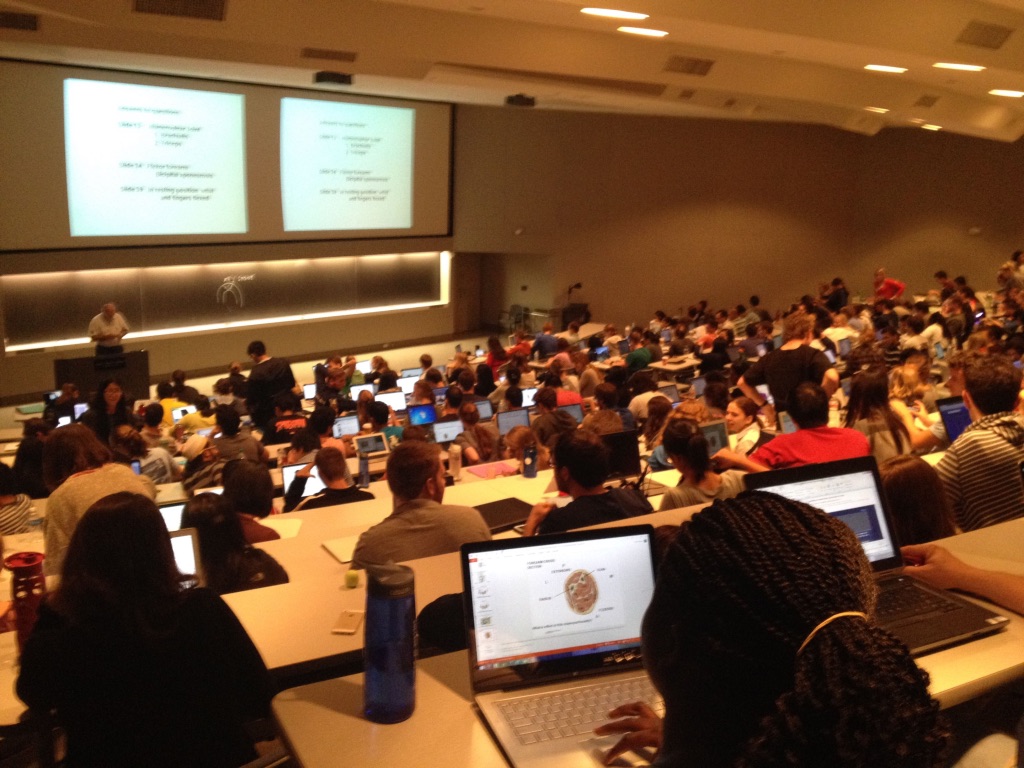
Fifth row from the back, left side of the auditorium (facing the lecturer), 4th seat from the aisle.
That’s where I sat in medical school.
Why do we pick a specific seat when we walk into a classroom, place of worship, or even a spin class (is it random or not?) … and why do we keep returning to that same seat? I’ve thought for a while that this phenomenon would be a fascinating project for an enterprising graduate student, but it turns out there have been studies done and there are three main explanations for this behavior.
Territoriality. The most powerful driver of why we choose and return to a specific seat is a very primitive one. Territoriality is not so much about claiming our rights to a specific place, but a way for a group to keep the peace. If this is my property and if you agree, we won’t fight about it.
Cognitive load. One less thing to decide means you can decrease a tiny bit of cognitive load.
Social interaction. There’s a plus to being surrounded by people you like (and who like you).

One more thing to ponder.
How we choose seats in an auditorium is interesting from a scientific point of view, but it’s also a powerful metaphor. We are drawn to a specific seat by a form of psychological “gravity”, which increases in strength the more times we sit there. There’s a similar form of “gravity” that draws us to our partner, our specialty choice, the city where we want to live. Most of the time this “gravity” grounds us and allows us to grow, but if and when it doesn’t, it helps to remember that you can choose to move to another seat.
“… being subject to physical gravity is mandatory, but being trapped by life gravity is optional.”
Sahil Bloom