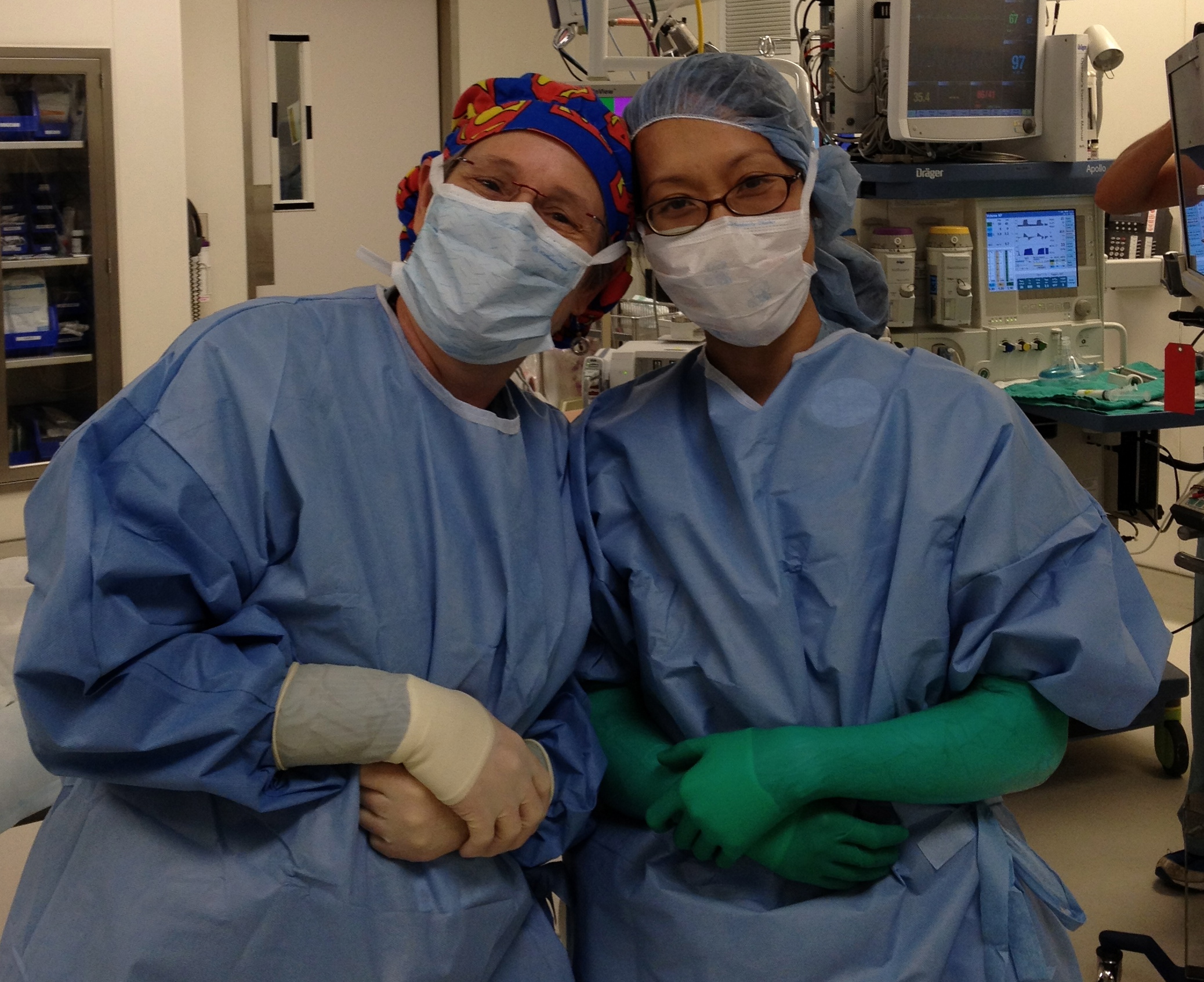
Match Week!

Like every doctor in the United States, I remember every detail of my “Match Day” …..The envelopes with our match results were placed in our mailboxes sometime during the morning. The entire class crowded in front of the mailboxes until the dean announced it was time. The doors were opened, envelopes were torn open and cheers erupted as we (finally) knew where we would be training!

Every medical student knows this process cold, but for their families and friends, here’s what this year’s graduating class went through to get to this moment:

Sometime last spring, students made their final specialty choice. Over the summer, they filled out the Electronic Residency Application Service  (ERAS) application, made sure letters of recommendation were submitted and met with their dean to provide information needed to complete their Medical School Performance Evaluation (MSPE).  From October through January, they travelled around the country visiting programs that offered them an interview. Last month, they ranked those programs in their order of preference and signed off on the final list. At the same time, the residency program directors submitted a list of the applicants they interviewed in their order of preference.

And then we all waited….

Today is the first day of “Match Week.” The National Resident Matching Program algorithm has been run with the goal of placing every graduating medical student in the United States into a residency training program. The system works well, with more than 95 percent of residents successfully matching to programs. For the few that don’t match, there is a second opportunity to match through the “SOAP” (Supplemental Offer and Acceptance Program), which will take place this week.

On Friday, our team from the Office of Student Affairs will take the envelopes containing the match results for our 189 graduates and staple them to two large boards. The boards, covered in paper, will be taken to a courtyard while students, family, faculty and friends gather. There will be congratulations from Dr. Klotman, the president of BCM, short speeches from the deans and comments from the class president. The class may (or may not) have a surprise as part of their celebration, like last year’s flash mob. And then, at 11 a.m. sharp, the class president will tear the paper from the paper from the boards, the envelopes will be opened…and the celebration really begins!


Congratulations to everyone matching this week and to the family, friends, faculty, Program Directors and Deans who make this possible!


This post appeared originially on BCM Momentum, the blog for Baylor College of Medicine.


Choosing Your Specialty

By January of the 3rd year of medical school, most medical students have had rotations in 3-6 medical specialties (out of the 145 specialities in medicine).  With what feels like really limited knowledge, they have to decide on their specialty and move forward.  They apply through the NRMP in the summer, interview at training programs in the fall, and in March go through “the match” to find out where they will train.

I started off believing that if you pay close attention, you will find the specialty that is “right” for you.  Cal Newport, in his book So Good They Can’t Ignore You: Why Skills Trump Passion in the Quest for Work You Love, calls this the “Passion Hypothesis”.  The “Passion Hypothesis” states that “the key to occupational happiness is to first figure out what you’re passionate about and then find a job that matches this passion”

I moved past the “passion hypothesis” as the sole way to choose a medical specialty when I realized that there were other variables like debt and family obligations that were important, too.

Here’s where I am now….

There may be a few people who have a lightening bolt hit them and know instantly what specialty they should go into, but they are few and far between.  Most people gravitate in a direction without a clear destination i.e. more medical than surgical, more procedural than not, more or less direct patient care, children vs. adults.  At some point they pick a specialty that is in their “zone” of interest…. and then they worry that they haven’t seen enough specialties or they may be making a bad choice.

“The more I studied the issue, the more I noticed that the passion hypothesis convinces people that somewhere there’s a magic “right” job waiting for them, and that if they find it, they’ll immediately recognize that this is the work they were meant to do. The problem, of course, is when they fail to find this certainty, bad things follow, such as chronic job-hopping and crippling self-doubt.” – Cal Newport

Here’s where it gets interesting.

What Cal Newport explains in his book parallels what I have seen in the happiest physicians I know, regardless of their specialty.  We have all seen the chief resident or seasoned attending light up when they learn something new at 2am, or when the complex diagnosis becomes clear with steady, deliberate investigation.   Cal Newport calls this the “craftsman mindset”.  It’s the process of devoting yourself to deliberate practice in order to master your field.  When you adopt the “craftsman mindset”, the passion follows.  Or, as Cal Newport summarizes it “working right trumps finding the right work.”

If you want to love what you do, abandon the passion mindset (“what can the world offer me?”) and instead adopt the craftsman mindset (“what can I offer the world?”) – Cal Newport

As I’ve thought more about it, I have also begun to wonder if picking a specialty isn’t somehow similar to how we choose the important relationships in our lives.  You may fall head over heels in love with another person or slowly realize you have met the person you want to spend you life with – but either way, the real relationship comes with time and “practice”.

One other thought, if you are currently struggling with your specialty choice.

There are no bad choices.

All the specialties in medicine are noble and important.  It’s a privilege to serve others… and we need all the specialties to be able to do it well.  Take the plunge.  Make the best choice you can and then devote yourself to being a craftsman in that field.

Cal Newport video from Authors@google.com

Photo credit

 “We are here to add what we can to life, not to get what we can from life.” – William Osler

Favorite Posts from 2012

Another year coming to an end!  Thank you to everyone who has read my posts this year.. I hope they have encouraged and supported you in your practice and studies.  Best wishes for a New Year of health, happiness, and joy to all!


Welcome to Hero School

Beepers and pagers and phones, oh my….

How to study for Step 1

Why sitting is bad for you

Residency is still school – how to study

Eating well (and setting a good example) despite your busy schedule

What to buy the doctor (or doctor in training) that has everything

What interns worry about

10 things to know before you start your first job

The hospital never sleeps and neither do the patients

Residency Interviews Part 1:  Your suitcase

Residency Interviews Part 2:  The flights

Residency Interviews Part 3:  The interview

Favorite posts from 2011

Favorite posts from 2010


Jack Dorsey’s Life Lessons

I just came across this post about Jack Dorsey’s life lessons.  A lot of wisdom here for everyone, but they ring especially true for those of us in medicine …

  1. Don’t be a jerk.
  2. Don’t take anyone for granted.
  3. Enjoy the moment.
  4. Be honest, always.
  5. Be humble.
  6. Be kind.
  7. Respect people’s wishes.
  8. Allow endings.
  9. Fail openly.
  10. Have an amazing haircut.


p.s.  For med students and residents who can’t afford (or don’t have time for) an amazing haircut,  #10 can be taken as a metaphor. .. 🙂


Gifts for Medical Students, Residents and Physicians

The holidays are quickly approaching and it’s time for my annual list of gift suggestions for medical students, residents and physicians.

  • Top of the list this year (for good reason) is the iPad mini.  I started rounding with an iPad several months ago and was instantly converted. The iPad mini is even better because it fits in my white coat pocket!  I am able to pull up my patient list on our EMR and access lab values and images as I’m walking from room to room.  I can also use it to show families the images, or pull up images from the web to help explain complicated concepts. For students (and all of us) an iPad gives you instant access to information to help in decision making. Most hospitals (if not all) have wi-fi, so the “starter” (i.e. least expensive) version is fine.  There is a big advantage to have 3G capability if you aren’t around wi-fi (just like your phone), but it will add a monthly fee.

Photo credit

  • For avid readers (of non-medical works), consider a Kindle, Nook, or other electronic reader.  (If you are considering an iPad, it can be used as a reader, so this would be redundant).  These devices can easily go into a backpack or call bag and make it easy to take 5-minute breaks from studying or work.

Photo credit

  • A new suitcase.  This is particularly important for medical students or residents who will be facing a round of residency or fellowship interviews in the in next year or two (but will be appreciated by anyone!)
  • A maid or housecleaning service once a week.  No one in medical school or residency has time to clean (or likes it)!  This will be one of the most appreciated gifts you’ve ever given someone. Along the same lines, consider a certificate for cleaning or doing laundry once a month (if you are inclined to do it yourself for them.)
  • Ties are usually required on the wards for men.  Good, professional ties will always be a welcome present.  Consider interesting medical ties like the human cell tie, x-ray and ortho themed ties or a human genome tie.    I’m not about to get into the (often heated) discussion about bow ties in medicine, but if you are considering a tie as a present, you might want to ask about bow ties before you buy. No matter what kind of tie you choose, pick one with a subtle theme that you have to look at twice. Don’t get a tie with a caduceus or that’s really blatant (stethoscopes, etc).

Photo credit

  • All students and residents need good, professional clothes – a gift certificate to a big department store is a good way to let them add to their wardrobe.

My personal favorite – it rolls away and you have to chase it!

  • Membership to a gym for a year.  Working out is important both for physical and mental health during medical training.  But – unless you know which gym is the closest to where they live (or most used by their friends), it might be better to create a homemade “gift certificate” and let them decide.
  • Anything to help promote more exercise.  A bicycle to commute to school or the hospital?  A gift box with exercise equipment?  Yoga classes? New running shoes?
  • Electronic speakers for their computer to listen to music while studying. Along the same lines, add in a subscription to Pandora One to create and listen to internet radio stations without commercials.
  • Appliances to help with fast, healthy cooking.  Top of my list would be a pressure cooker – either stovetop (which is what I use) or electric.  Another great choice for the money may be the Krups multicooker that is a rice cooker, steamer and slow cooker all in one.
  • A gift certificate to Whole Foods (or any grocery store that makes take out food), or a healthy prepared food service.  In Houston, we have My Fit Foods, Snap Kitchen, Diet Gourmet, Real Meals 365 and several other services.  These types of businesses exist in almost every major city and can be easily found on the internet.

Photo credit

Photo credit

Residency Interviews Part 3: The Actual Interview

You’ve made plans, arranged for your flight and hotel (or found alumni to stay with)…. and now you are ready for the actual interview!

Residency 1.jpg

Photo credit (and great advice on residency interviews from Loyola)

Learn about the program before you go.  Check out the program’s website.  Learn about the faculty – use google and PubMed to find out what they are interested in and what they have published.  Look up recent graduates to see where they went after their training.  Google the city, the hospitals and the medical school.   Use this information to plan questions to ask if your interviewer asks “Is there anything you’d like to ask?”


Photo credit

Keep track as you go. It’s really easy to have the programs blend together after 3 or 4 interviews.  Create a system to remember what you learned about the program and your overall impression.  During the day of the the interview, use a notebook to record details such as who interviewed you, answers to your questions, comments made by the residents, data about the program, etc.  After the interview (or during breaks) take time to write down your general impression.  You may want to also create a form or use a spreadsheet with some kind of ranking system to be able to compare programs later.


Photo credit (and more advice from mleresidencytips.com)

First impressions are important.  Be on time!  Smile, be confident, shake hands firmly.  Act like you are happy to be there.  Remember, you were selected from a large group of potential applicants to be there – they want to meet you!  Your clothes should be clean, pressed, and very professional.  We all joke about the “sea of black suits” but there is a reason everyone wears them.  It’s a fine line, though – you don’t want to look like you have on a uniform, so professional but stylish is ok.


Photo credit

Prepare for questions.  Getting ready for interviews is a great time for reflection about some “big questions” – what you want out of life, why you have chosen your specialty, etc.. Use a journal, your family or your friends to “think out loud”.  It’s important to think about what you will be asked, but don’t rehearse answers.  The issue of healthcare reform is bound to come up in your interviews.  Don’t worry about having a “right” answer to this question.  Share your opinion, but answer in a way that makes it clear you are appreciative of all the points of view in this complex issue.  A great resource is  The Healthcare Handbook, a book written by medical students about healthcare reform.

Enjoy it!  Yes, this is stressful and you are going to spend a lot of money and time, but this is a really special time.  You will be seeing new places and meeting famous physicians in your field. You will also be meeting a large number of future colleagues.  Don’t let the stress of interviewing obscure how unique and wonderful this process is!

Residency Interviews Part 2: The Flights

Unfortunately, the big airlines haven’t caught on to the market of residency applicants, so they don’t issue month passes or an equivalent (any airlines out there paying attention?).

Airline travel is by far the most expensive and most complicated part of arranging your interviews.  As a medical student embarking on the 2-3 month tour of somewhere between 8 and 20 programs, you are probably most concerned about saving money while keeping as much flexibility as possible.  Here’s some strategies and ideas to help:

Strategy 1:  If you live in ahub city, consider whether the long-term payoff for gathering miles on one airline will be worth it.  Right now it might cost more, but if it may make a difference a few years from now. If you get the credit card associated with the airline, there may be other benefits.  But, on the downside – the tickets will usually be more expensive. The other big downside to using most of the “hub” airlines is the relative lack of flexibility.  If you need to change tickets at the last minute, you’ll have a change fee that varies from $75 to $300.

 Strategy 2:  Go with the cheapest possible ticket through one of the third party providers like Travelocity, Expedia, Kayak , or Orbitz.  When you are booking these tickets, remember a lot of big cities have more than one airport.  When you do the math, a much cheaper ticket plus a rental car to drive an hour may put you ahead. Make sure you read the fine print on these “deals”.  This is probably best for the last minute ticket – there isn’t much flexibility if you have to change your flight.

Strategy 3:  Fly Southwest Airlines.

A plane sitting on the tarmac at an airport

Description automatically generated

I try not to endorse specific companies, but it is really clear to me, after talking to a lot of students, that there are some real advantages to flying Southwest Airlines for your residency interviews.  The biggest is that there are no change fees.  This means that you can book SW Airlines, check for dramatically cheaper fares elsewhere and then cancel the flight with no fees.  Since SW Airlines lets you keep a “bank” for these unused tickets, you can just apply it to the next trip (or to the well earned vacation at the end of the interview trail).  Check out their flight routesto see the cities they serve.

Try to organize your interviews geographically

Image result for flight itinerary

Photo credit

This isn’t always possible, but when it is, it will really save time and money.   On the East coast,don’t forget that the train is a good optionto get from city to city.  If you have more time and less money (and are interested in a great story you can tell) you might think about taking a bus between cities.

There are a lot of myths about early vs. late interviews.  In my experience, it doesn’t really matter.  Most programs take the time to pick the best candidates for their program, and they know that the last person they interview may be the perfect person for their program.

Despite what you wanted originally, you may find that you have been “forced” to book back to back interviews on opposite sides of the country.  There is nothing wrong with politely calling the program coordinators to explain the situation and ask if there might be any flexibility to move you to another date or put on you a waiting list.   Don’t push – remember, being rude to people who aren’t in charge is considered a huge red flag by most program directors. (Not to mention that it’s just not right.)

Build in flexibility for weather

/var/folders/b2/g7d7780s23g16ly_8hty_qqm0000gn/T/com.microsoft.Word/WebArchiveCopyPasteTempFiles/reagan_national_airport_snowstorm1.jpg

Photo credit

Residency interviews happen during the winter months.  If you are flying through or to the northern states, there is a real risk of flights being delayed or cancelled.   Don’t book tight connections and last minute arrivals.   Many programs have a social event the night before the actual interview day.  This is really important to attend (more on that later).  In order to make sure you arrive in time, try to book flights early in the day.  If there are weather delays, you will usually still have some options that let you get there in time.  If you make the early flight and arrive early – enjoy a new city that might be your home for the next 3-7 years!  Find a good museum, have a great lunch, go for a walk in a local park.

Avoid red-eye flights

Image result for sleeping flight

Photo credit

Yes, they are cheaper.  But – you will arrive crumpled, tired and not at your best.  This is not the time to cut corners.  Take a flight that gets you there rested, in time and able to be ready.

Other advice (from poormd.com, flyertalk.com, businessinsider.com)

  • Shop Tuesday at 3pm Eastern for the best prices
  • Prices stay low Tuesday, Wednesday and Thursday
  • Sale prices are removed from websites on late Thursday
  • Some flights are discounted at night, so check in the early morning
  • Airlines start discounting tickets 3.5 months before departure
  • Airline ticket prices dramatically increase 14 days before departure
  • Tuesday, Wednesday and Saturday are the cheapest days to travel
  • Monday, Friday and Sunday are the most expensive days to travel
  • Sign up for every frequent flier, frequent driver (rental car) and frequent sleeper program (hotels) you can
  • Follow airline Twitter accounts for last-minute deals
  • The first flight of the day is often the cheapest

Residency Interviews Part 1: Your Suitcase

It may seem kind of strange to write a post on just suitcases, but bear with me. For many medical students, the trips they will make for residency interviews will be their first real “professional” travel. If you haven’t traveled a lot, you don’t know everything that can go wrong…. So here are some rules to help you.

p.s. I’m doing this first in a series of blog posts on how to interview in case anyone needs to drop a hint that they need a new suitcase (and possibly new clothes) as an early holiday present.

Photo credit

Rule 1:  Try not to check your bags

Make it a goal that no matter where you go (or for how long ) you will always have what you need in a carry on suitcase. I went to Russia last year for two weeks – in the winter – with two carry-ons. Once you practice this, it’s not hard.

Why bother? What could go wrong? Just ask around. It won’t take long until you hear the story of someone who to ended up at an interview in New York when their bag was in Nebraska. Which brings me to rule 2.

Rule 2:  Assume you will be sitting next to the chairman of the department on the plane.

You don’t have to wear “interview clothes” on the plane but don’t have on anything that you would regret. It is really remarkable how many times you will end up sitting next to someone you will see the next day in your interview…. or someone who lives next door to your future program director.

Rule 3:  Have clothes in your small carry on bag that you could use in a pinch to interview. Ditto your toothbrush, razor, etc.

Even when you plan to carry on your suitcase, there are times you get on last and there is no room for your bag. Although it’s unlikely, it’s not impossible they will mess up and your bag isn’t there when you arrive. Think ahead. Pack your shirt, tie (or female equivalent) in a small travel “folder”. Put it in the outside pocket of your suitcase so you can grab it if your bag can’t be checked.

Rule 4:  Make a travel checklist and go over it before you leave to make sure you have everything. 

This is something you learn the first time you get to a meeting and you don’t have a jacket to put on in the cold room. I’ve put the outline of the one I use at the bottom of this post for you to modify for your use.

Photo credit

The next thing to do is make sure your suitcase is appropriate. Residency interviews are often a catalyst for buying a new suitcase. This is a good time to ask for an early holiday present if you need some help to buy a good one.

Options for suitcases

The regulations for suitcases vary a little by airline, but the take home message is get a suitcase that is 22 inches tall and not too wide if you plan to carry it on the plane. There are many other options, but the two companies that have really focused on good quality, lightweight carry-ons are TravelPro and Eagle Creek. TravelPro suitcases are used by pilots and flight attendants, which tells you a lot. I personally like Eagle Creek because of their packing system. There are other companies, too, so look around.

Photo credit

How to pack without wrinkles

One way is the Eagle Creek system, but there are others like wrapping your clothes around a bag with smaller items, rolling your clothes and using plastic covers, and packing little items around the bigger ones to avoid movement.

photo credit

How to get more things in the suitcase

Think of packing like a puzzle.  Put all your clothes on the bed to start with, then fill in spaces.  For example, pack your socks in your shoes.  Roll up workout clothes to pack in the edges.  But – unless you want wrinkles – don’t overpack.

Here’s a great video on how to pack more clothes with less wrinkles – seriously, watch this one.

Your “other” carry on bag

You’ll need to carry something with you when you interview for your papers and to collect the things they give you. This is a good time to carry something a little more professional than a back-pack. At a minimum, have a portfolio or a nice, small briefcase.

photo credit

For the plane, choose a carry on bag to carry your folio, the “emergency” interview clothes, whatever you are reading, your music, etc. These carry on bags, which often match the luggage, are designed to have as much room as possible but still fit under the seat.

photo credit

Travel Checklist (as promised)

Interview/meeting clothes

Suits/business wear x ___ days

Undergarments

Sweater/fleece (cold rooms?)

Heavy coat, scarf, gloves, hat?

Small purse/briefcase

Might need for some locations

? formal wear

? rain wear

? umbrella

? Passport

? Sunglasses

? cap

Toiletries

Toothbrush/toothpaste

Deodorant

Hair product

Hair brush

Razor etc

Sun screen?

? Extra glasses

? contacts

Workout

Gym wear

? Swimsuit/goggles

? exercise bands

Miscellaneous electronics

Computer/cord/plane power cord

Kindle/cord

Phone/charger

Pad/charger

(Rental car? – phone charger)

For the plane

water bottle

neck pillow

snacks

Professionalism and Compassion

The White Coat Ceremony marks the beginning of the journey into medicine for first year medical students.  In addition to the moment when second year students put the white coats on their new colleague, this night is also used to recognize role models. This year’s Ben and Margaret Love Foundation Bobby Alford Award for Academic Clinical Professionalism, given to the faculty who best demonstrated exemplary professionalism was awarded to Dr. Cynthia Peacock. The following is a transcript of the remarks Dr. Peacock made to the first year class.

Peacockcynthia

Becoming a physician was a life long dream of mine.  I grew up, one of three children, my father a blue-collar worker for the auto industry and my mother the daughter of a coal miner. No one in my family had made it to college, let alone medical school.

My first exposure to medicine was during the second grade when I read the story of Elizabeth Blackwell, the first woman in the US to receive a medical degree.  I was hooked.  Unfortunately, my family didn’t have the resources to send me to college, so I attended a hospital nursing program.  In the 70’s hospitals could train RNs.  They got their workforce by having the graduates pay them back in time for their training.  My journey as a nurse included working in the hospital setting, home care nursing and then public health nursing.  Moving to Texas found me working at TCH as a diabetes nurse educator.  At that time you could actually park in front of the hospital to go to work!  That job exposed me to academic medicine and I knew then that I had to fulfill my dream of being a physician.

So, in 1991, I crossed the threshold of Baylor College of Medicine to be one of the more senior medical students that has attended the school. I have never regretted the decision and I would do it all over again in a heart beat.  You will not regret your choice either.  For me it has been a continuous learning process.  I still look forward to morning report and the challenges of the differential diagnosis.

My white coat was given to me by the Baylor bookstore clerk after I handed her a check.   The young clerk recognized that, just like you, I was crossing another threshold closer to practicing medicine and exclaimed, “Wow you are going to be a doctor!”  You will always remember those first few times that you are recognized and congratulated on becoming a physician.  It makes you feel proud, distinguished, important, and accomplished.  Congratulate yourself, for all of your hard work that has gotten you here, you are now ready to don a white coat and take care of patients.  All these years later, I still have strangers impressed to find out that I am a doctor – but now, too, I hear stories of bad encounters with physicians or awful stays in the hospital.

Unfortunately you may see some doctors behave badly as you move through your ward rotations. Why?  Is it because some physicians see medicine as an individual effort and not a team sport?  Has the ego been groomed such that it gets in the way of good medicine?  Is it our quest to be the best so focused on medical knowledge prowess that we forget to practice compassionate and safe medicine?  The powerful existence of a disruptive physician has even become well represented in the iconic TV star Gregory House MD.

I am happy to report that Dr. House has hung up his stethoscope but unfortunately he will still exist in reruns.

Patients should not have to choose between a physician who is a skilled diagnostician or a physician who understands teamwork and how to comfort with words. We need physicians who are smart, well-trained, innovative, who can focused on delivering the best health care to patients, and who can play well with others.  We lose credibility when doctors choose to treat a diagnosis and not the patient.

I believe your generation, the next generation of doctors, will move away from the Dr. House phenomenon.  I see your generation as a generation that is socially conscious, has no borders, and identifies itself as citizens of the world.  Many of you already advocate for better global health. You are engaged, used to working in teams, and believe in group cohesiveness.  You are tolerant, less prejudiced, and believe more than ever in equality.  I applaud you. Your generation is one of the many reasons that I continue to teach.

I was recently in Washington DC for an advocacy work group meeting.  I sat next to a woman who happened to have a significant physical disability and so far has lived a rich life including having two beautiful children.  I asked her about her encounters with the health care system. Her quote to me, knowing that I was a doctor, was poignant.  “I have never been able to get from the health care system what I need by working with doctors, I work around them.”  She reaffirmed to me that we have a long way to go to improve our image and our outcomes, something I believe will challenge every one of you – but also something that every one of you will work to change.

When you put on that white coat today, ask yourself why are you wearing it?  Is it to be part of a comprehensive health care team who will deliver excellent patient centered health care?  Care that is rooted in compassion and humility? Hopefully it’s not to emulate the disruptive “my way or the highway,” Dr. House.

Because of the work that I do, I believe the ultimate lesson in compassion and humility is to care for the patient who is the most vulnerable, who has been marginalized in society and has been forgotten – and then be grateful for that encounter.  Mother Teresa once said, “Being unwanted, unloved, uncared for, forgotten by everybody, I think that is a much greater hunger, a much greater poverty than the person who has nothing to eat.  Your lessons in delivering compassionate medicine are soon to come during the many ward months that you have ahead of you.

I wish each and every one of you the professional success to be game changers by engaging your patients to help you deliver the best health care possible.  If you want to know what iconic figure you should relate to instead of Dr. House, turn to your parents or your grandparents and ask them about Marcus Welby MD. When I was young, he helped shape a generation of caring physicians, one of them may have just been me as I watched him on a black and white TV screen.  BTW you can Google him and he has his own Wikipedia site.

Good Luck to all of you and I hope to meet you personally during your medicine ward month.

Again thank you very much for this recognition.

Welcome to Hero School

It’s a real honor to be asked to speak to you today… but deciding on a topic wasn’t easy.  I thought about giving you some tips on how to succeed in medical school… or how to study… or how to not be worried about how you will do… but none of that seemed right for the occasion.

So, because this is your convocation, I decided to start by looking up the word.

“Convocation” comes  from the Greek for “calling together”.  It is defined as a group of people formally assembled for a special purpose.

Human beings mark important transitions with ceremonies like this one.  We are familiar with these kinds of ceremonies in our families – ceremonies like baptisms, bar mitvahs, weddings and graduations.  The ceremony today is no different because it, too, marks an important transition.

We are formally assembled here for the special purpose of welcoming you and acknowledging that you are on the threshold of an important journey.

Photo credit

Several years ago Body Worlds came to Houston.   For those that haven’t seen it, Body Worlds is a beautiful museum exhibition of human bodies, preserved using a special technique called plastination.  The exhibit opened in the fall, about the time I give some of the lectures in embryology.  It’s a time, as you will soon see, that the first year students are deeply enmeshed in the study of anatomy.  We discussed the exhibit in class and decided to arrange a field trip to the museum.

As I walked through the exhibit with the students, there were two things that occurred to me.

First, I had never been in a museum exhibit where everyone, from small children to the elderly, behaved with such reverence and awe.  There was no giggling or nervous laughter.  People were speaking in whispers, parents were holding children and pointing to the exhibits, showing them the beauty of the human body.

The second thing I realized was that seeing this exhibit affected me in a way I hadn’t expected.  As I talked to other physicians who had seen the exhibit I realized I wasn’t alone.  Prior to this exhibit, only physicians experienced the awe of dissection and this level of understanding of the human body.  It wasn’t that we didn’t want other people to see it …. but we all felt that something special to our world, which made us somehow a little different from other people, was now being shared with everyone.

Photo credit

There are many professions that are noble.  There are many graduate programs that are difficult.  But it’s not the same… there is something different about the journey to become a physician.

Photo credit

In every hero story ever told there is a predictable set of events.  This set of events, the hero cycle, was beautifully explained by Joseph Campbell, in his book The Hero With a Thousand Faces.

The hero cycle always starts with a need.  The community recognizes that something essential is missing and appeals to the hero to set out to find it.

The person chosen initially balks at idea.  “Who, me??? There’s nothing special about me.  Surely there is someone else who would be better. “   This is followed by the arrival of a mentor or friend who provides perspective and convinces the hero that he or she really is able.

And so, the hero takes on the challenge and leaves.

By necessity, this means passing from the known to the unknown.  Campbell describes this phase of the hero cycle as entering what he calls “a strange realm with new and different rules.”

As the hero enters this strange realm there are obstacles that have to be overcome, battles to be fought, mountains to be climbed.   There is always some self-sacrifice and nearly always some danger.  There are repeated tests. The hero often fails, but gets back up and starts again.

It’s also an important part of the hero cycle that the hero doesn’t do this alone.  There are guides and mentors along the way to give direction and provide instruction and tools that are needed to succeed.

Eventually, the hero overcomes the obstacles and obtains the object, knowledge or key that was missing.

The last, and most important part of the hero cycle is that the hero must then return back to the community with the treasure they have obtained.

I suspect the analogy didn’t escape you.

Somewhere you all learned of the need to relieve human suffering and heal disease.  All of you had second thoughts and wondered if you were good enough or strong enough to do this.  Most of you had a mentor or friend who convinced you that you not only could do it, but you should do it.

As a result, you are sitting here today ready to cross the threshold from the known to the unknown and enter this “realm with new and different rules”.

You will face tests and difficulties and you will, at times fail.  But I promise you, you will have mentors to guide you and give you what you need to succeed.

And… you will succeed.  Unlike the previous steps in your education, this system is designed to make sure you all make it through this journey.

And finally, like all heroes, you will take what you have learned back to your community to serve them.

Welcome to Baylor College of Medicine.

Welcome to hero school.

The faculty address I gave at the Baylor College of Medicine convocation August, 2016.