Portion Distortion

Most operating room lounges provide food for the surgeons, residents and medical students.  In our operating room it’s usually bagels and muffins.  The muffins don’t seem that big… until you realize they are at least 2 servings each!  Check out this picture from fooducate.com.

Knowledge is power when it comes to your diet – particularly if you are trying to lose weight (or at least not gain weight).  One of the biggest eye openers for people struggling with weight is to learn about the “portion distortion” that has occurred over the last decade or two.   This information will not only help you counsel patients, it will help you “walk the walk” by taking care of your own nutrition.   Weight gain is extremely common during clinical rotations and residency.  If you are interested in losing weight, or at least preventing weight gain during residency, one of the first steps is getting a grasp on normal serving sizes, food groups and how many servings of each food group you should eat.

Here’s a good list of how to “eyeball” what constitutes a single serving (from Webmd.com)

  • Vegetables or fruit is about the size of your fist.
  • Pasta is about the size of one scoop of ice cream.
  • Meat, fish, or poultry is the size of a deck of cards or the size of your palm (minus the fingers).
  • Snacks such as pretzels and chips is about the size of a cupped handful.
  • Apple is the size of a baseball.
  • Potato is the size of a computer mouse.
  • Bagel is the size of a hockey puck.
  • Pancake is the size of a CD.
  • Steamed rice is the size of a cupcake wrapper.
  • Cheese is the size of a pair of dice or the size of your whole thumb (from the tip to the base).

As a guide, a healthy diet should have (roughly) 8-10 servings of fruits and vegetable, 6 servings of grains or starches,  2-3 servings of milk or milk products and 1-2 servings of meat or other vegetable protein in a day.

Photo credit


What Vitamins Should You Take?

There is very little doubt that if we eat the diet we were designed to eat and spend adequate time in the sun that we will get most if not all the nutrients we need.   That’s the ideal, but not the reality for a lot of us.  I was recently advised by a group of physicians who are experts in the area that it is reasonable, and probably preferable, for adults to take a low dose multi-vitamin, 1000 units of Vitamin D and 1000 mg of fish oil every day.  I’m certainly not an expert, so you may want to take the following with a grain of salt, but here’s my take on this advice.

Multivitamins

Only 3-4% of Americans reach the DGA (Dietary Guidelines for Americans).  The ADA (American Dietetic Association) conclusions on the subject of multivitamins are basically a) it’s always preferable to get your vitamins from real food and b) given that it doesn’t happen for most people, multi-vitamins can bridge this nutrient gap.  (Marra MV, Boyar AP, J Am Det Assoc 109:2073, 2009)  Don’t fool yourself into thinking that taking a vitamin makes up for not eating right – your best bet is still the marvelous combination of vitamins and minerals found in plant foods.

The NIH consensus statement from 2006 on the subject  of multivitamin/mineral supplements (MVMs) states “the present evidence is insufficient to recommend either for or against the use of MVMs by the American public to prevent chronic disease.”

Where does it leave us?  As Michael Pollan sums it up, the best strategy is to “Eat food, not too much, mostly plants”.  It’s clear that it’s stupid to take high dose multivitamins because of the potential side effects.  (unless you are treating a known deficit). On the other hand, a normal (low) dose multivitamin is probably reasonable to help bridge some nutrient gaps – even though there are no conclusive data that say it will make a difference in preventing disease.

Vitamin D

If you google “Vitamin D” you get over 13 million hits.  A PubMed search gives you over 49,000 references.   Anyone in medicine (and everyone else as well) has learned by now that Vitamin D is a big deal.  It’s looking more and more like most of us are vitamin D deficient and that being deficient in Vitamin D is bad for you. http://www.vitamindcouncil.org/

The bottom line on this one is that you need to talk to your own doctor (and, yes, you should have one!) about checking your Vitamin D level.  30ng/ml is minimum, but some physicians feel that levels should be kept over 50 or 60ng/ml to optimally decrease the risk of some cancers and other pathologies. 1000IU is probably going to be the new recommended daily dose in the United States.  This one seems pretty straight forward:  a) get your level checked and b) it’s ok to take 1000IU per day.

Fish oil

Fish oil is a concentrated source of omega 3 fatty acids i.e. eicosapentaenoic acid (EPA), and docosahexaenoic acid (DHA).  Most Western diets are heavy in omega-6 fatty acids, which decreases the ratio of omega-3 to omega-6 fatty acid.  It’s this change in ratio that is thought to increase the inflammatory response.  Supplementing your diet with omega-3 fatty acids changes the balance back to a more favorable (less inflammatory) ratio.  There are good data that achieving this favorable balance in omega-3:omega-6 fatty acids can help prevent (and even treat) cardiovascular disease and may be beneficial in a variety of other inflammatory diseases as well.

So, it makes sense to work on changing this ratio by increasing your omega-3 fatty acid intake.  You can do this by eating around 12 ounces of oily fish (sardines, mackeral, salmon) a week, which is the best option if it’s possible.  For some people that’s not realistic, so the supplement may be a reasonable alternative.   There is one caveat – fish oil supplements can be contaminated, so it’s worth knowing the company (and not just buying the cheapest brand).  Other than the risk of contaminants, there’s not much downside to taking fish oil in a reasonable amount.  1000 mg a day (on days you don’t eat fish) is what is usually recommended.

Recipes for Medical Students and Residents

I love when I find new websites that provide great “pizza rule” recipes (recipes that take less time to prepare than it takes to order a pizza).  I just discovered Keep Your Diet Real, a site run by Corrine E. Fischer, MS, RD, LDN.  She’s not only a dietician, but she’s a professional food photographer, so the site is beautiful.  Her recipes are healthy, straight-forward and are great for the busy life of docs, medical students and residents.

Ten Healthy Breakfasts in Ten Minutes or LessSpring Roll SoupWheatberry and Edamame Salad


Recipes for Medical Students and Residents

In keeping with the “pizza rule” (everything we cook needs to take less time than it takes to order a pizza) and the hot weather…. Here’s some new recipes from a site I just discovered www.danispies.com.

Some of you don’t cook or, put more positively, are learning how to cook.   Dani Spies not only has fabulous, healthy and easy recipes but has also posted “Cooking 101” videos like this one called Egg 101.  These are a great resource if you are trying to learn the basics.

Here’s three recipes that meet the “pizza rule” and will make great dinners or on call lunches.

Chunky Greek Salad Topped with Sardines

Sardines-Salad

Clean and Simple Asparagus Pasta

Asparagus-Pasta

So, so Simple Shrimp Tacos

shrimp_taco_1_photo3

How to Make Changes for Health

We all know the basics about how to be healthier and how much that can influence our risk of cardiovascular (and other) disease in the future.  Knowing is easy.  Changing is hard.

There is no doctor who wants to be fat, smoke, or eat poorly.  If you smoke, don’t exercise, eat poorly or are significantly overweight you already know

a) you have a higher risk of premature death and, worse, disablility

b) you’ll have decreased energy and generally feel worse than people who are fit

c) it’s going to be a lot harder to counsel patients about what to do for their health

It would be fantastic if we were all issued a magic wand as part of our medical supplies.  It would be so much easier to make changes in our lives and our patients lives by a wave of a magic wand.  There is no magic wand, but we (and our patients) can make changes using what is known about behaviors and changing behaviors.

The American Heart Association has recently published a review of the literature and recommendations on how to sustain changes that improve health.  I’ve put the link below to the entire article but here’s my summary (and slight translation) of what they found worked to change behaviors:

  1. Set goals
  2. Use a system to monitor the change
  3. Create or discover a support system you can use on a frequent and regular basis
  4. Establish a way to get regular feedback on your progress
  5. Believe you can do it (and work on strengthening this belief)
  6. Reward yourself when goals are achieved
  7. Find role models for your new behavior and spend time with them (or what they have written)
  8. Brainstorm to use your innate ability to problem solve.  Don’t accept “I can’t”
    or “never” in your vocabulary of change – find creative ways to move past these obstacles.
  9. Learn from the times you fail (which is normal). ‘Try again. Fail again. Fail better.’  Samuel Beckett

Interventions to Promote Physical Activity and Dietary Lifestyle Changes for Cardiovascular Risk Factor Reduction in Adults. A Scientific Statement From the American Heart Association Artinian et al, Circulation. 2010;122:406-441

Do’s and Don’ts of Goal Setting from www.sparkpeople.com

Elements of Change from zenhabits.net

Tour de France Rice Cakes

I’m addicted to watching the Tour de France.  It’s an amazing athletic event, and the images (at least on HD) are simple astonishing.

There was a really great “side story” on tonight’s Tour broadcast about Dr. Allen Lim, a PhD sports physiologist.  The segment was specifically about his rice cakes – a real food equivalent of a commercial energy bar used by the Radio Shack riders.   http://dailyburn.com/recipes/dr_allen_lim_rice_cakes.

IMG_1510

I haven’t made these yet, but I’m pretty certain they are going to be really good and – more importantly – a great call/energy food for busy students and residents.  He has some other recipes that would probably be good on call energy food, too

Here’s a video on how to make these rice cakes.   http://www.cycle-ops.com/videos.html?id=50

Photo from http://bikefleet.blogspot.com/2009/03/allen-lims-rice-cakes.html

Salads

For medical students in basic sciences, a salad can be a great “energy” lunch that lets you stay alert in class.  For students on rotations and residents, a fresh salad is a great lunch and an even better middle of the night meal when you are on call.

The concept couldn’t be easier – put lettuce, spinach, or the greens of your choice in a big container.  Top with protein, cheese, veggies, nuts and/or fruit.  If you don’t care what it looks like, it’s also really easy to dump it all in a big zip-lock bag.  When it’s time to eat, pour the salad dressing in the bag with the salad, shake, and then serve yourself from the bag.

Protein:  Beans from a can, beans you make yourself with a crockpot or pressure cooker (which saves money and avoid excess salt and additives), canned tuna, cooked chicken from the deli, prepackaged meats (look at the labels to make sure you aren’t getting a lot of additives you don’t want), shrimp, etc.

Cheese:  Shredded cheddar, Monterey jack or Mexican cheese (reduced fat or regular), feta, goat cheese, thin slices of parmesan

Veggies:  Any leftover in your refrigerator!  Another good idea for this is to buy what you need for a mirepoix when you do your once a week shopping.  A mirepoix is the basis of  French cooking and is one part onions, one part carrots, and one part celery.  The Cajun trinity is similar but substitutes green bell pepper for the carrots.  If you buy the ingredients for a mirepox (or trinity) and chop it up on the weekend, you can use handfuls in salads, omelets, soups, etc all week.  (You can add other things, too, like mushrooms, red bell pepper, etc – anything that can be eaten raw).  If its a really busy week and you don’t have time to chop up vegetables, you can used canned green beans, corn, beets… whatever vegetables you like.

Nuts and/or fruits: Adding some dried fruits and nuts, sunflower seeds, etc, will add some extra nutrition.  Fresh fruits like blueberries, strawberries, sliced peaches are delicious in salads.  Canned fruits, especially mandarin oranges, are good, too.

Salad dressing. Don’t put the dressing on the salad until you are ready to eat.  (The French say it “cooks” the salad… but the result in any language is soggy salad.) My favorite dressing is a homemade vinaigrette.  Start with vinegar (red wine, white wine, sherry or balsalmic), a clove of diced (not crushed) garlic, a healthy teaspoon of good Dijon style mustard, salt and pepper.  Stir these all together until the salt is dissolved and the mustard is blended with the vinegar.  Add olive oil while you are stirring (or shake it up at the end.)  The classic ratio is 1 part vinegar to 2 parts oil, but you can add less oil to taste.  I usually squeeze a little lemon juice in, too.

The easiest thing by far is bottled salad dressings.  Be careful about calories (if you are watching your weight).  If you take salads to work regularly, you may want to leave the bottle there (unless the food snatchers raid your refrigerator on a regular basis).

http://allrecipes.com/Recipes/Salad/Green-Salads/Top.aspx

http://hubpages.com/hub/Favorite-Salad-Toppings-Lessons-From-Restaurant-Salad-Bars

http://www.fitsugar.com/Nutritional-Information-Salad-Toppings-7598444

Recipes for Medical Students and Residents: Salsa for Beginners

I made a great dinner last night that took about 5 minutes to cook – absolutely within the “pizza rule” for medical students and residents (i.e. a recipe should take less time to cook than it takes to order a pizza).  It’s the kind of recipe I wish I’d had when I was a student/resident, so I thought I’d share it.  I know that many of you are not from Texas (or another state with a tradition that includes salsas), so here’s the basic concept.

1.  Buy tortillas (I like corn the best, but flour or whole wheat flour tortillas are fine).

2.  Choose a protein.  I prefer fish or shrimp (because they are so fast) but any meat will work.  An even easier alternative  is to buy a roasted chicken (or cooked beef or pork).   You can also use beans or tofu if you are vegetarian.

3.  Make a fresh salsa (see below)

When it’s time to eat:  Cook or heat up the meat (or alternate protein), heat up the tortillas (1 minute in the microwave).  Put the meat (or alternate protein) into the tortillas and top with the salsa. These soft tacos can make a compete meal, but serve a side of vegetables if you want … it’s a great dinner (and lunch the next day at work).

Salsas are best when you make them yourself.  You can buy good salsa in a jar but it’s never as good (or as healthy) as the ones you make.  Leftover fresh salsa can be used as a dip for tortilla chips – as is (diced) or blended.

The salsa I made last night was easy:  1 mango, 1 green tomato, red onion, cilantro, a jalapeno pepper – all diced fine and then mixed with lime juice and seasoned with salt and pepper.   All traditional fresh salsas are a variation on this same theme – tomato with or without fruit, cilantro, onion and peppers to taste.  On of the best examples is “Pico de gallo” (shown below), which is one of the most classic salsas – red tomato, onion, cilantro and jalepeno with lime juice and salt.  http://en.wikipedia.org/wiki/Pico_de_gallo

You can be creative!  Mix and match from this list or check out some of the recipe links  below

  • Vegetables:  tomato, tomatillo,bell peppers, corn, cucumber
  • Fruit:  melon, watermelon, peach, pear, mango, nectarine, avocado
  • Onion:  white onion, yellow onion, green onions, garlic
  • Chiles:  jalepeno, serrano, chipotle
  • Spices:  oregano, parsley, cilantro

Links to salsa recipes:

http://allrecipes.com/Recipes/Appetizers-and-Snacks/Dips-and-Spreads/Salsa/Top.aspx

http://www.salsa-recipes.com/index.html

http://www.fresh-salsa-recipe.com/

Getting Ready for Your Internship

Everyone who has ever graduated from medical school worries that they aren’t ready.  If you aren’t a little worried, there is something wrong.  It’s a big transition!  But, that being said, I can reassure you that first, you are in good company; every new graduate feels the same way!  Second, your attendings and senior residents understand.  Not only did they feel the same way, but they’ve been through it a few times before with other interns.  They are there to teach you and help you learn your field.  It’s not always going to be easy, but you are never going to be completely alone as an intern – there will always be someone there to help.

Many of you will have the feeling that you need to review everything from medical school in the next 2 weeks, and read the entire textbook in your field after that.  STOP!  It won’t help and it will drive you crazy!  Here’s what I recommend instead:

1.  Develop a new exercise routine that you can stick with when you get really crunched for time.  Figure out something you can do for 20 minutes every day consistently.  After you move in to your new place (assuming you are moving to a new town), check out the gyms near work and/or your home.  Joining a gym should be a top priority.  But – you may want to wait until you’ve been at work for a few weeks.  There may be a preferred gym for most of the residents, and that’s the one you should join.

2.  Think about how you are going to eat well as an intern…. which is VERY hard.  Find the good grocery stores, prepared food places, take out (healthy) restaurants that are near where you work and/or live.  Read about nutrition, ask your family for favorite recipes.  Take a class or two to learn easy cooking techniques.

3.  Do spend a little time thinking about your new role.  You are going to have to master your field in a short time (it sounds long now… but just wait).  This is a good time to go through your medical school notes and take out the ones you know you’ll use during your internship.  Don’t read or study, just organize them so you can find them again when you need them.  If you know which textbook is the most recommended in your field, this is a good time to get it.  Don’t study … just skim through it.  You are NOT expected to know it yet, so don’t let this scare you.  Instead, take some time to marvel at all the amazing things you are going to learn, and the people you are going to be able to help with that knowledge and skill.

4.  Take a vacation.  I’m serious.  Spend most of this month visiting family, reading novels and hanging out on the beach.  Read poetry, call friends.  You’ve earned it!

Farmer’s Markets

I just got back from my weekly (when I’m not on call) trip to the farmer’s market.    I’m going to try to convince you why buying food at a farmer’s market should be a regular habit for any medical student or resident (although I think it applies to everyone else, too).

What the heck is a farmer’s market?

In general, farmer’s markets are open air markets where local farmers bring their food to sell. They usually take place once a week (often on Saturdays).  If you want to know more about farmer’s markets, check out the website of Urban Harvest, which is responsible for the market I go to in Houston. 

How do I find out where they are?

The best way is to search the internet for your city.  Local harvest is a web site that covers most farmer’s markets, but there may be smaller (and possibly more convenient) markets in your city that aren’t listed here:   http://www.localharvest.org/farmers-markets/

If it doesn’t look like there is a farmer’s market near you, another option is to buy a share in a CSA (Community Supported Agriculture).  If you buy into a CSA you will pick up a fairly large quantity (usually a good sized box) of whatever is being grown at the time – usually once a week.   If you can find a group of friends to split this with, its a great option  http://www.localharvest.org/csa/

What should I do to look cool if I’ve never been to a farmer’s market before?

Bring your own bags. This isn’t an absolute requirement, but it’s much cooler than relying on the vendors.  They often have small paper or plastic bags, but it will be easier if you bring your own.  In the big picture, you should do this no matter where you shop (good environmental karma!).  Fortunately, the “give away” bags at medical meetings are perfect for this!   A lot of grocery stores sell reusable shopping bags or you can find them on the internet.

Bring cash. Some vendors may take credit cards but don’t count on it.

Does it cost more?

Yes (but not a lot more).  But don’t let that stop you!  Value isn’t always measured by money – even if you are poor student or resident.  It’s not going to be a lot more and it’s completely worth it. (see below)

If it costs more and it takes more time, why should I bother?

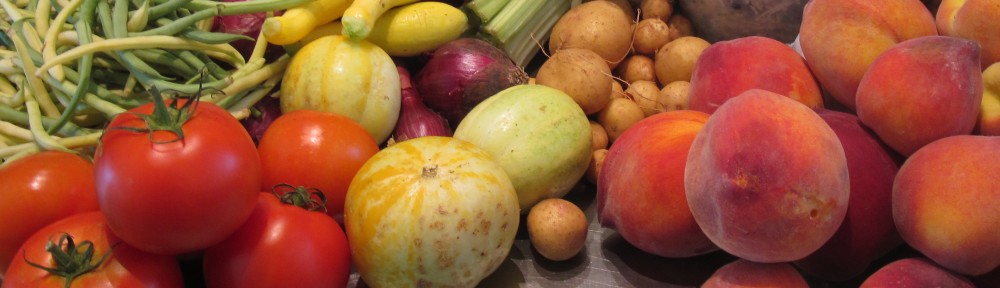
The food absolutely and unequivocally tastes better.  The first time I bought potatoes at a farmer’s market was a revelation for me.  I knew that tomatoes and peaches would be better, but I had no idea that a potato would be in the same category.  The produce you buy at a farmer’s market was in the ground (usually) less than 24 hours ago.  It is incredible how much better it tastes!

The food is probably better for you.  Most farmer’s markets sell organic or near organic food.  There’s good data that organic plants are higher in many nutrients and it’s intuitively obvious that avoiding pesticide residues on your food should be beneficial.

You’ll eat with the seasons. There are no data that this is better for you, but it really makes sense.  If nothing else, it will taste better and you’ll be helping the environment by not eating things that traveled thousands of miles to get to you.

You’ll get to know the people growing your food. This sounds trivial, but it’s really cool.  You can ask them about how they grow the food, and you’ll hear stories about what’s happening on their farms.  One of my favorite vendors, Blue Heron Farm, pictures brings pictures (usually baby goats) which she also shares on Twitter and Facebook. There is also something intangible (but cool) in knowing that someone (not just a big corporation) cares enough to grow your food.

The farmer’s market is a once a week “sanity break”. You are outside, surrounded by beautiful food and happy people.  At the market I usually go to, there is always some live music, too.  It’s a great experience and, combined with the fact that you are doing something healthy for yourself, it’s a once a week mood changer!