Setting an Example: Eating Well

At some point all physicians give advice to their patients about dietary changes to improve health.  Let’s be honest.  We don’t do so well ourselves.  The “classic” fare of residency (donuts or muffins for breakfast, pizza for lunch, and some fast food on the way home) doesn’t really give you much credibility when you are talking to patients.

doc-hamburger-copy-copy

Photo credit

No medical student or resident is going to be able to eat perfectly, exercise regularly, and do all the other things that lead to a healthier lifestyle.  But every little change you make now will pay off.  You’ll feel better and have more energy.  You’ll be less likely to gain weight.  And – you’ll be able to talk to patients  – with specific examples – about what they can do to improve their own health.

In the crazy busy life of medical school and residency, it’s hard, if not impossible, to spend time and energy to shop, cook and eat really well.  It doesn’t get much better once you start your practice.  What is possible, no matter how busy you are,  is to realize that there are some simple things you can do to improve what you are doing now.

My top 10 tips for better eating in medical school and residency

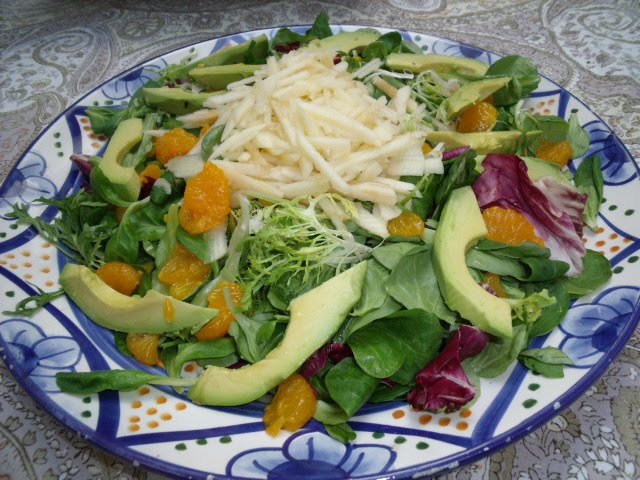
1.  Eat fruits or vegetables with every meal or snack.  This may mean buying a bag of apples once a week and just eating apples twice a day (boring but effective).  Even better, follow the “USDA plate” recommendation – ½ fruit and vegetable, 1/4 protein 1/4 grain/complex carb on every plate of food you eat.

Photo credit

2. Eat breakfast.  If you are up too early to really eat, make a smoothie the night before to put on the blender when you wake up and take it with you in the car.  My personal favorite:  ½ cup plain Greek yogurt, ½-1 cup of fruit, ¼ cup egg whites (pasteurized, in a carton), 1-2 Tblsp honey.

cereal-300x234

3.  Eat more eggs (especially egg whites).  Eggs have gotten a bad rap, but they are very cheap and very easy to cook.  Cook hard boiled eggs on the weekend to eat for breakfast or snacks during the week.  Make omelets or huevos ranchero for dinner.  Go ahead and spend a little more to get cage-free eggs to do the right thing.

huevos-rancheros

Photo credit

4. Don’t skip meals.  Even on the worst call day you can keep a meal replacement bar or two in your pocket.

Kind-Bars-300x289

Photo credit

5.  Pack the food you need for call days the night before so it’s ready to go in the morning.

call-day-food

6.  Chop up a bunch of veggies on the weekend to throw in salads, soups or in wraps.

7.  Cook or buy one good meal on the weekend that will last for part of the week.   A good stew or soup?  Lasagna?  Look for good recipes on the web.  If you really don’t want to cook, find a healthy caterer or restaurant to buy it instead.

Vegetable-Chili-500-300x199

Photo credit

8.  Take a good sandwich to work for one or more meals.  Peanut butter on whole wheat may be monotonous, but a) it doesn’t have to be refrigerated and b) it beats McDonald’s.

Photo credit

9.  Free pizza isn’t really free.  It’s incredibly high calorie and the ingredients in the cheap kind aren’t good for you.  (Same for take out Chinese, donuts, muffins, etc)

Photo credit

10.  Skip the liquid calories.  Cokes may give you an energy boost, but you are better off with real calories from a piece of fruit, a sandwich and some coffee or tea.  (but learn how to use caffeine effectively)

coke-sugar-copy-copy

Photo credit

Zucchini

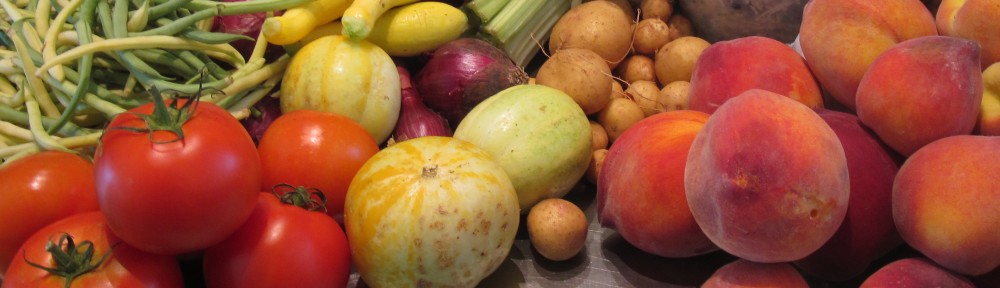
It’s summer and there are too many zucchinis (and yellow squash, tomatoes and other fabulous summer vegetables). Even in seasons other than summer, zucchini is always around and makes for really good eating!

Photo credit

Cooking zucchini takes 5 minutes – just sauté them with a little olive oil, salt and pepper and whatever herb you like (tarragon, thyme, basil).  You can add in a little garlic if you’d like or (like the photo and recipe below) some almonds.  Leftovers are great in salads or omelets, so cook more than you need for one meal.

Zucchini with almonds from Smitten Kitchen

One of my all time favorite summer foods is ratatouille, a great food that takes advantage of the bounty of the summer harvest.  It’s easy to make and incredibly delicious.  I suggest you make a big batch – It gets better with time  (at least a few days).  When you get tired of eating it plain you can put it over pasta, eat it cold (particularly good with cottage cheese), or mix it with a grain for a hot meal or salad.

Ratatouille-vegetables-006

Ratatouille recipe

turkey-stuffed-zucchini

Turkey stuffed zucchini from Skinnytaste.com

TomatoZucchiniTart

Tomato Zucchini Tart

zucchini-cups-400x400-kalynskitchen

Zucchini cups (and 20 more zucchini recipes from Kalyn’s Kitchen)

Fast, Easy Recipes: Kalyn’s Kitchen

I’m always looking for good websites for recipes that are healthy, simple and easy to make.  In other words, the kind of food that makes it easy to avoid eating fast food when you are on call.   Kalyn’s Kitchen is a fabulous website for delicious, healthy, and often low calorie recipes that meet the “pizza rule” for medical students and residents (i.e. recipes that take less time to prepare than it takes to order a pizza). She also really goes out of her way to teach each step in the recipe, so if you are new in the kitchen, this is a fabulous website for you!


Tuna Salad Lettuce Wraps with Capers and Tomatoes

Not-so-Dumb Salad with Cucumbers, Tomatoes, Onions, Avocado, and Balsamic Vinegar

Mediterranean Tostadas with Hummus, Feta, and Kalamata Olives

Crockpot Double Lentil, Sausage, Brown Rice, and Spinach Soup

The Best of Wellness Rounds 2011

HAPPY NEW YEAR TO EVERYONE!

Advice for interns

Why I hardly ever drink diet drinks

How to choose your specialty

What to do on your day off

Studying basic sciences – strategies for success

Studying clinical medicine

Getting (and staying) motivated to exercise

How to succeed on clinical rotations

Gifts for medical students and residents

Why I’m spending more time on Twitter

How not to have sore feet after a day in the hospital

Fast, Easy Recipes: Simplyrecipes.com

I’m always looking for new websites that have easy, delicious and healthy recipes that meet the “pizza rule” for medical students and residents (i.e. recipes that take less time to prepare than it takes to order a pizza).

My latest find is simplyrecipes.com.  It’s a great site run by Elise Bauer.  These are mostly recipes she and her family have created.  There is a section on “budget recipes” and another one on “Quick Recipes” both of which are great for students and residents.  She also has a lot of instructions about cooking if you are new to the kitchen.

 baked-shrimp-tomatillos-a

Baked Shrimp with Tomatillos

vermicelli-salad

Sesame and Cilantro Vermicelli Salad

 chicken-mushroom-sage

Chicken Breasts with Mushroom Sage Sauce

This Week’s Highlights from @drmlb

Twitter has become a wonderful way for me to send out a variety of ideas and links that I think are helpful (and/or interesting).  Here are this week’s highlights!  If you are new to Twitter RT means Retweet (just “forwarding” it as is) and MT means Modified Tweet (“forwarding” it with a comment).

  • “This is definitely a 15 minute video every medical student should see.” The art of the physical exam bit.ly/nnmaTN @drmlb
  • Comments one makes to colleagues: as important as the interview. Professionalism = doing the right thing when no one’s watching. RT @MedPedsDoctor
  • Beginner’s mind in medicine. How to keep what we do exciting! MT@KevinMD bit.ly/qle7SJ
  • One flight of stairs = 16 calories burned. One day on call = ?10 flights ?20 ?30)..it adds up! @drmlb
  • Epidemiologist with humor?!? This is a great talk about drug development. bit.ly/ovkPyS @drmlb
  • “…small things often adds up to produce a far greater impact than any of us realize.” Surgery through different eyes bit.ly/q5XUkh  @drmlb
  • “..those of us who spend our emotions at work are not the kind to view our work as “just a job.” MT@Kevin MD bit.ly/pRAbmm  @drmlb

This Month’s Healthy Habit: Eat More Fish

One of my New Year’s resolutions this year was to come up with monthly “resolutions” for myself and for anyone who follows this blog.  Cooking Light magazine (which is one of my favorite sources of recipes and ideas for healthy living) had the same idea, so I am shamelessly borrowing their healthy habits!  This month’s healthy habit is to eat more fish.

Seafood is a great high protein, low fat food.  It’s also a great source of Omega-3 fatty acids.  It also has the advantage of being very fast to cook, a big plus for medical students, residents and busy docs.

How do you decide on which seafood to buy?

There are two things that should guide you in picking fish.  Importantly, one of them isn’t price.  You need to know about sustainability and toxicity when choosing your seafood.  Seafood that is caught or raised in a sustainable fashion with low toxicity is more expensive, but worth the extra cost.

It’s a sad fact that the oceans are being heavily overfished.  It sounds like an easy fix to farm raise the fish, but it’s not always true – sometimes the pollution that results from fish farms is worse than the overfishing.

The Seafood Watch from the Monterey Bay Aquarium is an amazing resource to find out which seafood is being caught or farmed responsibly.  It’s available on line or as an app for your phone.  Look for labels from the Marine Stewardship Council or Friend of the Sea, too.

sustainable-seafood-logos-m

For docs, it’s important to know that, like all foods, there are contaminants that can occur in seafood.  The risk – unless you are immunocompromised – is tiny compared to the benefit, though.  Another serious issue is the concentration of heavy metals (mercury and lead, in particular) in some of the larger fish.  This is particularly important for women of child-bearing age and for children.  Heavy metals are concentrated in large fish because of the food chain.  It makes sense that smaller fish will have negligible (or absent) levels.  Fortunately, they are also higher in omega-3 fatty acids making them an even better choice!  Sardines, anchovies and mackerel may not be on your usual list of foods, but give them a try.  Here’s some good sardine recipes to get you started.

What about tuna?

Canned tuna is a cheap and high-quality food, so it’s high on the list for medical students and residents.  Unfortunately, all tuna is not created equal – so you have to pay attention.  It’s more expensive, but look for pole-caught tuna in the store.  Blue fin tuna, and most other tuna used in sushi is incredibly overfished and should be avoided.

pole-caught-tuna

Fast, easy recipes to get you started

red-curry-shrimp-ck-l

Thai Red Curry Shrimp

salmon-kiwi-relish-lMarinated Salmon with Mango-Kiwi Relish

 fish_taco-l

Fish Tacos with Cabbage Slaw

Cooking Healthy, Eating Fresh Elective, Class 1 – The Hispanic Diet (Guest post)

His big red clown shoes were obvious as they peeked out from underneath the curtain. His smell overtook me immediately upon walking into the room. Pulling back the curtain, I saw him sitting there, right next to my patient. My 47 year old, obese patient with diabetes mellitus, hyperlipidemia, and exacerbation of her interstitial lung disease, had gone down stairs and picked up a meal from McDonald’s.

It’s a story we hear all to often in the medical field. And yet, these stories are not limited to our patients. As medical professionals, we too find ourselves in line for a quick bite of McyDees.

Among these stories that have now become commonplace though, there is a new story being written. One that is gaining prominence across the country, in places like the NYU medical center, Kaiser Permanente in California, and Cleveland Clinic, to name a few. And the string that binds these stories together is healthy, fresh food.

This week there was a new addition to this story with the inaugural class of the “Cooking Healthy, Eating Fresh” elective – a student run, hands-on cooking class geared towards MS2s right about to enter clinics. With a total of 5 classes this semester, each one focused on a specific health topic (e.g. diabetes, cardiovascular disease), the students in this class are getting a chance to hear from a physician in the field as well as learn to cook from a premier chef – German Mosquera, formerly at Ruggles Green, and now Head Chef at  Roots Bistro.


Class Topic – Accessibility

One of the main issues with counseling our patients, especially those with no insurance or a Gold Card, is accessibility to fresh fruit and veggies. If you’d like to read more about Houston’s food desert status and ideas already being worked on, check out this article from the Houston Chronicle.  The bottom line is that some of our neighborhoods in Houston don’t have easy access to fresh produce. There are a number of ideas being discussed, including the establishment of farmer’s markets in these communities, but share your thoughts – let us know if you have any ideas for what we can do as a community to promote accessibility.


Cool Ingredients

Butter lettuce – a versatile green leaf lettuce for wraps, salads, and sandwiches, use the hydroponic variety for cleaner, more sustainable growing.

Ancho Dried Chili – sweet and mild chili accent that can be added to any soup, sauce or marinade.

Epazote – A Latin American herb, available at a local Fiesta market, comparable to cilantro or basil.

Coconut palm sugar – a great low-glycemic sweetener option that is minimally processed.

Banana leaf – useful in Latin American cooking as a cooking vessel and flavor infuser.

Whole grain sprouted hemp tortillas – a better alternative to processed wheat or corn tortillas, contain more protein and fiber.


Random Tips

–  Learn how to handle your knife properly – allows for more precise cutting, better handling.

–  Use a type of acid, such as lime, lemon, or orange, to prevent oxidation (browning) in fruits such as avocados and apples.

–  Use Ancient sea salt instead of iodized salt because of its high mineral content. (but remember there is no iodine in sea salt)

–  Color is flavor, burnt is burnt!

–  Fresh ingredients are the key to flavorful food.

–  Simple vinaigrette ratio – 1 part acid:3 parts oil.

–  Know your dirty dozen and clean 15. This will help you save money and be more conscious when deciding what to buy organic.


Tortilla Soup

Ingredients:

  • 3 field ripe tomatoes, or 1 -14.5 oz. can diced tomatoes, drained
  • 1/2 cup coarsely chopped white onion
  • 2 cloves garlic, coarsely chopped
  • 6 cups chicken stock or vegetable stock
  • 3 tablespoons olive oil
  • Sea salt
  • 4 large fresh epazote sprigs or cilantro

For the condiments:

  • 2 pasilla chiles, seeded and cut into small squares or strips
  • Hemp tortilla strips or squares
  • 1/2 lb. local artisan cheese
  • 1 ripe Hass avocado, pitted and peeled, then diced

Directions:

1. Sauté the onions, tomatoes, and garlic with olive oil until soft.


2. Add the stock and bring to a boil.  Season to taste with sea salt, reduce the heat to medium-low, cover, and simmer for 5 minutes.  Add the epazote or cilantro and continue to simmer for another 5 minutes. (Add chicken if desired).


3. To prepare the condiments, heat the oil in a small frying pan over medium heat.  Add the chiles and fry quickly until crisp, about 1 minute.  Using a slotted spoon, transfer the chiles to paper towels to drain, the pat them with more paper towels to absorb the excess oil.  Repeat the same steps for the tortilla strips.


4. When ready to serve, remove the epazote sprigs from the soup.  Put equal amounts of the tortilla strips and cheese in the bottom of each warmed bowl.  Ladle the hot soup and top with the fried chiles and the avocado.


Makes 6 servings


Butter Lettuce Salad with orange, jicama, and avocado

Ingredients:

  • 1/3 cup fresh lime juice, strained (about 2 limes)
  • 1 chipotle chile, pureed
  • Sea salt and freshly ground pepper
  • 1/2 cup extra-virgin olive oil
  • 2 navel oranges
  • 2 bunches greens of choice, about 1/2 lb, large stems removed
  • 1 small jicama, about 3/4 lb, peeled and finely julienned
  • 1 ripe Hass avocado, pitted and peeled, then sliced lengthwise


Directions:

1. In a small bowl, whisk together the lime juice, chile, 1 teaspoon sea salt, and pepper to taste.  Pour the oil in a thin, steady stream while whisking constantly until thoroughly emulsified, forming a vinaigrette.  Set aside.


2. Working with 1 orange at a time, cut a slice off the top and the bottom to reveal the flesh.  Place the orange upright on the cutting board and, using a sharp knife, cut down along the sides, removing all the white pith and membrane.  Cut the orange in half vertically then cut each half crosswise into slices 1/4 inch thick.  Repeat with remaining orange.  Place in a bowl, add the greens and jicama, and toss to mix.


3. Just before serving, drizzle the vinaigrette over the greens mixture, then carefully fold in the avocado slices.  Taste and adjust the seasoning with sea salt.


Makes 4 servings

Link to photo and alternate salad recipe


Jasdeep Mangat & the Cooking Healthy Team
(Recipes courtesy of German Mosquera)


Fast, Easy Recipes: The Gracious Pantry

The Gracious Pantry is written by a full time student who “creates simple, clean eating recipes with everyday ingredients.”  The recipes are healthy, simple and beat eating fast food when you are on call.   This website has a lot of delicious looking, healthy recipes that meet the “pizza rule” for medical students and residents (i.e. recipes that take less time to prepare than it takes to order a pizza).

clean-eating-butternut-coconut-cilantro-soup2

Butternut Squash Soup with Coconut Milk and Cilantro

clean-eating-southwestern-breakfast-muffins-

Southwest Breakfast Muffins

clean-eating-weeknight-spaghetti-

Weeknight Spaghetti

Healthy Habits: Go Meatless (at least) One Day A Week

One of my New Year’s resolutions this year was to come up with monthly “resolutions” for myself and for anyone who follows this blog.  Cooking Light magazine (which is one of my favorite sources of recipes and ideas for healthy living) had the same idea, so I am shamelessly borrowing their healthy habits!  So, for August, think about setting a goal to go meatless one day a week.

It’s impressive to me how many of my colleagues, students and friends have become vegetarians.  They have different reasons, from ethical concerns for how animals are treated to issues with their health.  If you’ve thought about trying a vegetarian diet, this is a good month to experiment by going meatless one day a week.

What are the advantages of a vegetarian diet?

  • It will be easier to lose weight and maintain a healthy weight.
  • You’ll help the environment by decreasing the “carbon footprint” related to your food choices.

Photo source

What are the different kinds of vegetarian diets?

From Wikipedia: “An ovo-vegetarian diet includes eggs but not dairy products, a lacto-vegetarian diet includes dairy products but not eggs, and an ovo-lacto vegetarian diet includes both eggs and dairy products. A vegan diet excludes all animal products, such as eggs, dairy, and honey.”

How do you make sure you get adequate nutrients if you are not eating animal protein?

If you are going meatless a day or two every week, none of this will apply to you.  If you are thinking about a completely vegetarian diet you may want to look at the the USDA resource page on Vegetarian Nutrition.  The four nutrients that may be deficient in some vegetarian diets are:

  • Protein.  If you include eggs and dairy products, it’s realtively easy to get enough protein in a vegetarian diet.  Good protein sources include beans, soy products (tofu has 20gm of protein per cup) and nuts.  In the past, people who ate a vegetarian diet were told to combine food to make sure they got complete proteins. Current thinking is a little different – as long as you are eating a variety of proteins during the day, you’ll be fine.  Women need about 50 gm of protein a day, men a little over 60 (unless you are an endurance athlete, pregnant or nursing). Here’s a list of protein sources from SportsMed Web.
  • Calcium. If you include dairy products, calcium is not usually a problem.  For vegans, it’s important to include calcium rich foods or consider a supplement.

fn7_vegetarian

Photo source

Where can I get good vegetarian recipes?

How to Cook Everything Vegetarian: Simple Meatless Recipes for Great Food by Mark Bittman

Vegetarian Cooking for Everyone by Deborah Madison

Moosewood Restaurant Cooks at Home: Fast and Easy Recipes for Any Day

Vegetarian Times

Vegetarian recipes from Epicurious.com

Vegetarian recipes from allrecipes.com

Food Network vegetarian recipes