My New Favorite Recipe – Quiche With a Healthy Crust!

It’s not often I share a single recipe, but this one is so delicious, so healthy and so easy that it warrants a separate post.

sweet potatoe quiche

Photo credit (and recipe)

Although the recipe as written has spinach filling, you can use other fillings. Just to give you a few ideas…

  • Sausage (regular or vegetarian), bottled red peppers, cheddar cheese
  • Canned artichoke hearts with parmesan cheese
  • Ham with Swiss cheese
  • Fresh tomatoes, mozzarella and basil
  • Any leftover veggies and/or meat in your refrigerator

This “quiche” makes a great dinner, but can also be put in your bag for breakfast or lunch for a busy day or call night. Quiche freezes well, so you can make several, freeze them and have breakfast/lunch/dinner for days!


Eating Well at Work

It’s hard for those that haven’t been there to understand how medical school, residency and/or long hours in the hospital changes what and how we eat.  There isn’t time to sit down to eat, there aren’t good choices and often, the only thing to eat is the “free” food at conferences.  But…. Free food isn’t free. There’s a reason it’s cheap (poor ingredients) and that it “tastes good” (lots of fat, sugar and salt)… but it makes us feel terrible after we eat it.  (Beware the middle of the night french fries!) More importantly, we aren’t providing the nutrients we need to take care of other people and ourselves.  So, what’s the answer?

Spend the money and the time to invest in your health! Grabbing donuts or bagels in the surgeons’ lounge in the morning, pizza at noon-day conference and a hamburger at MacDonald’s in the middle of the night is terrible. (You know it’s true).


mcdonalds hospitalPhoto credit


So what’s the alternative? Here’s a five-step, easy plan that will let you eat better, feel better and avoid gaining weight in medical school and residency.  This is predicated on cooking your own food but you can use this plan if you don’t cook by buying prepackaged foods.  But really…. If you can learn how to take out a gallbladder or care for ill patients in the ICU don’t you think you can learn how to sauté a few vegetables???


healthy-hospital-foodPhoto Credit


  1. Make a plan
  2. Make a shopping list
  3. Shop once for the week and (when you can) prep ahead
  4. Use your day(s) off to cook things that might take a bit more time and freeze some for other days
  5. Keep a few “instant” healthy meals in your pantry

 

keep calm count to five

Make a plan

Map out your week’s meals and snacks using the “pizza rule” (nothing you cook should take longer to cook than it takes to order a pizza). Pay special attention to call days. It’s important to have really delicious food which can be grabbed in a minute when you are on call. I use Evernote to make my list for the week so I can share it with my family:

Screen Shot 2015-12-26 at 10.46.14 AM

If you like to cook, you probably already know where to find recipes you’ll like. If you don’t cook regularly, I post recipes on @drmlb with #CallFood that meet the “pizza rule” and would be delicious on call. Here are few other sites I use regularly: Eating Well, Cooking LIght, My Recipes, Food Network, Kayln’s Kitchen, Skinny Taste. If you use Evernote to organize your list, it gives you one other advantage – you can download their add-on and clip recipes from the internet directly to Evernote. Each “note” (i.e. recipe) in Evernote can then be shared with whoever you cook with (i.e. whoever gets home first can start dinner!). It also lets you search all your notes so you can easily find your recipes in the future.


grocery IQ

Make a shopping list

I use Grocery IQ for my shopping list. This app lets you organize your grocery list by the aisles in your favorite stores to make shopping faster. It also allows you to share the list with your significant other which means that whoever is able to get to the store first has the updated shopping list!   I don’t really use the “coupon” feature or the barcode scanner, but if you choose to use these functions, please use the FoodEducate app with it to make sure your choices are healthy!

There are other apps for shopping which come recommended by others which, to be fair, I thought I should share: Any List, Pantry Manager, Paprika

med student in grocery storePhoto Credit


Shop once and (when you can) prep ahead

Planning lets you spend less time in the grocery store and absolutely means less food wasted. When you get home from the store think about the meals you are going to cook later in the week. If your carrot soup on Tuesday calls for sliced carrots, diced fennel and chopped onions, chop them when you get back from the store on Sunday and put your “mise en place” in baggies or containers in the refrigerator. Cooking is not that time consuming…. but prepping is!

mirepoix

One other good trick is to make “mirepoix” on the weekend for the week. Diced onions, carrots, celery, bell peppers, etc can be prepped and put in a bag. It can be an instant stir-fry on nights when you need something fast.  You can also put a handful in soups, omelettes, or wraps to get extra vegetables in your day. Mix it with leftover rice or other grains to make an instant salad (you can add tuna, if you want, too).


CHEF classPhoto Credit


Use your day(s) off to cook things that might take a bit more time and freeze some for other days.

You need good “comfort food” when you are working hard, but it can be both comforting and healthy. For example, this recipe for spaghetti squash lasagna. The preparation for this recipe isn’t that hard (you can steam the spaghetti squash in the microwave instead of roasting it in the oven, for example) but it’s a little too long for nights when you get home late and are really tired.

Learning to use a pressure cooker (my favorite) or a slow cooker like a crock pot is a great way to cook up a batch of something when you are home and doing other things without spending a large amount of time in the kitchen

No matter what you make or how you make it, make enough to freeze individual portions and then store them so they will stay fresh. Don’t forget to mark the containers with a Sharpie and eat them within 3-4 months!


no-time-to-cookPhoto Credit


Keep a few “instant” healthy meals in your pantry

Despite my best efforts to plan, there are weeks when I’ve miscalculated amounts, don’t have enough time or just don’t want to eat what I had planned. When that happens, it’s great to have a go-to “instant” meal, which usually comes out of the freezer and pantry. Here are some to get your list started!

Moroccan Lentil Stew – (particulary good with harissa and served over couscous)

Quick meals from frozen ravioli

Shrimp fried rice


food be your medicine

Fast, Easy Recipes: Naturally Ella

I’m always looking for websites with great recipes that meet the “pizza rule” for medical students, residents and busy docs. (Food that takes take less time to prepare than it does to order a pizza).

Naturally Ella is a website by Erin, who “grew up on fast food” but, along with her family, made significant changes when her father had a heart attack at age 45. Her blog has healthy vegetarian recipes that are easy to prepare and make great #callfood*. Even if you aren’t a vegetarian, these recipes will convince you to join the Meatless Monday movement!
Avocado-Chickpea-Salad-4

Avocado Chickpea Salad

 hummus grilled cheese sandwich

Hummus and Grilled Cheese Sandwich

 Sweet-Potato-Sriracha-Noodle-Soup-5

Sweet Potato Sriracha Noodle Soup


*Search for #callfood on Twitter for other “pizza rule” recipes that are great to take to the hospital for call!

Healthy Recipes: 101 Cookbooks

It’s been a while since I posted about cooking and the pizza rule”. If you are trying to eat well as a medical student or resident, the key to success is planning, finding simple healthy recipes, and cooking for yourself.

101 Cookbooks has recipes that are healthy and many that are fast… but a few minutes on this beautiful blog will also feel like a “mini-vacation”. Heidi Swanson’s beautiful writing about food and travel, her award winning images plus the wonderful recipes make this time well spent.

summer_vegetable_curry_recipe

Summer Vegetable Curry

 kale_market_salad

Kale Market Salad

 oxbowpasta

Best School Lunch: Sicilian Broccoli and Cauliflower Pasta


* The “pizza rule”: Find recipes that let you cook dinner in less time than it takes to order a pizza.

Fast, Easy Recipes: Canyon Ranch

I’m always looking for sources of recipes that meet my “pizza rule” for cooking.  (Things that take less time to make than it takes to order a pizza).

Stressful work requires good fuel.  Taking time to cook something healthy, satisfying and delicious provides that fuel  – but it also sends a clear message that you are taking care of yourself.  Canyon Ranch  has been teaching people this message for years.  They have a wonderful website with really delicious, easy and healthy recipes.

Recipe for Salmon with Mango Blueberry Salsa

 Photo credit


Recipe for vegetable soup

 photo credit

 Chicken-Tomato-Avocado-Quesadilla

Recipe Chicken Apple Quesadilla

 Photo credit

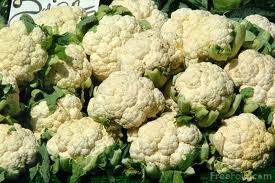
You are going to have to trust me on this one and try it.  This is the most delicious cauliflower you will ever eat

images

Recipe for Mashed cauliflower

Getting Ready to Start Medical School

It’s one of the most common questions asked by soon to be medical students…. “What should I do to get ready to start medical school?

Set up your environment

The amount of material you will be asked to master in your first year of medical school is more than you’ve ever been asked to master before.  You have to approach it with a different strategy than you used in college.  One critical component of this strategy will be to keep up with the material – starting from the first day.

If you try to hook up your cable, organize your electricity and straighten out parking at your apartment during the first week, you will fall behind.  Take the time to come explore your new environment and get settled in at least a week before classes start.  A week doesn’t sound like much to miss, but it’s a significant amount of information in medical school! One of the important tasks to check off the list during the week you are settling in is to set up your study area.  Make sure you have a computer that meets all your needs and an area to study that is pleasant, ergonomic and comfortable.  Most students find a dual screen to be very helpful as you are moving through notes and slides to study.

You’ll be spending 1-2 hours studying (at a minimum) for every hour of class.  Given the number of hours you’ll spend studying, you might want to think about an “active” desk that lets you stand, walk, or pedal as your study.

Develop (or strengthen) an exercise habit

Use this summer to develop a daily exercise routine that you can take into your new (and crazy) schedule.  Your goal for the summer should be to develop a balanced exercise program (cardio, strength training and flexibility) that works for you.  If you’ve never done any strength training, hire a trainer and learn about it. If you develop a balanced exercise routine this summer, it will be much, much easier to continue this once you start medical school or your internship. Commit to doing at least 30 minutes of exercise a day this summer and it will be a lot easier to continue once the pressure of school really kicks in.

Link to a Beginner’s Guide to Running

Running is one of the best (and most convenient) cardio exercises for medical students and residents (because it’s cheap, efficient and effective)  Use this summer to become a runner. If you hate running, find another good cardio exercise habit to develop instead – but pick one!

Link to 9 Ways To Make Bike Commuting Easier

If you don’t own a bicycle, think about getting one.  There will be places to ride for fun when you have time off.  You can also use your bike to commute to school which is a great way to sneak in exercise and save money.

Link to Learn to Love Cooking (and Save!!

If you don’t know how to cook, learn.

Good nutrition is an important part of doing well academically.  It’s hard to concentrate and learn if you are eating junk. There is one simple trick to eat well during medical school: Learn to cook.  This is a skill that will become progressively more important as you enter your clinical work in medical school and then move on to your residency training.

Learn some basic skills to cook simple things.  If you have good cooks in your family, have them teach you.  If you don’t have family members who can teach you, find cooking classes near you and sign up.  Many high end grocery stores and gourmet stores offer classes for beginners – look on line for classes near you.

Why Doing Nothing Is One of the Most Important Things You Can Do

Come to medical school rested.

Do not study. Seriously.  We will give you what you need and nothing you can do this summer will make it any easier.  It’s far more important to arrive rested and ready to go than to try to learn material that may or may not be relevant. Take a real vacation (or two). Visit family and friends – take a road trip and connect with people you haven’t seen in a while  Hang out on a beach, go for some great hikes, read some great novels.  Sleep in late, eat well, and just rest!

Photo credit

Fast, Easy Recipes: Kalyn’s Kitchen

I’m always looking for good websites for recipes that are healthy, simple and easy to make.  In other words, the kind of food that makes it easy to avoid eating fast food when you are on call.   Kalyn’s Kitchen is a fabulous website for delicious, healthy, and often low calorie recipes that meet the “pizza rule” for medical students and residents (i.e. recipes that take less time to prepare than it takes to order a pizza). She also really goes out of her way to teach each step in the recipe, so if you are new in the kitchen, this is a fabulous website for you!


Tuna Salad Lettuce Wraps with Capers and Tomatoes

Not-so-Dumb Salad with Cucumbers, Tomatoes, Onions, Avocado, and Balsamic Vinegar

Mediterranean Tostadas with Hummus, Feta, and Kalamata Olives

Crockpot Double Lentil, Sausage, Brown Rice, and Spinach Soup

Healthy Habits: Reduce Your Salt Intake

One of my New Year’s resolutions this year was to come up with monthly “resolutions” for myself and for anyone who follows this blog.  Cooking Light magazine (which is one of my favorite sources of recipes and ideas for healthy living) had the same idea, so I am shamelessly borrowing their healthy habits!  This month’s healthy habit is to eat less salt.

SaltShaker

Adding salt to taste in your own food is one thing.  “Hidden” salt in processed food is a totally different matter. Restricting salt is important for salt sensitive people to prevent or treat hypertension.

Different people have different sensitivities to salt.  Somewhere between 10% and 25% of the population are salt sensitive.  (this increases to 60% in people with hypertension).

The average American consumes around 4000mg of salt each day.  “The 2010 update of the Dietary Guidelines recommends adults limit their daily intake to less than 2,300mg, the equivalent of just 1 teaspoon of salt. The limit for those at risk of high blood pressure—African-Americans, people with hypertension, and anyone over the age of 51—was lowered to 1,500mg. “

How to decrease your sodium intake

  • Become “salt aware”.  Prepared foods will always have more sodium than fresh foods.  Here’s a great chart from colostate.edu that shows the differences.

salt-info

Salad dressings – up to 350mg per serving

Frozen dinners or entrees – 600 to 1600 mg

Soy sauce – 1000mg per tablespoon

Cheeses – 500-600 mg per oz

Prepared snacks – chips, pretzels, microwave popcorn, etc  – 300-600 per oz!

Pickles – 1000mg in a big dill pickle!

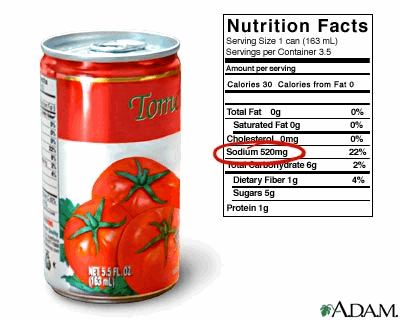
Canned vegetables – 150-350 mg per cup

saltpresconf

Photo source

This Week’s Highlights from @drmlb

Twitter has become a wonderful way for me to send out a variety of ideas and links that I think are helpful (and/or interesting).  Here are this week’s highlights!  If you are new to Twitter RT means Retweet (just “forwarding” it as is) and MT means Modified Tweet (“forwarding” it with a comment).

  • “This is definitely a 15 minute video every medical student should see.” The art of the physical exam bit.ly/nnmaTN @drmlb
  • Comments one makes to colleagues: as important as the interview. Professionalism = doing the right thing when no one’s watching. RT @MedPedsDoctor
  • Beginner’s mind in medicine. How to keep what we do exciting! MT@KevinMD bit.ly/qle7SJ
  • One flight of stairs = 16 calories burned. One day on call = ?10 flights ?20 ?30)..it adds up! @drmlb
  • Epidemiologist with humor?!? This is a great talk about drug development. bit.ly/ovkPyS @drmlb
  • “…small things often adds up to produce a far greater impact than any of us realize.” Surgery through different eyes bit.ly/q5XUkh  @drmlb
  • “..those of us who spend our emotions at work are not the kind to view our work as “just a job.” MT@Kevin MD bit.ly/pRAbmm  @drmlb

This Month’s Healthy Habit: Eat More Fish

One of my New Year’s resolutions this year was to come up with monthly “resolutions” for myself and for anyone who follows this blog.  Cooking Light magazine (which is one of my favorite sources of recipes and ideas for healthy living) had the same idea, so I am shamelessly borrowing their healthy habits!  This month’s healthy habit is to eat more fish.

Seafood is a great high protein, low fat food.  It’s also a great source of Omega-3 fatty acids.  It also has the advantage of being very fast to cook, a big plus for medical students, residents and busy docs.

How do you decide on which seafood to buy?

There are two things that should guide you in picking fish.  Importantly, one of them isn’t price.  You need to know about sustainability and toxicity when choosing your seafood.  Seafood that is caught or raised in a sustainable fashion with low toxicity is more expensive, but worth the extra cost.

It’s a sad fact that the oceans are being heavily overfished.  It sounds like an easy fix to farm raise the fish, but it’s not always true – sometimes the pollution that results from fish farms is worse than the overfishing.

The Seafood Watch from the Monterey Bay Aquarium is an amazing resource to find out which seafood is being caught or farmed responsibly.  It’s available on line or as an app for your phone.  Look for labels from the Marine Stewardship Council or Friend of the Sea, too.

sustainable-seafood-logos-m

For docs, it’s important to know that, like all foods, there are contaminants that can occur in seafood.  The risk – unless you are immunocompromised – is tiny compared to the benefit, though.  Another serious issue is the concentration of heavy metals (mercury and lead, in particular) in some of the larger fish.  This is particularly important for women of child-bearing age and for children.  Heavy metals are concentrated in large fish because of the food chain.  It makes sense that smaller fish will have negligible (or absent) levels.  Fortunately, they are also higher in omega-3 fatty acids making them an even better choice!  Sardines, anchovies and mackerel may not be on your usual list of foods, but give them a try.  Here’s some good sardine recipes to get you started.

What about tuna?

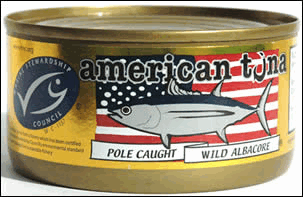
Canned tuna is a cheap and high-quality food, so it’s high on the list for medical students and residents.  Unfortunately, all tuna is not created equal – so you have to pay attention.  It’s more expensive, but look for pole-caught tuna in the store.  Blue fin tuna, and most other tuna used in sushi is incredibly overfished and should be avoided.

pole-caught-tuna

Fast, easy recipes to get you started

red-curry-shrimp-ck-l

Thai Red Curry Shrimp

salmon-kiwi-relish-lMarinated Salmon with Mango-Kiwi Relish

 fish_taco-l

Fish Tacos with Cabbage Slaw