Recipes for Medical Students and Residents

I love when I find new websites that provide great “pizza rule” recipes (recipes that take less time to prepare than it takes to order a pizza).  I just discovered Keep Your Diet Real, a site run by Corrine E. Fischer, MS, RD, LDN.  She’s not only a dietician, but she’s a professional food photographer, so the site is beautiful.  Her recipes are healthy, straight-forward and are great for the busy life of docs, medical students and residents.

Ten Healthy Breakfasts in Ten Minutes or LessSpring Roll SoupWheatberry and Edamame Salad


Salads

For medical students in basic sciences, a salad can be a great “energy” lunch that lets you stay alert in class.  For students on rotations and residents, a fresh salad is a great lunch and an even better middle of the night meal when you are on call.

The concept couldn’t be easier – put lettuce, spinach, or the greens of your choice in a big container.  Top with protein, cheese, veggies, nuts and/or fruit.  If you don’t care what it looks like, it’s also really easy to dump it all in a big zip-lock bag.  When it’s time to eat, pour the salad dressing in the bag with the salad, shake, and then serve yourself from the bag.

Protein:  Beans from a can, beans you make yourself with a crockpot or pressure cooker (which saves money and avoid excess salt and additives), canned tuna, cooked chicken from the deli, prepackaged meats (look at the labels to make sure you aren’t getting a lot of additives you don’t want), shrimp, etc.

Cheese:  Shredded cheddar, Monterey jack or Mexican cheese (reduced fat or regular), feta, goat cheese, thin slices of parmesan

Veggies:  Any leftover in your refrigerator!  Another good idea for this is to buy what you need for a mirepoix when you do your once a week shopping.  A mirepoix is the basis of  French cooking and is one part onions, one part carrots, and one part celery.  The Cajun trinity is similar but substitutes green bell pepper for the carrots.  If you buy the ingredients for a mirepox (or trinity) and chop it up on the weekend, you can use handfuls in salads, omelets, soups, etc all week.  (You can add other things, too, like mushrooms, red bell pepper, etc – anything that can be eaten raw).  If its a really busy week and you don’t have time to chop up vegetables, you can used canned green beans, corn, beets… whatever vegetables you like.

Nuts and/or fruits: Adding some dried fruits and nuts, sunflower seeds, etc, will add some extra nutrition.  Fresh fruits like blueberries, strawberries, sliced peaches are delicious in salads.  Canned fruits, especially mandarin oranges, are good, too.

Salad dressing. Don’t put the dressing on the salad until you are ready to eat.  (The French say it “cooks” the salad… but the result in any language is soggy salad.) My favorite dressing is a homemade vinaigrette.  Start with vinegar (red wine, white wine, sherry or balsalmic), a clove of diced (not crushed) garlic, a healthy teaspoon of good Dijon style mustard, salt and pepper.  Stir these all together until the salt is dissolved and the mustard is blended with the vinegar.  Add olive oil while you are stirring (or shake it up at the end.)  The classic ratio is 1 part vinegar to 2 parts oil, but you can add less oil to taste.  I usually squeeze a little lemon juice in, too.

The easiest thing by far is bottled salad dressings.  Be careful about calories (if you are watching your weight).  If you take salads to work regularly, you may want to leave the bottle there (unless the food snatchers raid your refrigerator on a regular basis).

http://allrecipes.com/Recipes/Salad/Green-Salads/Top.aspx

http://hubpages.com/hub/Favorite-Salad-Toppings-Lessons-From-Restaurant-Salad-Bars

http://www.fitsugar.com/Nutritional-Information-Salad-Toppings-7598444
Healthy Sandwiches

Making a healthy sandwich for lunch is a great way to insure that you don’t eat the leftover pizza from last night’s call team.  A really good sandwich which balances protein and carbs is also a great way to get through a long call night.  Keeping your energy up when you are up all night on call is difficult but there are tricks to maintain energy for call. The most important way to have good energy on call is to eat good quality food every 3-4 hours. Sandwiches are great for call because they are so easy to make, easy to store and easy to put in a pocket to eat on the go.

Pick good ingredients whenever you can.  It’s worth paying a little more to have food that is just food (and not a lot of fillers, corn syrup, transfats, etc).  Make sure you get high quality bread – 100% whole wheat is best, but if you really don’t like whole wheat, at least try to get as much whole grain in the bread as you can. Whenever possible, add veggies to add nutritional value.

Peanut butter sandwiches have the advantage of not needing refrigeration.  You can keep them in your white coat pocket if you want to (an advantage on a busy day).  You can stay traditional (i.e. peanut butter and jelly), or up the nutritional content by adding banana (or other fruit) or with other unusual combinations.

Egg salad sandwiches are great in the middle of the night when you are on call.  101cookbooks.com egg salad recipe is a pretty classic recipe which is really wonderful.  If you want to up the protein and decrease the fat leave out some or al of the egg yolks and use lowfat mayonnaise.  There are other options for traditional egg salad recipes, too

Tuna or chicken salad sandwiches can be made with classic recipes, or less traditional ingredients that up the nutritional content such as spicy tuna salad, or other unique tuna salad recipes.

Lean meat (chicken, ham, pork, beef) makes a great, high protein sandwich.  Add cheese, tomatoes, spinach, shredded carrots or other veggies to increase the nutritional value.  If you are watching your weight use low-fat cheese and avoid mayonnaise.  If you use hummus or avocado instead of mayonnaise or other spreads you’ll also make the sandwich more nutritious.

Here are a few other sites to help you be creative with your sandwich ideas:

Healthy Sandwich Recipes & Tips

Love Your Lunch: 10 Healthy Sandwich Recipes

Good Nutrition is in the Bag: Healthy Sandwich Alternatives

Farmer’s Markets

I just got back from my weekly (when I’m not on call) trip to the farmer’s market.    I’m going to try to convince you why buying food at a farmer’s market should be a regular habit for any medical student or resident (although I think it applies to everyone else, too).

What the heck is a farmer’s market?

In general, farmer’s markets are open air markets where local farmers bring their food to sell. They usually take place once a week (often on Saturdays).  If you want to know more about farmer’s markets, check out the website of Urban Harvest, which is responsible for the market I go to in Houston. 

How do I find out where they are?

The best way is to search the internet for your city.  Local harvest is a web site that covers most farmer’s markets, but there may be smaller (and possibly more convenient) markets in your city that aren’t listed here:   http://www.localharvest.org/farmers-markets/

If it doesn’t look like there is a farmer’s market near you, another option is to buy a share in a CSA (Community Supported Agriculture).  If you buy into a CSA you will pick up a fairly large quantity (usually a good sized box) of whatever is being grown at the time – usually once a week.   If you can find a group of friends to split this with, its a great option  http://www.localharvest.org/csa/

What should I do to look cool if I’ve never been to a farmer’s market before?

Bring your own bags. This isn’t an absolute requirement, but it’s much cooler than relying on the vendors.  They often have small paper or plastic bags, but it will be easier if you bring your own.  In the big picture, you should do this no matter where you shop (good environmental karma!).  Fortunately, the “give away” bags at medical meetings are perfect for this!   A lot of grocery stores sell reusable shopping bags or you can find them on the internet.

Bring cash. Some vendors may take credit cards but don’t count on it.

Does it cost more?

Yes (but not a lot more).  But don’t let that stop you!  Value isn’t always measured by money – even if you are poor student or resident.  It’s not going to be a lot more and it’s completely worth it. (see below)

If it costs more and it takes more time, why should I bother?

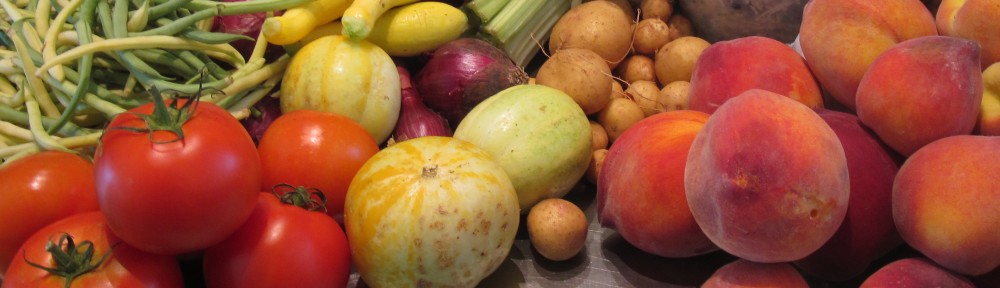
The food absolutely and unequivocally tastes better.  The first time I bought potatoes at a farmer’s market was a revelation for me.  I knew that tomatoes and peaches would be better, but I had no idea that a potato would be in the same category.  The produce you buy at a farmer’s market was in the ground (usually) less than 24 hours ago.  It is incredible how much better it tastes!

The food is probably better for you.  Most farmer’s markets sell organic or near organic food.  There’s good data that organic plants are higher in many nutrients and it’s intuitively obvious that avoiding pesticide residues on your food should be beneficial.

You’ll eat with the seasons. There are no data that this is better for you, but it really makes sense.  If nothing else, it will taste better and you’ll be helping the environment by not eating things that traveled thousands of miles to get to you.

You’ll get to know the people growing your food. This sounds trivial, but it’s really cool.  You can ask them about how they grow the food, and you’ll hear stories about what’s happening on their farms.  One of my favorite vendors, Blue Heron Farm, pictures brings pictures (usually baby goats) which she also shares on Twitter and Facebook. There is also something intangible (but cool) in knowing that someone (not just a big corporation) cares enough to grow your food.

The farmer’s market is a once a week “sanity break”. You are outside, surrounded by beautiful food and happy people.  At the market I usually go to, there is always some live music, too.  It’s a great experience and, combined with the fact that you are doing something healthy for yourself, it’s a once a week mood changer!

Pressure Cookers

You may have read the title and thought this might be about work and stress… but, no, it’s not about the pressure cooker at work, it’s about cooking!

If you are trying to save time cooking (which is an essential part of cooking as a student or resident) you should really think about buying a pressure cooker.  This is a foreign cooking appliance to most people, but it is an incredible time saver.  Do not listen to your mother/grandmother/aunt who says they blow up… they don’t!  I use mine more or less weekly to make garbanzo beans.  Buy dry garbanzo beans (which are really cheap), soak them for 4-8 hours  and cook them with a little spice (or not) for 12 minutes on the second ring. (You can skip the soaking and cook for about 15 minutes instead)  They make a great snack (instead of peanuts) right out of the refrigerator.  Another really good use for pressure cookers is to make stock.  When you peel carrots, cut the ends off onions, etc just throw the pieces into a bag in the freezer.  Ditto for leftover bones and bits from fish, chicken, beef (if you want a meat stock).  When the bag is full, put the frozen bits in the pressure cooker with water and cook for 20-25 minutes.  This saves a lot of money and tastes tons better than store bought stock/broth.

Here’s a list of other things you can cook in a pressure cooker

  • A whole chicken in 15 minutes
  • Beans (from dried) in 5-10 minutes
  • Artichokes in 10 minutes
  • Potatoes in 5-10 minutes

Although the classic pressure cooker is still an amazing and wonderful kitchen tool, it has been a little eclipsed recently by the Instant-Pot.  This is now top of my list for gifts for medical students and residents.  It is a combination pressure cooker, rice cooker, slow cooker….and more.

Photo credit

How to Eat Well On Call

It’s Saturday and I’m on call – and it’s going to be a busy day!  We have about 75 patients on the service, we already have 4 cases done and another 4 posted, and it’s still early (~4pm)   I have a fantastic resident with me today.  We just were chatting about what we are going to do for meals today.  He didn’t have breakfast and has only had a Coke and a “borrowed” bowel of Kix cereal from the recovery room so far.  I had whole wheat toast with some goat cheese before I left my house this morning, and I here’s what I have to eat today:

  • Strawberries
  • A handful of frozen cooked shrimp with cocktail sauce (they’ll thaw by the time I want to eat them)
  • Frozen peas (I put them in the microwave for a minute but, like the shrimp, frozen would be fine because they’ll thaw) + goat cheese, olive oil, vinegar, salt and pepper
  • Leftover whole wheat orzo, artichoke hearts, tuna and lemon pasta from last night
  • An apple
  • Lemon wedges for water

My resident’s Coke is probably more than I used to have as an intern… which is STUPID.   Eating well is important to feel well, perform well and do the right thing for your patients. There is one word that explains the difference between my resident (and what I used to do) and what I do now… planning.   “I’ll just get something from the restaurant across the street later…”, “There will probably be food leftover from the GI conference…” .. “I can always eat a bagel from the lounge..” … NOT.   When you finally have a minute to grab something to eat, you won’t usually have time to go look for the food.  It’s a lot easier if its’ there and ready to eat.

Here’s how to do this right:

1. Buy a good “lunch box” .

I like the hard plastic ones that fit in an outside, insulated carrying case.  It’s a lot easier to clean up if something spills than the usual “lunch box”.

You can use plastic (disposable) containers to carry your meals with you.  I’ve switched to glass containers because some of the data about heating the plastic containers in the microwave started sounding convincing.  It does mean you have to keep track of them and bring them home, but I suspect in the long run (if I don’t lose them) it will be cheaper than the plastic containers.   I particularly like the ones I bought because the seal is so tight that they don’t ever leak  (even for things like soup).

2. PLAN.

The night before call, figure out what you are going to take. Make it good stuff, too!  Call nights are not the “what I know I should eat” nights.  You need to have real food (i.e. not processed) but don’t skimp.  When you get to the “I really deserve those french fries” time of your call (which we all do) you will have really delicious and balanced food  in the refrigerator.

3. Pack your meals for the next day the night before (no matter how late it is or how tired you are).

It’s the only way you’ll actually do this.   None of us when we work this hard have the energy to put together meals for the day at 5am.  This takes a little effort but the payoff is real.  You will absolutely eat better, have more energy, maintain your weight and do a better job.  Don’t forget to throw some fruit in – and to make sure it’s washed so you can just pull it out of the refrigerator for a snack.

Recipes for Medical Students and Residents

Here’s a few more recipes that meet the “pizza rule” (cooking in medical school and residency has to take less time than ordering a pizza).  Here’s the link to my post on cooking for yourself in medical school and residency if you need more info on the “pizza rule”: http://wellnessrounds.org/cooking-for-yourself-in-medical-school-and-residency/

Spinach, Feta and Tomato Quiche

http://www.vegetariantimes.com/recipes/10963?utm_source=Vegetarian&utm_medium=newsletter&utm_campaign=vege175

This is a really easy recipe that uses phyllo dough (which you buy in the frozen food department) as a crust.  Another alternative is to buy frozen pie crust (I prefer whole wheat). You can skip the sesame seeds, but if you choose to use them, make sure you toast them.  Put them in a hot pan and don’t turn away!  Keep shaking the pan and as soon as you smell the sesame dump them out (about a minute or two).  If you don’t have nutmeg, don’t worry about it.

I really try not to mention anything commercial in this blog, but I have to make an exception for spices.  If you like to cook, or are learning how to cook, spices are key.  I order mine online from a spice company http://www.penzeys.com.   They are fresher than what you buy in the store and about the same price.  More importantly you can buy little (half) jars which saves money and keeps fresher spices in your cabinet.  When you buy spices, whether online or in the store, write the date on the jar.  You should throw them out after 2 years.

21 Superfast Stir-Fries and Sautes

http://www.cookinglight.com/food/quick-healthy/20-20-superfast-stir-fries-sautes-00400000037729/page23.html

This site has 21 different recipes for stir fry dinners that take less than 20 minutes to prepare and all look delicious.  Stir-fries and sautes are always easy, and are going to make up a high percentage of your “pizza rule” dinners.  You’ll need a wok or a saute pan – one of the essentials of a student or resident’s kitchen.  Good cookware is a great thing to ask for as a present (and I just added it to the list of things to buy for someone graduating from medical school!)

If you buy a wok, you have to season it before you use it.  This is not hard, but you’ll look like an amateur if you don’t know about it (and one of my rules is that it’s important to look cool).  Seasoning just means getting a thin layer of oil to incorporate into the surface of the wok.  The key is “burning” it on the first time and then keeping it on by not scrubbing the wok.  After you cook in a wok, clean it with soap and water, but don’t scrub it – if it’s shiny you messed up.

http://thepauperedchef.com/2007/08/when-cheaper-is.html

http://www.asiarecipe.com/woks.html

Recipes for Medical Students and Residents

I’m going to periodically add some recipes to the blog that meet my “pizza rule” i.e. if it takes longer to cook than it does to order a pizza it’s not going to work… http://wellnessrounds.org/cooking-for-yourself-in-medical-school-and-residency/

WHOLE WHEAT SHELLS WITH ASPARAGUS, PEAS, FETA AND MINT

This is a great vegetarian dish and would make enough for a lot of call nights!.  The recipe calls for garlic oil (which I’ve never heard of).  I’d skip it or, if you really want to add a little garlic taste, mash up a couple of cloves in some olive oil (like 2 tblsp) before you start and let it sit while everything else is cooking.  You can drizzle the olive oil over the pasta at the end.

http://www.vegetariantimes.com/recipes/10964?utm_source=Vegetarian&utm_medium=newsletter&utm_campaign=vege174

GRILLED FISH WITH FRESH PEA SAUCE AND PEA AND TOMATO RELISH

Here’s the original url for this recipe which is delicious (but a little fussy and violates the pizza rule)

http://www.foodista.com/recipe/4V8PPYZF/grilled-fish-with-fresh-pea-sauce-and-pea-and-tomato-relish

Here’s the resident friendly version:

GRILLED FISH WITH FRESH PEA SAUCE AND PEA AND TOMATO RELISH  (PIZZA RULE VERSION)

2 servings

  • 2 filets of the freshest white fish in the store (Tilapia, snapper, etc)
  • 2 tablespoons olive oil  (cut to 1 tablespoon or use Pam to save calories)
  • 1 package frozen peas
  • 1 cup chicken stock  (buy the 4 packs of one cup each)
  • 1 shallot (if you can’t find one, use part of the red onion)
  • 2 cloves of garlic (don’t cheat on fresh garlic)
  • Salt and pepper
  • 2  Italian Roma tomatoes
  • ½  minced red onions
  • 1/4 cup chopped black olives  (buy in bulk at Whole Foods – use Nicoise or herbed olives of Provence – can buy small jar, too)
  • 2 tablespoons chiffonade of basil  (chiffonade = finely sliced.  Don’t cheat on the fresh basil, either)
  • 3 tablespoons extra-virgin olive oil  (cut to one table spoon if you are watching calories)
  • 2 Yukon gold potatoes cut into 6ths or 8ths

Start with the base of the sauce

  • Saute the shallot (or onion) in the olive oil
  • Add the garlic until you smell it (more and it will burn = bitter)
  • Pour in the chicken stock
  • Bring to a boil
  • Add the potatoes – drop the heat to a simmer and cook until just fork tender (~8-10 min)
  • Pour in the frozen peas – cook for 3 minutes
  • Take the potatoes out and save

Take out a third of the peas with a slotted spoon and put in a bowl to use later

  • Put everything else (minus the peas and potatoes you took out) into a blender until smooth.  (If you don’t own a blender, this is a critical tool for residents so go out and get one!  Smoothies are a key food item for medical students and residents and blenders are cheap!)

Make the relish

  • Cut up the tomatoes, olives, basil, red onion
  • Add to the peas you saved from above
  • Add the olive oil

“Grill” the fish

  • Use a grill pan or non-stick sauté pan (another important piece of resident equipment)
  • Put olive oil in the pan (Pam if you are watching calories)
  • Cook 3-4 minutes per side

Assemble the dish

  • Pour the sauce into a bowl
  • Put the fish on top
  • Arrange the pieces of potato around the edges
  • Put the relish on the fish

A variation (if you like Mexican flavors)

  • Use tomatoes, corn, cilantro, jalepeno and onion for the relish
  • Use frozen corn instead of peas

MLB’S EASY MEXICAN SOUP

8 servings

  • 1 tsp olive oil
  • 1 onion, diced
  • 1 red bell pepper, diced
  • 4 carrots, diced
  • 4 stalks celery, diced
  • 8 cups (two containers) chicken broth
  • 1 roasted chicken (bought already cooked), skin removed and meat broken up into small pieces
  • 10 oz frozen corn
  • 1 can pinto beans
  • chopped cilantro
  • 2 avocados
  • pico de gallo (buy at the store)*

Saute vegetables in olive oil until they are soft

Add chicken broth, bring to a boil

Lower heat to simmer and cook 10-15 min (until vegetables are mostly cooked)

Add chicken, corn and pinto beans

Cook another 5 minutes on simmer

Garnish bowls with chopped avocado (1/4th per serving), cilantro and pico de gallo

Optional:  Add cooked rice and/or shredded cheese

* to make pico de gallo (if you can’t find it ready made)  combine 3 diced tomatoes, 1 diced onion, chopped cilantro, one diced (fine) jalapeno, salt and lime juice.  This is a great dip for chips or to put on grilled fish or chicken, too.

Don’t Skip Breakfast!

If you are not up to eating a big breakfast when you wake up, that’s ok.  Particularly in residency you may be getting up too early to be hungry.  As you are brushing your teeth make yourself drink a big glass of water.  Even if you are not hungry at all eat a little something  like a piece of fruit or a cereal bar.  (Set them out on the counter the night before to grab and eat in the car if you have to.)  There will be days that you may not get anything else to eat until the middle of the day, so don’t forego all nutrition in the morning.  Take a  “real” breakfast to work with you and eat it when you can between 8 and 10.   


Easy breakfasts for doc’s on the go

 An energy bar (e.g. PowerBar)

Frozen breakfast taco (see recipe below!)

Last night’s dinner (such as rice and meat, rice and an egg, noodles)

A smoothie (you can put the ingredients in the blender the night before, then just put it on the blender in the morning)

Peanut butter and jelly sandwich

Frozen pierogies heated up in a microwave

Instant oatmeal (add nuts and dried fruit if you want)

Cereal and milk (add fruit to make sure you get fruits into your diet)


MLBs Breakfast Tacos

Buy 10-12 whole wheat tortillas, 1 can of refried beans, 1 bag of reduced fat shredded Mexican cheese.   Spread all the tortillas out on the counter and divide everything up between them. 

Add whatever else you want: 

8oz of cooked chicken or turkey (grilled in the deli is best)

Sausage (veggie soy sausage is good and tastes fine in the tacos)

Corn

Rice

Roasted red peppers (in a jar)

Chiles

 Put the tacos in the freezer in individual freezer bags (Ziplock,etc) .  (Put the individual bags in a big freezer bag if you want to further limit freezer burn). 

 2 minutes out of the freezer and into the microwave = breakfast.

Book Recomendation: Iron Doc by Mamta Gautam, MD

I became aware of this book last week through one of the anesthesia residents at work (whose chairman made this book required reading for all residents in his department).  Dr. Gautam is a psychiatrist who has specialized in caring for physicians and is an expert in physician wellness.  She uses training for an Ironman triathalon as an analogy.  Physicians have to “train” for different roles (personal and professional) if we want to prevent burnout.  She proposes a training program that helps keep balance in the complicated life of a doctor. The book primarily addresses physicians already in practice, but the information is very applicable to trainees, as well.

Here’s her website if you are interested:  http://www.drgautam.com/gautam/books.htm