The socioeconomic issues we face today aren’t new, so maybe it’s not a surprise that we struggle to even imagine a world where hunger, homelessness, and illness are faced with kindness and equity… which is why I was so intrigued with this article by Swapan Samanta, an economist who uses mathematics to understand social inequities.
“They [the prophets of five major religions] knew that food is never just food, that meals reveal the soul of a civilization, that the way we eat together – or fail to – determines whether we survive or collapse. Ancient wisdom and modern mathematics point to the same truth…Scarcity is a choice, not a condition.”
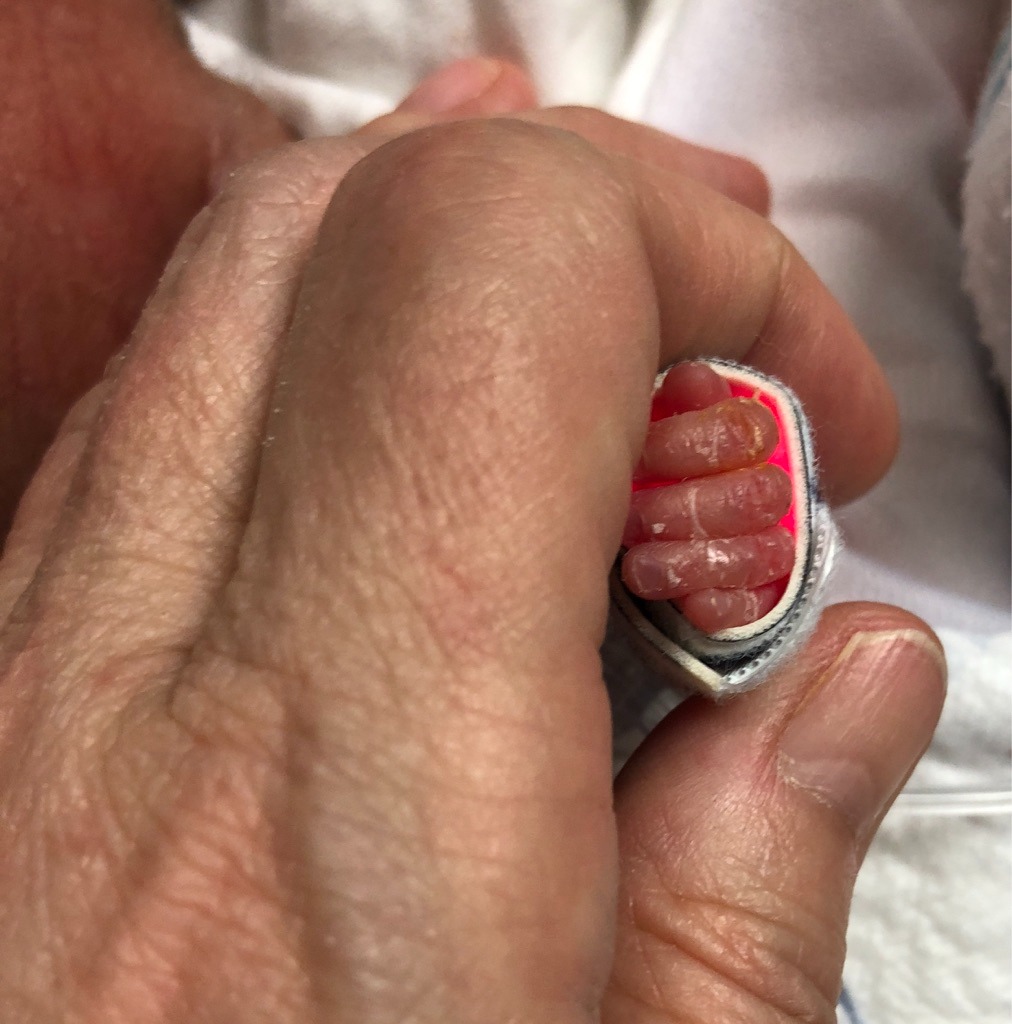
For those not in medicine… the ductus arteriosus is a one of the necessary shunts around the lungs when babies are in the womb. (You don’t want blood going to the lungs which can’t oxygenate the blood because the baby isn’t breathing yet.) At the moment of birth, all that has to change… and pretty quickly. In term babies, it starts immediately, and the closure is done by 48-72 hours. In premature babies, it can take longer. And, in rare cases, it doesn’t close at all. When it stays open, we call it a patent ductus arteriosus (PDA).
Since the first surgical closure in 1938, PDAs have been closed by surgery, catheters, and medications. Over the last several decades there has been a progression in which way was the “right” way (and when it should be done). To summarize the overall trend, we began to move away from surgery and towards less invasive catheter and/or pharmacologic closure. Like all good research, there were lots of studies that preceded and led to the work published this week – which showed that just waiting (without medicines, surgery, or catheter closure) had the same outcome (a composite of death and/or bronchopulmonary dysplasia at 36 weeks) when compared to using medicines to close the PDA. Importantly, it also showed that the overall death rate was less in the babies who were just observed.
No difference in early death or lung disease, and a higher survival without any direct treatment.
It may have been different for you, but as a child Lent was never explained to me in a way that made sense … and I had lots of questions:
What is a Liturgical year??? (I grew up in a Protestant church so this was never really explained)
Why 40 days? (except it’s really 46?)
Why do we call it Lent?
Why “give up” something? (And why is chocolate always on the list?)
The Liturgical Year
Like the seasons,the structure of Christian (and most other religious) worship follows the solar year. Not surprisingly, the Christian calendar has its origin in the Jewish calendar, which revolves around the Sabbath (the origin of our week) and Passover (once a year in the spring, which set the annual cycle of a year).
From before the time of Christ, the GraecoRoman world kept Saturn’s day (on what we now call Saturday) as the first day of the week. Since no other origin can be traced for the seven-day cycle, it would appear that they adopted the week from the Jewish system. The Romans did not, however, name the other days of the week definitively until the third century of the Christian era.” (The Liturgical Year – It’sStory, 2000)
Prior to the 4th century, there was no “liturgical year” as we know it now… there was only Easter (which like Passover, has a date decided by the lunar calendar). The very early church (the first 200 years) fasted to prepare for Easter, which is the practice that led to subsequent Lenten practices.
Shared by Deacon Art Bass on Facebook
The origins of “Lent”
In 313 CE Constantine, the emperor of Rome, announced that no longer would Christians in Rome be persecuted. In fact, having seen a vision of a cross on a shield in battle, he converted to Christianity and made it the official state religion of Rome. (And, as we say… the rest is history)
Prior to that time, it was not easy to be a follower of Christ. In 217, Hippolytus described what it took to become a Christian. “After being carefully screened, candidates were admitted to a three-year period as “hearers of the word.” As well as attending their own sessions of instruction, they were permitted to be present at the liturgy of the word, but not for the prayer of the faithful or for the eucharist (II, 16-19), participation in which is the privilege of the baptized members of the community.” (The Liturgical Year, Canadian Conference of Catholic Bishops, 2017)
It was only after three years of intense study and discipline that new Christians could be baptized – which always took place during the celebration of Easter. This was not a trivial decision. Those who chose to follow Christ during the first 3 centuries risked persecution, torture, and even death.
From Three Years to Forty days
It’s not surprising that after 313, when persecution of Christians was no longer permitted, that more people sought to join this new religion. It’s also not surprising that a) baptisms still took place on Easter and b) you still had to commit to study and discipline before you could be baptized.
After the time of Constantine, however, the Church found itself in a world that was less openly hostile. Converts flocked in. Gradually the strict discipline of the catechumenate, which had been a three year process, was abbreviated to be totally encompassed in the six weeks of Lent.(The Origins of the LIturgical Year, Talley, 1991)
Why 40 days? When the Council of Nicea met in 325 CE they decided to formalize the preparation to match the recorded 40 day fasts of Jesus, Moses, and Elijah.
Why Sundays are not included.
Sundays are considered a celebration of Christ’s resurrection, so they aren’t considered part of the 40 days of Lent (which is why it is actually 46 days)
Why do we call it “Lent”?
Easter and Passover both occur during a window of dates that fall in the late spring (because they are based on the lunar calendar). The word “Lent” means spring: From Merriam-Webster dictionary. The origins of “Lent” are from the “Middle English lente springtime…from Old English lencten; akin to Old High German lenzin spring”
If you are Christian (and especially if you have a Lenten practice) I hope this helps you understand why this isn’t about giving up chocolate. (Seriously). For those who follow other paths, I hope this will shed some light on some of the practices of those around you, practices that we don’t usually talk about.
p.s. About the ashes… Ash Wednesday is always 46 days before Easter. It’s a practice that was established during the 9th-11th century so there would be a clear beginning for Lent. It’s based on many Biblical texts about ashes being a sign of repentance.
p.p.s. I’m not an expert… so if you are, please let me know what I’ve omitted (or misrepresented).
Medical training is based on active learning – studying textbooks and articles, listening to experts, seeing patients, setting up procedures and then performing them, reading images, looking at slides. This kind of learning is straightforward – You do the task, get feedback (in a variety of ways), and then adjust to improve.
I’ve never really thought about passive learning in medicine … until I learned about this recent study from the Institute of Neuroscience at the University of Oregon that clearly showed that passive exposure improves active learning (at least in mice).
Based on my experience as a medical educator, that rings true for medical students and residents, too. Watching experts do a procedure over and over won’t ever replace learning to do the same procedure – but it does seem to be a habit embraced by superstar medical students and residents (in addition to their deliberate and very active learning).
“The core insight here is appealing precisely because it’s so easy to act on. Passive exposure costs almost nothing. No extra willpower, no additional scheduled practice time, no special equipment. You just need to put yourself in contact with the material you’re learning.”
How can you add a little passive learning to your day (in addition to rereading and highlighting notes or listening to a recorded lecture)?
Just listen. The ideal way to take advantage of the didactic courses in the first two years of medical school (and subsequently in clinical rotations and residency) is to engage actively with the material during the lecture. (Yes, I’m serious… and here is how to do it). But if you find yourself unable to really engage it turns out that “just listening” (i.e. being a passive learner) isn’t a complete waste of time. You can also attend departmental Grand Rounds or other interesting lectures as a first year medical student (Most of them are before your classes start or during lunch). You won’t understand much… until you do (which is always exciting!) . You can find a list of these lectures on every hospital and medical school website (Here’s an example from Baylor College of Medicine). These are public lectures so you won’t be out of place. If anything, they will be delighted there are basic science students interested enough to attend. (p.s. there is often food, too…)
Just watch. “Shadow” in the first two years of medical school…ask senior students or residents (who will ask their attendings) if you can watch surgery, follow someone in clinic, or go on rounds with a team. When you are on a rotation, “just watch” surgeries that you aren’t assigned to (which is a lot easier in minimally invasive procedures because you can watch it on a screen). The same goes for “just watching” a pathologist looking at slides, or a radiologist reading images, etc. You can also take advantage of YouTube to “just watch” videos of procedures, how to do a physical exam, etc, etc.
Passive exposure will never replace active learning (a really important point!) but just watching and just listening aren’t a waste of time… and may help make active learning a bit easier.
“Nonviolent protests are twice as likely to succeed as armed conflicts – and those engaging a threshold of 3.5% of the population have never failed to bring about change.” (Robson, 2019)
“There are no more ancient bookends than sunrise and sunset. For millennia we have lived between their cycles. We have come to internalize their rhythm. Unconsciously we are aware of them even if we do not see them. My ancestors taught that it was important to acknowledge these daily transformations: the promise of a new beginning and the invitation to a deep rest. Hope and peace. We live in the balance between sunrise and sunset. We live between expectation and fulfillment. I will greet the sun when I first see it and I will embrace the night when it comes quietly to claim me. I will search for wisdom between the bookends of time.”
This is the text of the sermon I was to give today. Like many churches in the path of this weekend’s severe winter storm, we cancelled our in-person services to keep each other safe.
The text for these thoughts is Matthew 4:12-23, and, in particular, these verses:
As he walked by the Sea of Galilee, he saw two brothers, Simon, who is called Peter, and Andrew his brother, casting a net into the sea—for they were fishers. And he said to them, “Follow me, and I will make you fishers of people.” Immediately they left their nets and followed him. As he went from there, he saw two other brothers, James son of Zebedee and his brother John, in the boat with their father Zebedee, mending their nets, and he called them. Immediately they left the boat and their father and followed him. Jesus went throughout all Galilee, teaching in their synagogues and proclaiming the good news of the kingdom and curing every disease and every sickness among the people.
The video at the end is meant to be played as an integral part of the sermon.
When Jesus spoke these words roughly 2000 years ago, he didn’t say them in English. I know that’s obvious, but it bears repeating. Jesus spoke Aramaic with his family and friends. He was able to read Hebrew, which was the language of the temple, and he spoke Greek, which was the common language of the Roman Empire (which is why the gospels were written in Greek). When the gospel according to Matthew was written, “akoloutheō” (ah-ko-loo-THEH-oh) was the word used for “follow”.
Akoloutheo is also the root of the English word “acolyte”. That association may help us understand what Jesus actually meant when he said “Follow me” because an acolyte is “a person who attends or assists a leader”. Its modern use is mostly related to the church; Acolytes are the people you see every Sunday preparing the communion table, lighting the candles, and carrying the cross.
In other words, when Jesus said “follow me” to his first disciples, it wasn’t a metaphor. It meant “walk with me, assist me, attend to me”. This sense of “hands-on” following is also present in the English word “follow”. In Old English the meaning of the word “follow” was to “accompany”. The word most likely evolved from the proto-Germanic word *full-gan, or “full-going”.
Understanding this etymology helps us with today’s reading. Because if “following” Jesus means to accompany him, to be “full-going”, to be completely invested, it’s asking for something more than most of us learned growing up in church. Because following Jesus is not just about “giving your life to Christ”, it’s about walking into the world led by a radical way of being that completely upends powers and principalities. It’s about full-on, hands-on, joy-filled discipleship to bring the kindom of God to earth as it is in heaven.
Of course they dropped their nets and left everything behind.
When Jesus said “follow me”, he was clearly instructing Simon, Andrew, James, and John to travel with him towards the kindom of God… But it also meant they could walk away from oppression.
Fishermen in the first century Rome weren’t what we think of today. They didn’t own their boats – and they didn’t own the fish they caught. Both their boats and the fish they caught belonged to the Emperor of Rome. When they hauled in their nets, the biggest fish went to high ranking Romans. Any remaining fish that could be sold were sold to make money for Rome. As a result, fishermen in first century Rome were as low in the social order as tax collectors. They were just collecting fish for Rome instead of coins.
Of course they dropped their nets and left everything behind.
They assisted him, attended to him, learned from him as he “went throughout all Galilee, teaching in their synagogues and proclaiming the good news of the kingdom and curing every disease and every sickness among the people.”
Word spread quickly. Crowds began to gather.
People then, like now, were hungry for good news, sick of being oppressed and frightened, desperate to be healed. They lined roads to welcome him and sat in crowds gathered to hear his teaching. They offered places for Jesus and his disciples to stay and provided them food.
It’s actually not that hard to imagine…because right now, in our country, there are crowds gathering to hear similar good news, crowds lining streets and gathering in schools and in churches to hear profound teaching on how to bring peace into our lives and the world.
For those who might not be aware, a group of Buddhist monks who live in Fort Worth left their home in October on a Walk for Peace. They are walking 2300 miles from Fort Worth to Washington DC… not to protest but to carry a simple message, one that resonates with the teachings of Christ – Peace is within each of us, a peace that passes all understanding… a peace that can heal the world.
I find it fascinating (and important to remember) that everything we see is perceived by our brain and then translated into an image. For example…the white on the outside of these “petals” is exactly the same as the white inside (Asahi Illusion)
“Taken together, an estimated 117 billion people have collectively lived on our planet, and, of that total number, 7% are alive right now.” (Open Culture)
“Always remember that you are absolutely unique. Just like everyone else.”
Who knew? (other than the 403K people who have watched this video).
And this. (There is still such kindness in the world)
“During an earlier London run, West was inspired by children he saw in the lobby dressed as Belle and as princes. He noticed many of them wore glasses. Belle now wears glasses any time she reads onstage, including scenes in the Beast’s library.” Houston Chronicle
If setting goals and trying to use willpower doesn’t work, what other options do we have?
Is there a way to use the New Year as a new beginning without setting ourselves up for failure?
Make it easier (based on neuroscience)
Andrew Huberman came up with the term “limbic friction” to describe how our limbic system (which pulls us towards comfort) creates resistance to doing things that take discipline, things that aren’t fun when we do them. In this great podcast, he describes a different way to make resolutions, a system he developed based on neuroscience:
Pick 6 habits you want to change.
For 21 days, try to do 4 of them every day (which means you can skip 2).
If you miss days or do less than 4 don’t try to make them up (or beat yourself up).
After 21 days, go on “autopilot” for 21 days to see which ones have “stuck”. No habit trackers, no long term failures, just a tiny experiment (thank you Anne-Laure Canff!) that you can repeat as you often as you want.
Set New Year Destinations (instead of resolutions)
To move us away from the usual rigid “discipline” of New Year’s resolutions, Ryder Carroll suggests that we think of our goals as lighthouses, not rules. You still need to write them down and revisit them often, but only to see if you need to adjust your course, not to celebrate a win (or punish a failure).
“By all means, set specific goals. Build your brilliant lighthouses along the alluring shores of all the places you wish to explore. Just see them for what they are: concepts, ideas, mental landmarks we construct to prevent us from getting lost at sea as we make our way from where we are, to where we want to be. Like lighthouses, goals are only as good as what they allow you to see.”
She suggests that instead of “instead of asking “What should I do?“, we should ask a better, harder question: “Given the constraints of my life right now, what is one small choice that would make my days more humane?” And once you have the answer to that question, she wisely says to limit the answer to something you can do on your worst days… not a lofty goal that requires you to be at your best.
We don’t need resolutions that prove our strength. We need ones that respect our limits. Because the goal isn’t to become invincible. It’s to become someone who can keep going—tenderly, truthfully—inside a life that will always be unfinished.
There is no cure for being human. But there is grace for being human, anyway.
The following is the text of a sermon preached on December 28, 2025 at Bering Church.
Last week I had a conversation with Diane and Calvin about preaching from the lectionary. During that conversation, Diane said something important that stuck with me: “Preaching from the lectionary makes you read the parts of scripture that are hard…the parts you don’t really want to deal with.”
Advent, the season of waiting for the Light, ended on Christmas Eve as we retold the nativity story. We woke up the next morning to the wonderful chaos of the Christmas celebration… and we are still celebrating Christmas. Today is the 3rd day of Christmastide (otherwise known as the 12 days of Christmas), the season that lets us dive deeply into the miracle of Christ’s birth, the gift of God putting on skin to come live with us and within us.
The 3rd day of Christmas is also Childermas in the calendar of the church, the “children’s mass”. We don’t celebrate feast days the way our siblings in the Catholic church do, but they are reflected in our lectionary… and so today, our gospel lesson is about the Slaughter of the Innocents.
It seems a little on the nose that the Sunday I was asked to preach the text is about Herod ordering the murder of every boy in Jerusalem under 2 years of age.
Because, as a pediatric surgeon, I have personally witnessed the slaughter of children.
I have heard the anguished cries of their parents.
I know exactly what Rachel’s weeping sounded like…
You don’t have to be a pediatric surgeon working in an urban hospital to witness the slaughter of children today.
The news is filled with images and stories of children dying from bombings in Gaza, Ukraine, Syria, and so many other places…Children dying from starvation and disease because food and medicine are being deliberately withheld…Children dying from gunshot wounds on beaches and in our cities.
It’s understandable that we just want to look away…to protect our tender hearts from this horror, from this darkness.
What do you do with a Christmas text about something this horrible? And why is this part of the Christmas story?
Today’s text reminds us that in the midst of Christmas lights, presents, and celebrations… there was, is, and will always be darkness in the world. But it doesn’t stop there. I think it also provides some guidance on what to do…how we are to bring light into the darkness.
Lament
Jesus wept.
It’s not only the shortest verse in the Bible, it’s a directive for those of us who have chosen to follow Jesus. Like Rachel, like the mothers in Bethlehem, in the face of unthinkable tragedy, it’s not only ok that we mourn, it is important that we lament, that we embody our sorrow… that we weep, tear our clothes, cover ourselves with ashes.
Like Rachel and the mothers in Bethlehem, we need to let our hearts be broken by that which breaks the heart of God.
Be angry
Profound sorrow is often accompanied by anger, even if we try to (or have been taught to) suppress it. Rebecca Solnit, who is one of my favorite philosophers and activists, quotes Rev. Dr. Renita J Weems who teaches that “rage is a form of prayer”. It’s a form of prayer because rage is not primarily about the anger, it’s about the love and care that underlies that anger.
So don’t worry if you feel rage with your sorrow… it’s holy.
Watch for the way opening
Today’s scripture lessons start by teaching us that in the face of unbearable sorrow we are to lament, weep, and even shake our fists at God in anger. But then, we need to let go, we need to “put our trust in YHWH’s unfailing love.” (from another of today’s readings, Isaiah 63:7-9)
When I say “let go”, let me be clear. I’m not talking about letting go of the grief – I’m talking about transforming it in a way that allows us to “watch for the way opening” as the Quakers say.
The mothers in our story never stopped grieving. Each of them had waves of grief that were unrelenting, waves of grief that tumbled them in the surf of sorrow and then threw them to the ground. But as time went on they began to realize, like everyone who has experienced this kind of intense grief, that although the waves never stop, they begin to decrease in intensity and frequency. In the midst of grief there are moments where we can finally stand up without being knocked down… and in those moments sorrow can be transformed.
Joseph must have felt sorrow, too… along with tremendous anger. His fiancee became pregnant, but not by him. He had to obey a ruthless tyrant and take Mary to Jerusalem so Herod could know how many people to tax. And then, when they got there, it was so crowded there was no place to stay…
And, yet…
Joseph got up.
Not once, not twice, but three times.
He had three different dreams and each time the same thing happened…
He had a dream not to divorce Mary… and “Joseph got up and did as the angel of God directed.”
He had a dream to escape with Mary and Jesus to Egypt… and “Joseph got up, awakened Jesus and Mary, and they left that night for Egypt.”
He had a dream to return to Israel with Jesus after the death of Herod… and “Joseph got up, awakened Jesus and Mary, and they returned to the land of Israel.”
The word in Greek that is translated as “dream” in Matthew is specific for a dream that is a clear message sent by God. This word is used only 21 times in the Bible, and only 6 times in the New Testament… all in the Gospel according to Matthew.
We believe that God is still speaking to us in dreams, events, conversations, natural beauty, art, poetry, imagination… Sometimes it’s with a loud voice…urgent messages like the ones Joseph heard, but more often it’s a whisper, words that enter our awareness like a sacred secret. As John C. Dorheur, pastor and former President of the UCC explains “Sacred moments and new truth and inspired wisdom can come to us along many pathways. Some moments of insight are approached through disciplines we cultivate for that very purpose. Other epiphanies come utterly by surprise, the product less of our cultivation than of some unexpected inspiration that the universe conspires to create.
So I return to the questions I started with…
What do you do with a Christmas text about something this horrible? And why is this part of the Christmas story?
Today’s gospel reading reminds us that darkness has always been and will always be present in the world, that there are times that it will drop us to our knees in grief or fear. But it also gives us a glimpse about how to move through that darkness, to remember that Light was born into the world, a Light that shines in the darkness, a Light that darkness cannot overcome. (John 1:5).
We are to bear witness.
When faced with unbearable tragedy, when we find ourselves in the throes of darkness, we are to bear witness, to not look away. As painful as it is, we are to let our hearts be broken by that which breaks the heart of God.
Ring the bells that still can ring, forget your perfect offering, there is a crack, a crack in everything that’s how the light gets in.
We are to lament (and not be surprised if we are angry).
We are to embody our sorrow and feel rage at the injustice… honest emotions, felt deeply.
We are to trust.
Having faced the darkness, felt deep sorrow and anger, we then need to let go. We can’t let sorrow and anger consume us. Through faith we watch for moments that let us begin to transform our sorrow and our anger, looking for the Light that is able to shine through our brokenness …and then we are to take that Light into the world to do what Love would have us do.
May we be open to the many ways that God is still speaking – in our dreams, in the actions and words of angels among us, in quiet whispers and gentle touch, in birdsong and sunrise.
In the dark, in times of sorrow, fear, and anger may we watch for the way opening.
And then, like Joseph, may we listen, get up, and obey.
Amen
Sermons are meant to be heard, more than read. If you want to listen, you can find this sermon here (The sermon starts at 18:43).